
Twenty-five years ago, on 1 April 2001, the Netherlands became the first country in the world to open civil marriage to same-sex couples. Today, we live in this country, walk past the same city halls where history was made, and carry a small blue booklet that says we are legally married. For us, this anniversary is not an abstract number. It shapes our daily life as a binational gay couple and rainbow family in Amsterdam. This Couple of Men article about marriage equality in the Netherlands and WorldPride in Amsterdam 2026 is our attempt to connect these threads: the history of 25 years of same-sex “gay” marriage in the Netherlands, our wedding, and the way Amsterdam will celebrate this milestone with the world in 2026.
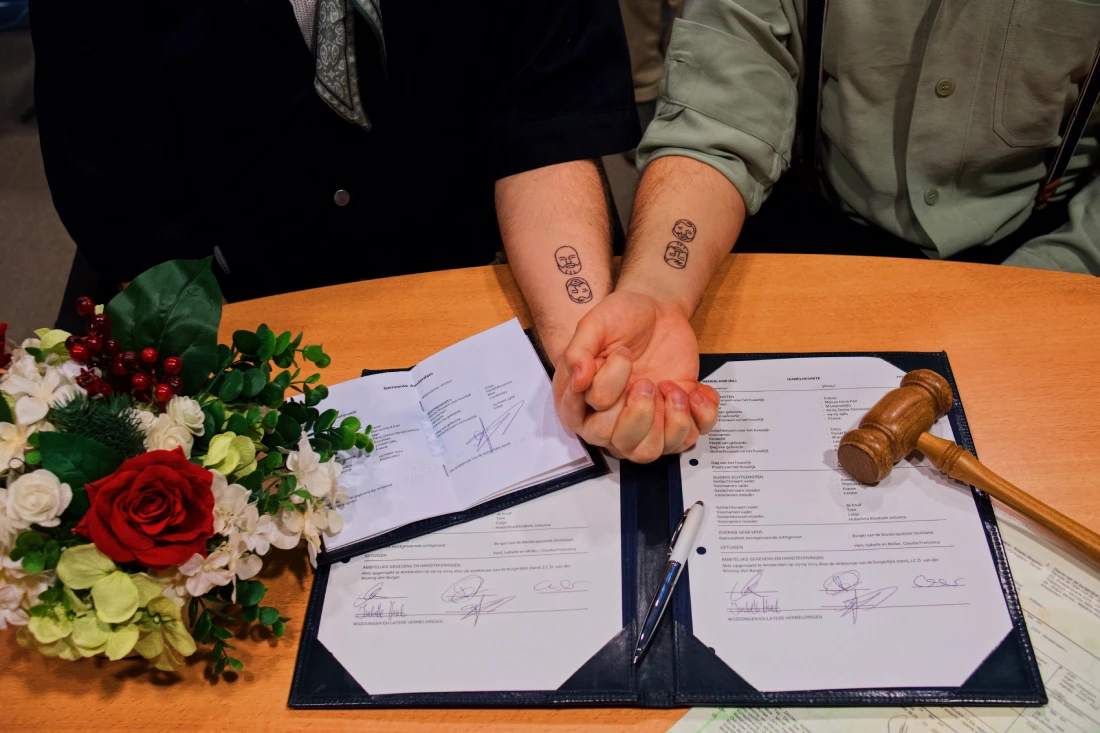
When we look at 25 years of same-sex marriage in the Netherlands, we also look at our own timeline. One of us grew up in the city that made history. The other moved across a border for love and for the promise of a safer, more equal future. In 2024, we got married in Amsterdam after eleven years together. In 2026, Amsterdam will host WorldPride under the theme “Unity,” chosen to honor 25 years of marriage equality in the Netherlands.
Advertisement
KLM Flight Deals
Fly around the world with our gay-friendly partner KLM Royal Dutch Airlines, and its partners Air France and Delta Air Lines in Economy, Premium Comfort and Business Class to LGBTQ+ welcoming destinations worldwide.
Our story starts in Berlin, but our roots are in two different places. Daan was born and raised in Amsterdam. He grew up with Dutch bike lanes and canals, and with the quiet fact that marriage equality was already part of the legal landscape when he was a teenager. The idea that two men or two women could marry was never a distant theory. It was simply there in the background of everyday life.
Karl was born in eastern Germany, south of Dresden, and later studied in Dresden and Berlin. His coming of age was shaped by a different legal and political reality. Marriage equality arrived later in Germany, and the idea of building a life as a gay couple often felt more fragile and conditional. Berlin offered more freedom and visibility, but it still did not feel like a place where the law had fully caught up with how queer people live and love.
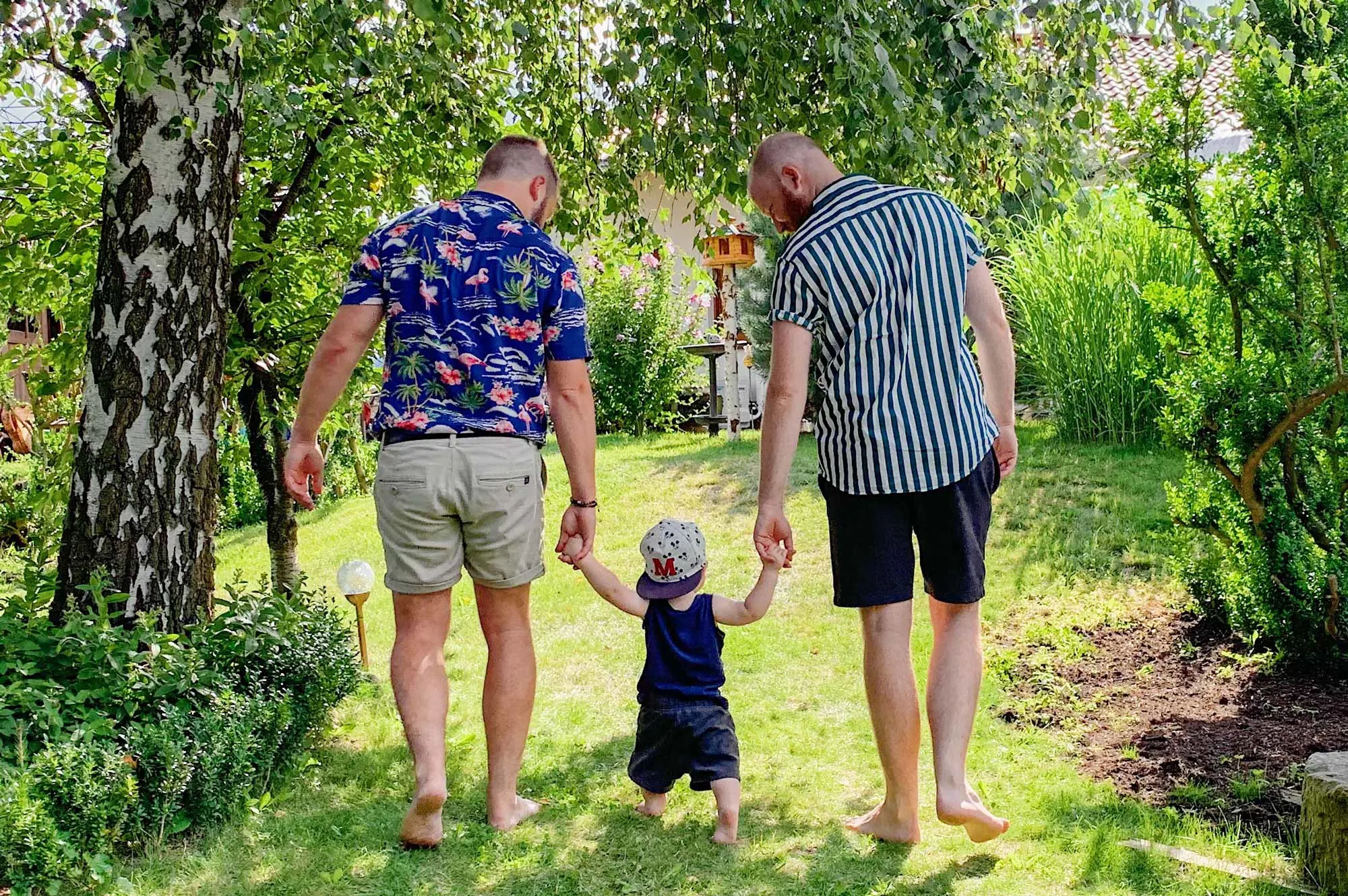
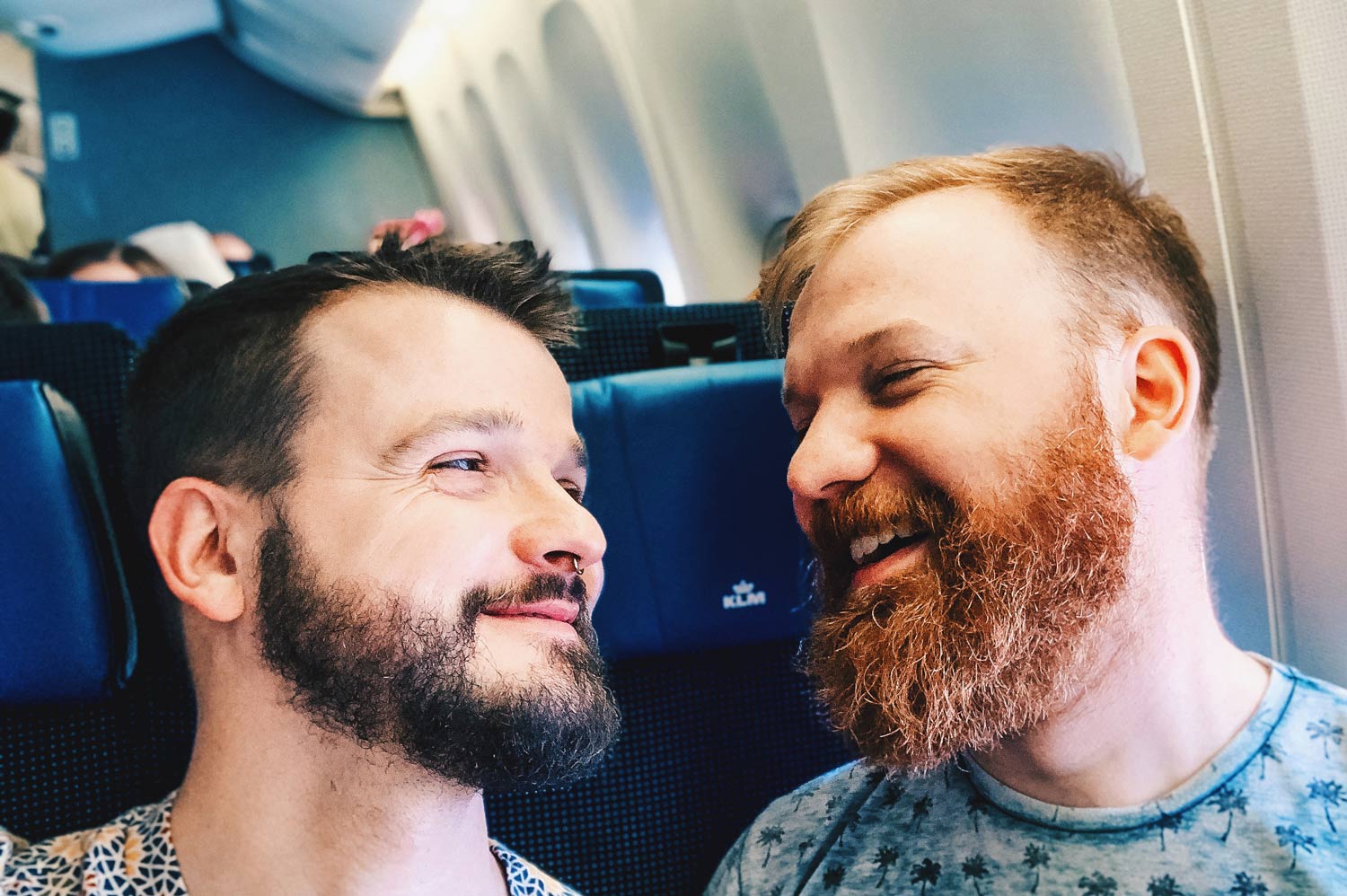
We met in Berlin. The setting was loud and imperfect on a rough, sweaty, and sexy dance floor in the long Berlin nights. But something between us clicked in a way that survived clubs, work schedules, and national borders. About half a year later, Karl moved to Amsterdam for Daan after getting a job and a place to live. What started as a cross-border romance became a shared life in the city where Daan grew up and where same-sex marriage had been a reality for years.
Amsterdam quickly became our shared home, although we have been on the road for our blog a lot. Karl learned how to navigate the city in the rain, how to read Dutch letters from the municipality, and what it feels like when your daily routes cross places that once appeared in international news about LGBTQ+ rights. We were building a home, a chosen family, and a future in a legal system shaped by the 2001 decision.
Reading tip: Germany legalized same-sex marriage “Ehe für Alle”
LGBTQ+ travel guides 2026: safe & inclusive
Tested for safety, inclusion, and being a queer welcoming destination worldwide—from vibrant city breaks to outdoor escapes! Our LGBTQ+ and gay travel guides help you to travel with confidence.
A brief history of same-sex marriage in the Netherlands
On 1 April 2001, the Dutch Civil Code changed in a way that sounded simple on paper but was revolutionary in practice. Two people of the same sex could marry each other under the same conditions as different-sex couples. The bill had passed the House of Representatives and the Senate after years of political debate and activism. Royal assent followed in December 2000. Overnight, a legal barrier that had separated same-sex couples from the institution of marriage disappeared. That night in Amsterdam, four same-sex couples said “Ja” (Dutch for yes) in the city hall, married by Mayor Job Cohen in front of cameras from around the world. Two male couples and two female couples became the first same-sex spouses recognized by a national civil code.
Their rings were small objects with enormous symbolic weight. They showed queer people everywhere that a government could decide to treat their love as equal in the most traditional legal institution it has. In the years that followed, tens of thousands of same-sex couples married in the Netherlands. Many of them settled in or around cities like Amsterdam, Rotterdam, and Utrecht. Same-sex couples with children became more visible, and today there are thousands of rainbow families raising kids within this legal framework.
Reading tip: Pride Calendar Netherlands 2026: All LGBTQ+ Events by Dutch Province
At the same time, public support for marriage equality grew steadily, and survey after survey indicates that a large majority of people in the Netherlands consider same-sex marriage a “normal” part of today’s society. These numbers do not tell every story of struggle, loss, or discrimination, but they show how deep the change has gone. Marriage equality did not erase homophobia or transphobia, and it did not solve every legal problem queer people face. It did create a concrete structure that makes it easier for couples to build long-term lives together, share property, protect each other, and raise children with a bit more security. As two men who rely on that structure, we feel how real those laws are every time we sign a document, talk to a bank, or travel as a rainbow family.
Public support for marriage equality grew steadily, and survey after survey shows that a large majority of people in the Netherlands consider same-sex marriage a normal part of society.
You can find more detailed numbers in this CBS article on 25 years of same-sex marriage in the Netherlands.
Why we never planned to get married
For a long time, marriage was not part of our plan. We both grew up with a very specific script of what a wedding would look like. There was always a bride, often a church, a white dress, and a father walking someone down an aisle. There were expectations about gender roles and family dynamics that did not fit who we are and how we relate to each other. Even after more countries adopted marriage equality, the institution still looked very binary and very straight. The roles in many ceremonies, the language in traditional vows, and the idea of “giving someone away” carried assumptions about gender and power that we did not want to reproduce.

We were happy to be partners, boyfriends, a couple, a team. Calling ourselves “husbands” felt distant and strange for many years. Being queer typically means learning to question structures before you step into them. We asked ourselves what it would mean to celebrate an institution that has been used for centuries to control property, reproduction, and social norms. We talked about friends who still cannot marry in their home countries, about trans folks whose relationships are questioned by authorities, and about the risk of presenting marriage as the ultimate success story for queer lives. It was important for us to keep space for other ways of being a couple and a family that does not revolve around a marriage certificate.
And then we said yes: our gay spring wedding in Amsterdam
What changed our minds were mostly practical conversations at our kitchen table. We were buying a home in Amsterdam and dealing with banks and contracts. We were thinking about our children and what would happen in different health emergencies or travel situations. At the same time, we were planning trips and realizing that in some countries our relationship would be taken more seriously, and sometimes more safely, if we were legally married.
At some point, the question shifted. It was no longer “Do we believe in the traditional idea of marriage?” It became, “Do we want to use this legal tool to protect each other, our kids, and our home in the system we live in?” Our doubts about the institution did not vanish. We decided that our safety and stability as a queer family are indispensable enough to use a structure we do not fully trust or celebrate. So we chose a date that already belonged to our story. On 29 March 2024, eleven years after we became a couple, we got married in Amsterdam.
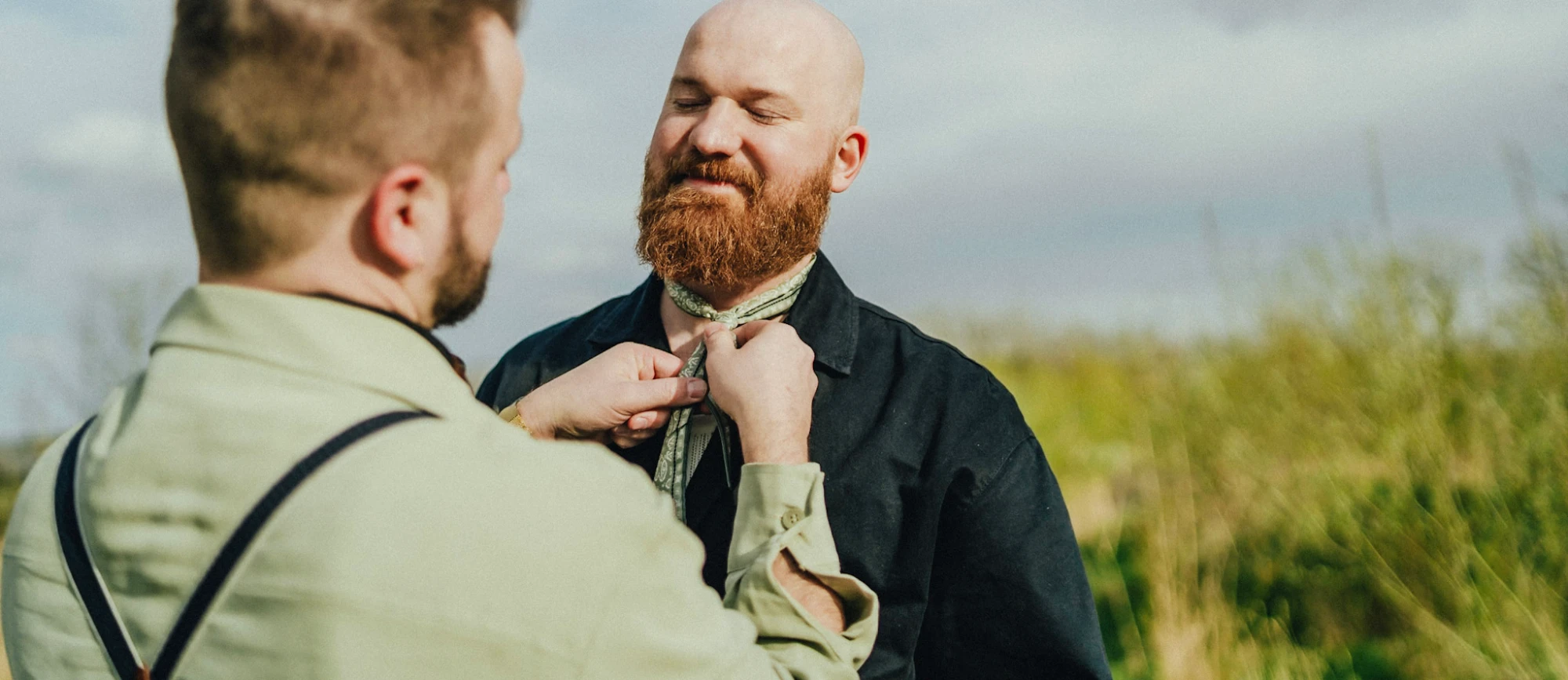
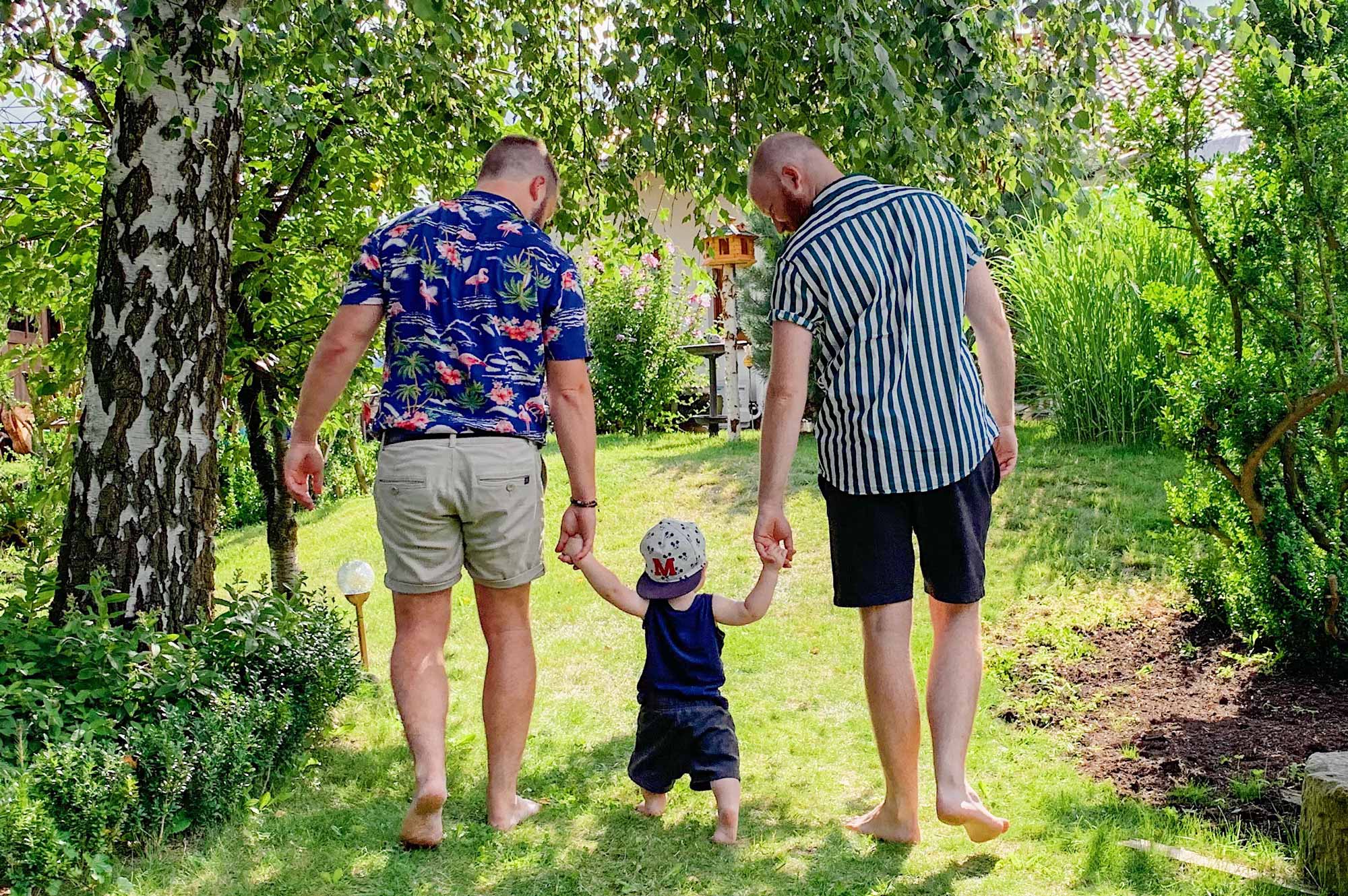
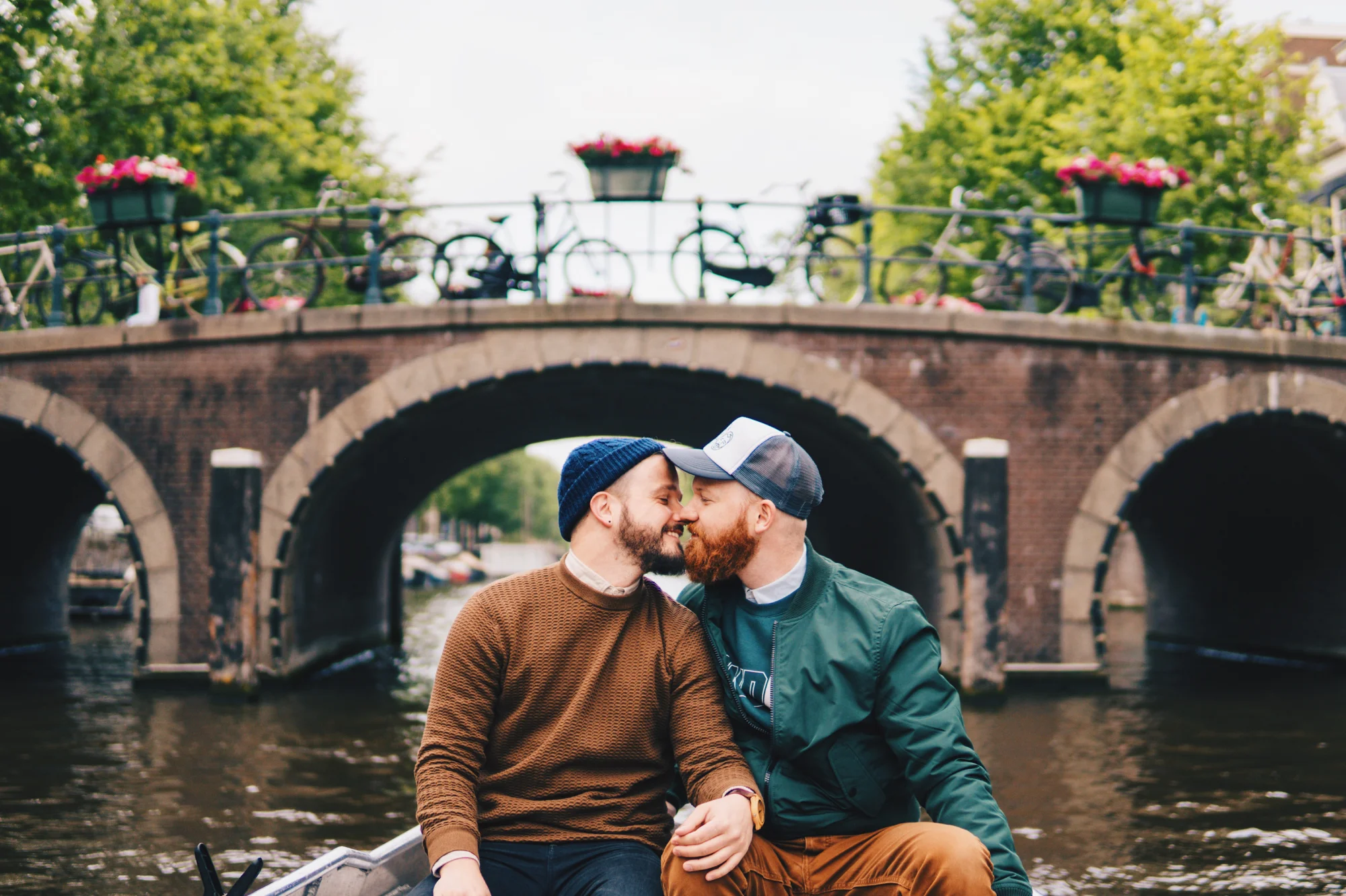
The ceremony took place at the district city hall in Bos en Lommer, a very everyday Amsterdam building that now holds one of our strongest memories. We invited friends and chosen family from several countries, people who have walked with us through moves, career changes, joy, and grief. Our children were there with their mothers. Watching them run around the room while we signed the papers made the idea of “family rights” feel very real and very close. We kept the ceremony small and honest. There was no aisle, no white dress, and no moment where someone handed one of us over. There were two grooms in spring outfits, a very Dutch registrar who switched between Dutch, English, and a bit of German, and a group of people who knew us with all our imperfections.
Reading tip: Our Gay Couple journey – A prefab roof extension in Amsterdam
We wrote our own words, kept some thoughts private, and allowed ourselves to be emotional in a room that usually runs on a tight schedule. In that moment, the paradox was impossible to ignore. We were stepping into an institution we had criticized for years. At the same time, we were reshaping it by being fully ourselves. Two men, binational, multilingual, with children and queer friends from different countries in the room. This was not a straight wedding with two men added on top. It was ours. And that felt powerful.
Travel Guide Amsterdam
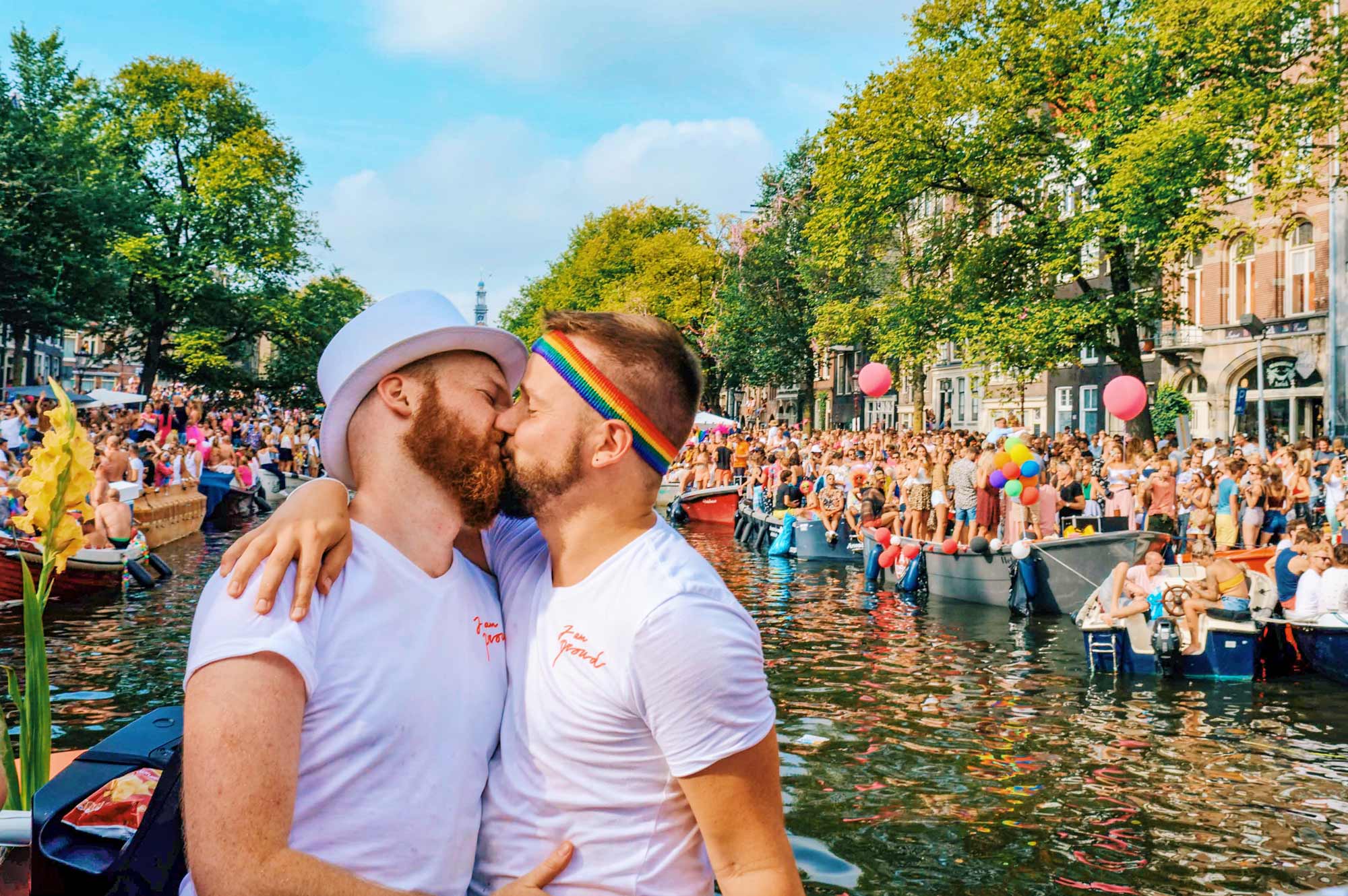
The Dutch capital is considered to be one of the most gay-friendly cities in the world. By legalizing same-gender marriage as the first country in the world already in 2001, the Netherlands and its capital offer a diverse LGBTQ+ friendly cultural program throughout the whole year. The highlight of the Summer is (Gay) Pride Amsterdam.
Amsterdam as the capital of marriage equality
Living in Amsterdam means sharing a city with thousands of other same-sex couples who made the same legal choice we did. Many of them are married. Many raise children. For us, this changes how the streets feel. We see two men in suits outside a district city hall on a Friday afternoon and quietly wish them congratulations. We walk past canal houses and know that behind some of those windows, there are families that look a little like ours.
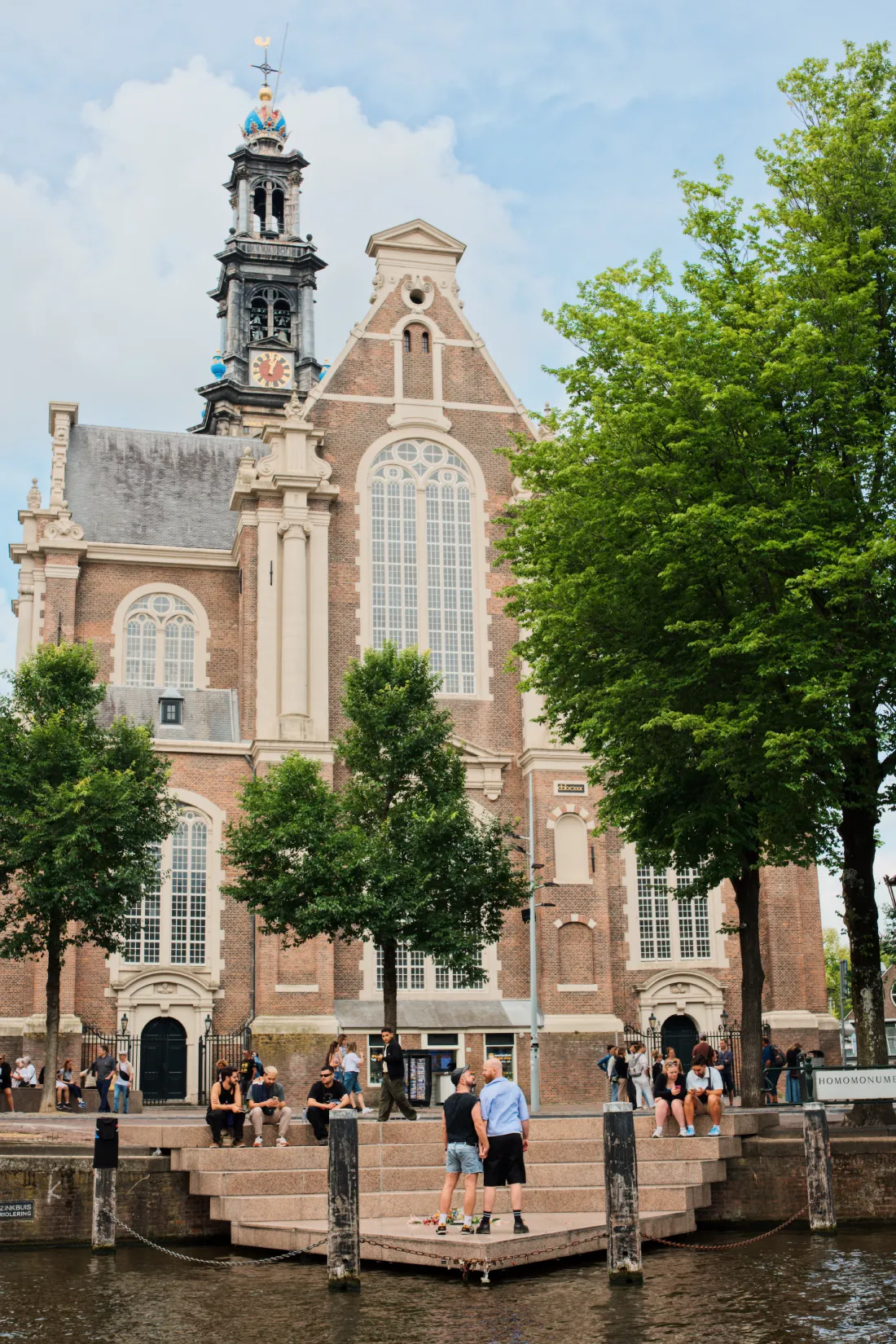
Amsterdam has become a symbol of marriage equality far beyond the Netherlands. For many visitors, it is one of the first places where they see two brides or two grooms posing on a bridge without attracting hostile stares. City politics, local initiatives, and simple daily visibility work together here. Just a short walk from the city center, the Homomonument and Pink Point at Westermarkt add an important layer to this story. Standing on the big pink granite triangle, between Westerkerk and the Anne Frank House, we are reminded that our marriage in Amsterdam exists because others fought, suffered, and organized long before us.
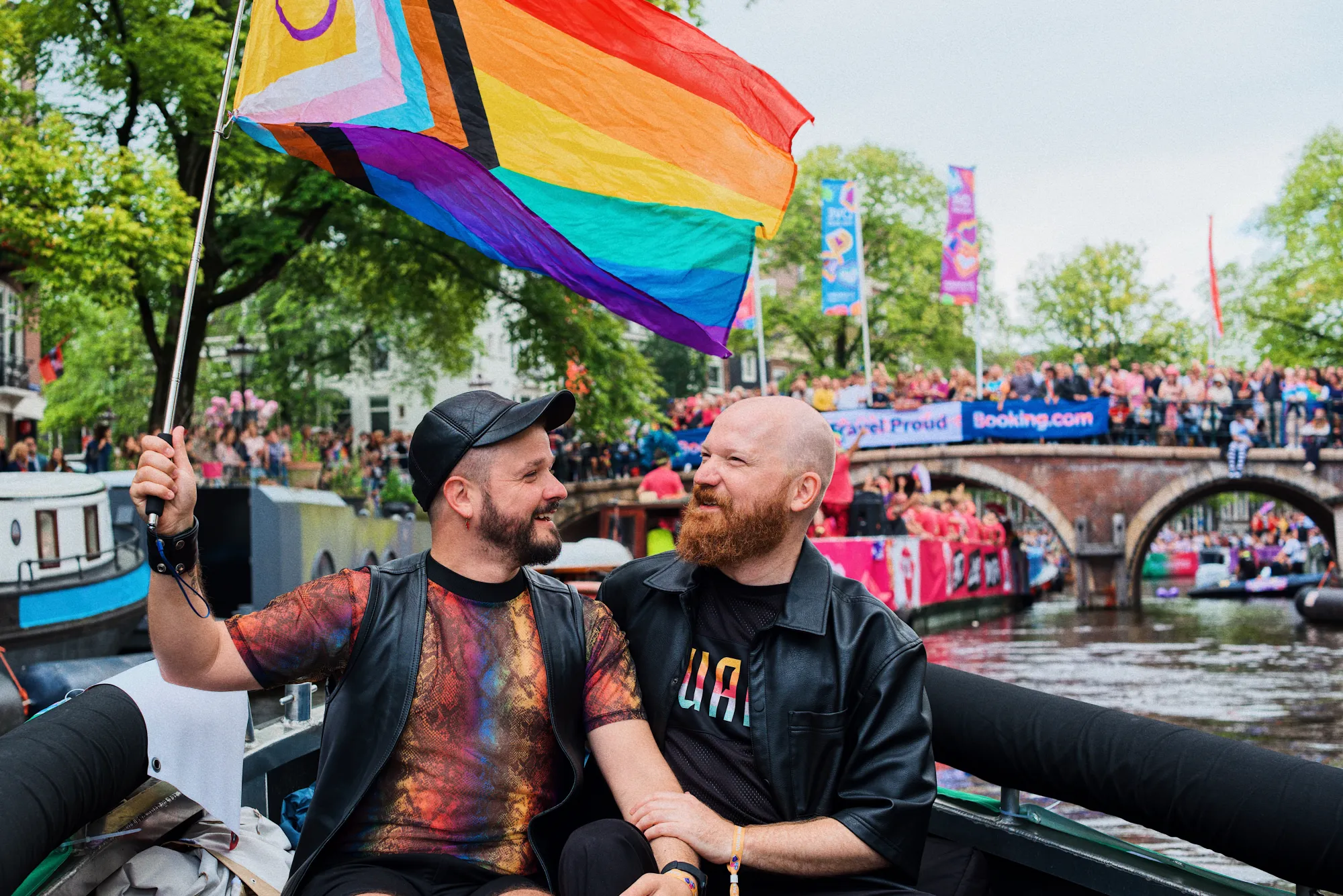
That does not mean everything is perfect or safe for everyone all the time. It does mean that a married same-sex couple is no longer an exception that people whisper about. Because Amsterdam is Daan’s hometown, this does something special to our sense of family history. When we stand in front of the city hall where we got married, we also stand in the city where he rode his bike to school, where he discovered his own queerness, and where the first couple in 2001 said “Ja.” Our marriage is a new layer added to a place that already held his childhood and adolescence. For Karl, it is a reminder of what changed within a single lifetime, from growing up in eastern Germany to signing a Dutch marriage certificate as a husband.
From marriage equality to WorldPride Amsterdam 2026
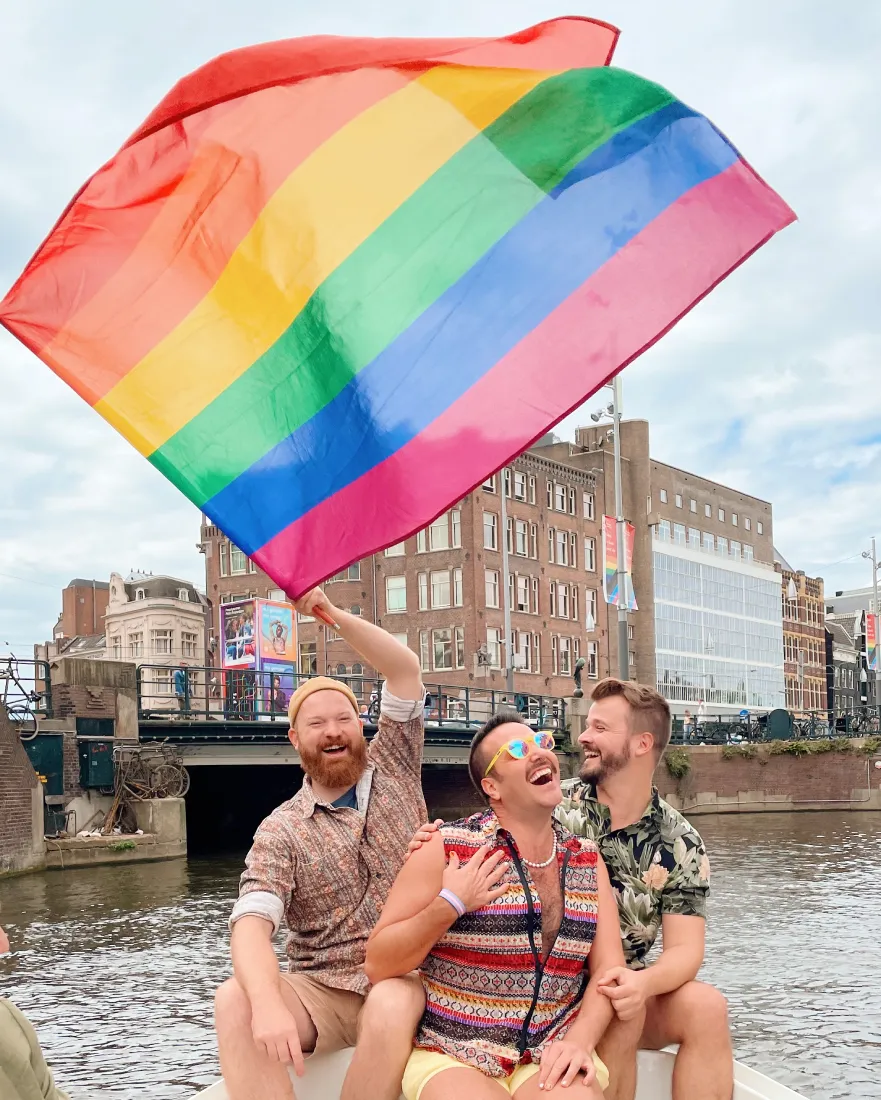
In 2026, Amsterdam will host WorldPride with the motto “Unity.” The timing is not an accident and is well chosen. Twenty-five years after the Netherlands opened civil marriage to same-sex couples, the city will welcome visitors from all over the world to celebrate, protest, and reflect together. During WorldPride, the Homomonument with its world-famous Pink Point, will be two places where this unity becomes tangible, as locals and visitors gather to remember queer history, honor resistance, and imagine what the next 25 years of equality should look like. For both of us, this feels like a full-circle moment. We got married in 2024, live our married life in this city, and now Amsterdam invites the global LGBTQ+ community to mark this anniversary on the world stage.
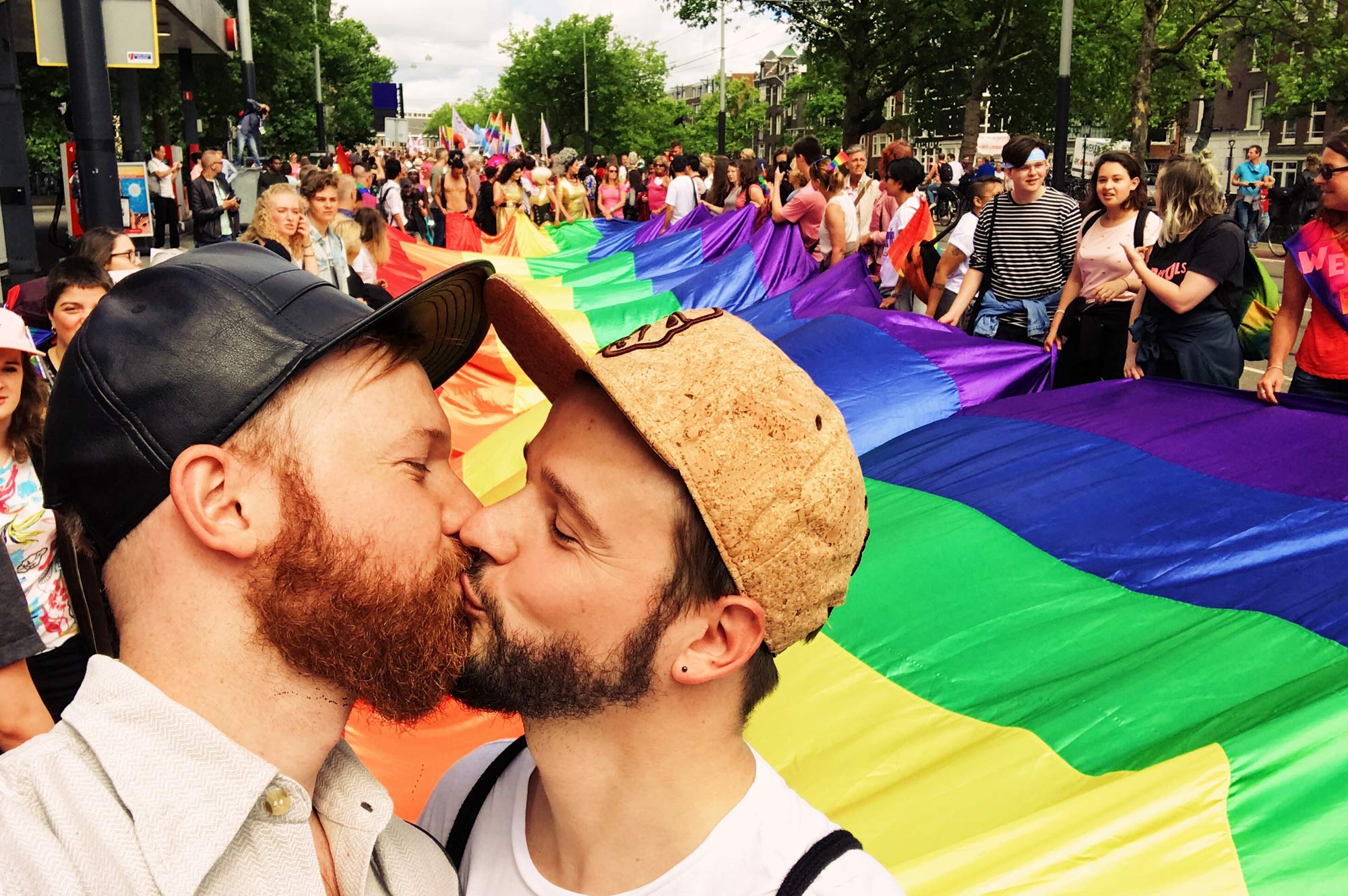
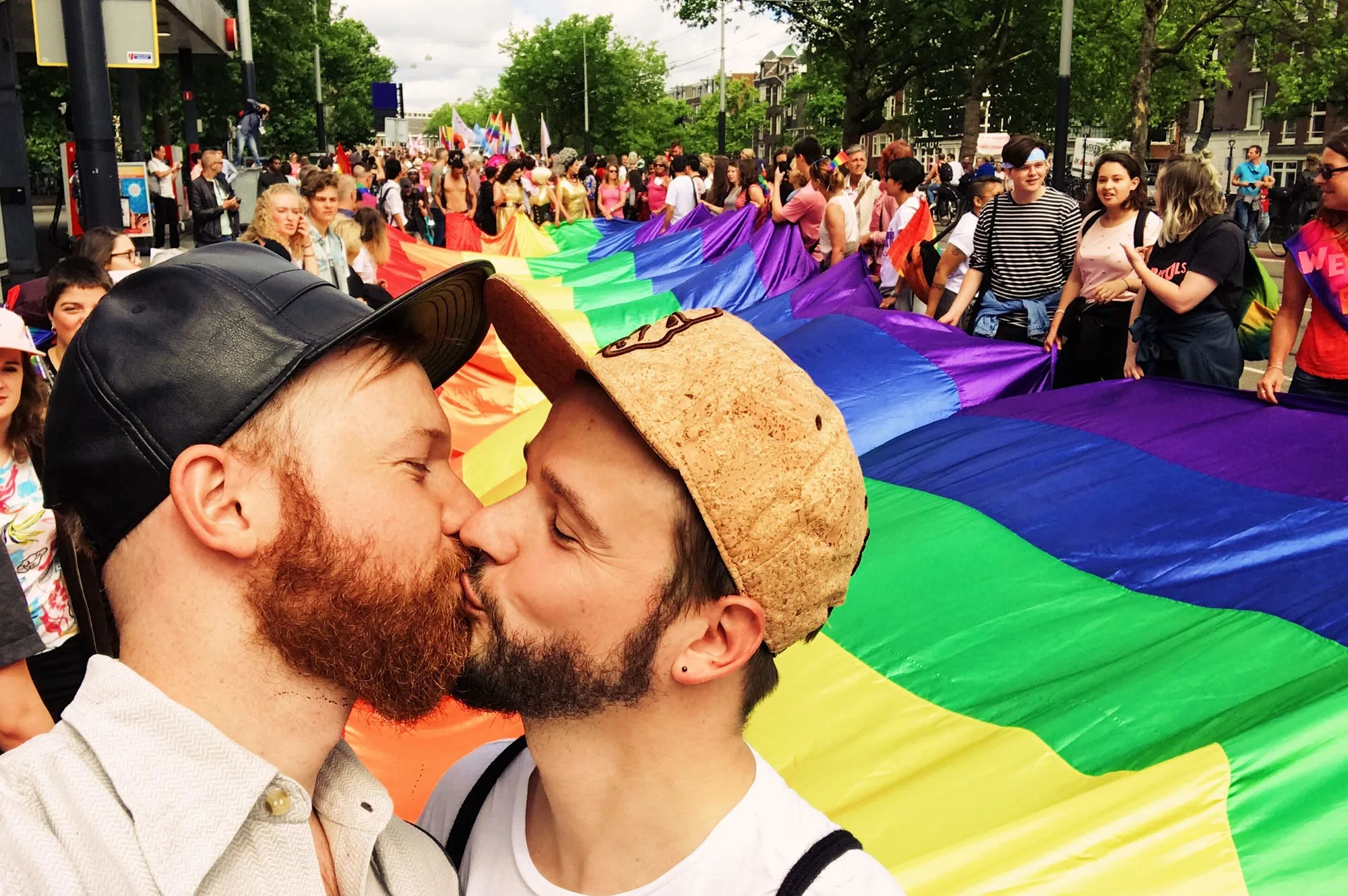
WorldPride will bring the usual energy of pride weeks: parties, conferences, performances, art, political debates, and, of course, the canal parade. At the same time, the narrative of marriage equality runs through the program. There will be space to talk about what 25 years of legal marriage have changed in the Netherlands and what still needs to change here and elsewhere. There will be couples celebrating anniversaries that would not exist without the law from 2001. There will be activists who fought for those rights and younger people who were born into a world where same-sex marriage was already there.
We plan to experience WorldPride as locals and as travel writers for the Dutch Tourism Board, IAmsterdam, KLM Royal Dutch Airlines, and Booking.com. We want to show visitors the Amsterdam we know beyond the postcard canals, and we would like to bring our readers into conversations about rights, safety, and community. This year’s WorldPride 2026, hosted by our home city, is a reminder that our little blue marriage booklet exists because people organized, demanded change, and refused to accept half-measures. Standing in the crowd during WorldPride, we will be two of many, carrying our own story inside a much larger one.
WorldPride Amsterdam 2026: Plan your trip now
Amsterdam will become the global capital of the rainbow LGBTQ+ movement. This guide helps you plan your queer-friendly trip: where to stay, what to do, and how to connect with the global LGBTQ+ community.
Anyone planning a trip can find all important information on the Pride guide on our blog or check the official WorldPride Amsterdam 2026 information on the Pride Amsterdam website.
What 25 years of same-sex marriage changed, and what it did not
Looking back at the past 25 years, it is easy to focus on the success story. A country legalized same-sex marriage. Thousands of couples got married. Public opinion shifted in a positive direction. Families with two mothers or two fathers became more visible. Our own life is a direct result of this development, and we are deeply aware of the privilege that comes with it. At the same time, marriage is only one piece of the puzzle. Many queer people in the Netherlands still face discrimination in housing, healthcare, and the workplace. Trans and non-binary folks deal with legal and social obstacles that are not solved by marriage certificates. Queer migrants and asylum seekers often experience a sharp contrast between the progressive image of the country and the reality of restrictive migration policies.
We carry these realities with us when we talk about how grateful we are for marriage equality. Both truths exist at the same time. There is also the global picture. When we travel, our marriage is not recognized everywhere. In some countries, it gives us more safety. In others, it does not exist under the law. Some places have taken big steps towards equality, others are moving backwards, and in many parts of the world, same-sex relationships are still criminalized. Our Dutch marriage certificate is a shield in some contexts and just a piece of paper in others. This contrast reminds us that marriage equality is a milestone, not an endpoint.
For a global overview of countries with same-sex marriage, it helps to look at recent international datasets that map where marriage equality is already the law and where it is still being debated. These legal changes are closely linked to shifting attitudes in many societies. Surveys tracking global views on same-sex marriage over 25 years show a clear trend towards more acceptance, even if the pace is very uneven.
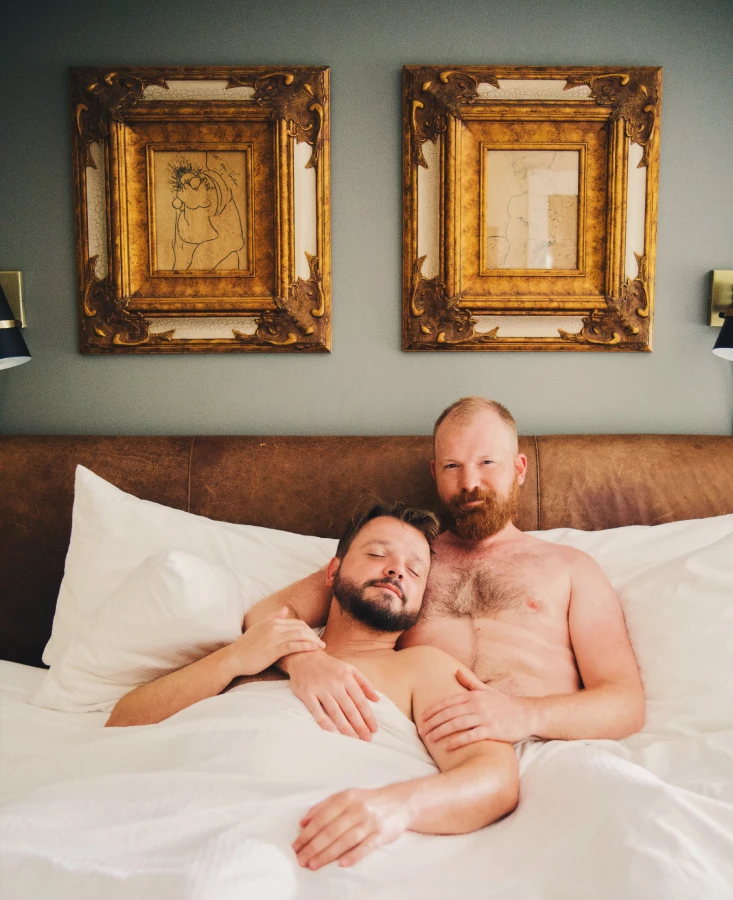
Gay Travel Index 2026
The Berlin-based Spartacus informs LGBTQ+ and queer travelers about how gay-friendly a holiday destination is, based on several ranking criteria.
Which country ranks first? Where is it safe to travel to as a gay and LGBTQ+ traveler?
You can use the GTI to prepare for your gaycation and to guide your choice of holiday destination.
Holding the paradox: critical of the institution, grateful for the protection
We regularly return to the paradox at the heart of our wedding. On the one hand, we are critical of the institution of marriage. We know its history as a tool for controlling who counts as a family and who does not. Many queer people of the LGBTQ+ community do not want to marry or cannot marry. And we also do not see marriage as the gold standard for a valid relationship.
On the other hand, our everyday life is easier and safer because we are married. We share a mortgage and legal responsibilities. Additionally, we can make medical decisions for each other without having to prove our relationship from scratch. We travel as LGBTQ+ travelers with a shared legal status, which can reduce questions at borders or check-in. Our children are more clearly protected in a system that still thinks in terms of parents and spouses. It would feel dishonest to pretend that this legal comfort is not relevant.
We try to live inside this tension consciously, criticizing the institution and still using it. And although we can celebrate our wedding day, we still stand with those who are shut out of marriage or choose a different path. For us, queerness is not about being pure in our rejection of systems. It is about being honest about how we move through them, where they help us, and where they hurt others. Our marriage is one way of navigating a world that is not designed for us, but it is not the only way to live a queer life.
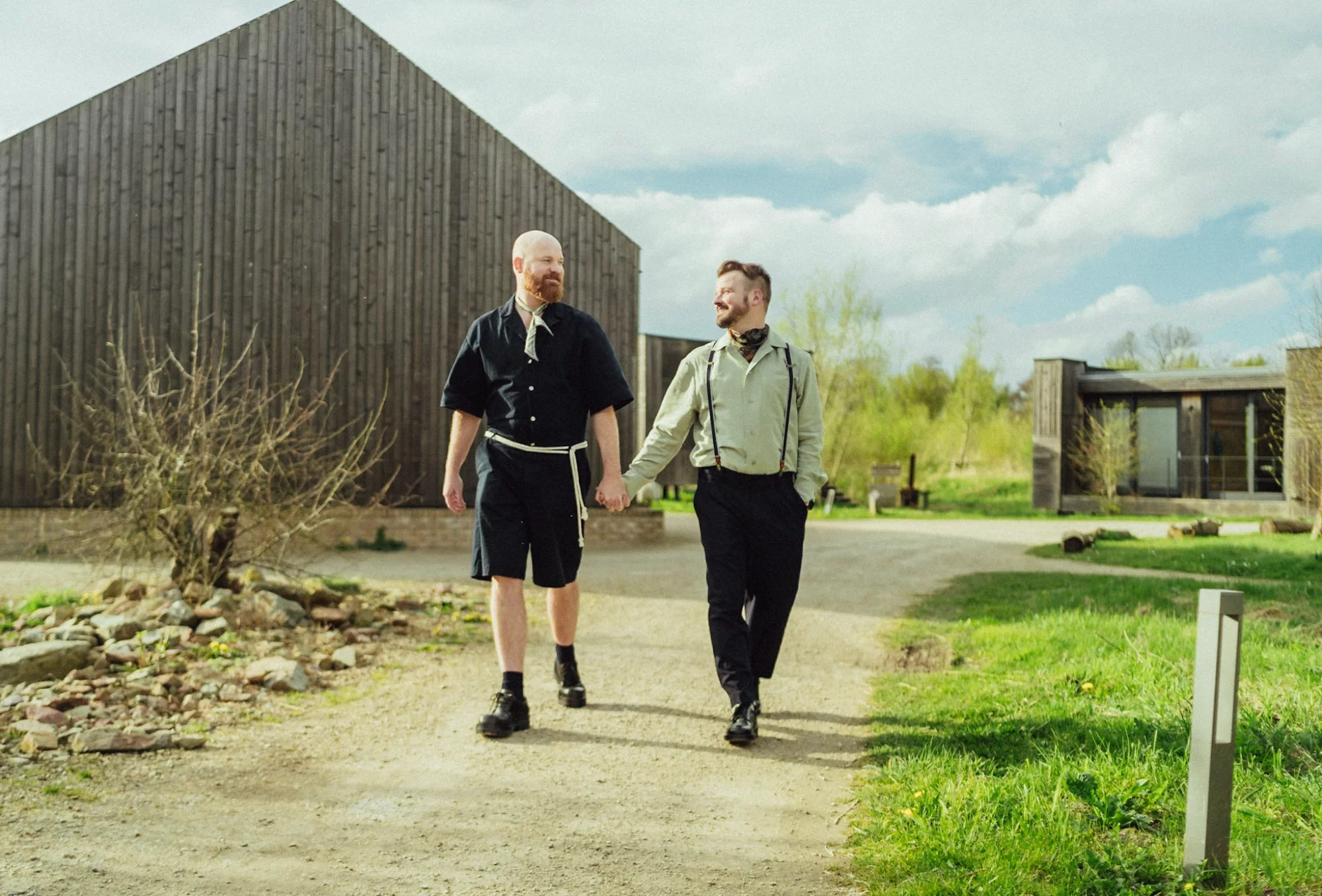
Why the marriage equality anniversary matters to us
As WorldPride approaches and the 25th anniversary of marriage equality fills the air with speeches, exhibitions, and social media posts, we think about the quiet ways this law shapes our days. We receive official letters addressed to us as spouses, and we hear our children talk casually about having two dads and two moms. None of this would look or feel the same without the 2001 legal change.
We also think of the people who stood in front of cameras in 2001 as the first same-sex couples to marry. They did something incredibly personal and brave in the eyes of the public. Our wedding in 2024 was smaller, more intimate, and sheltered from that kind of attention. Yet we stand on the same legal foundation. Our marriage is part of the same story. That connection gives our private decision a political dimension we cannot ignore.
When we celebrate our first, fifth, or tenth wedding anniversary, we are also celebrating the work of activists, lawyers, politicians, and ordinary queer people who demanded more than compromise. When we welcome friends to Amsterdam for WorldPride 2026, we will show them not only the festivities, but also the quiet everyday places where marriage equality lives: district city halls, playgrounds, supermarkets, streets full of couples who look like us.
Twenty-five years of same-sex marriage in the Netherlands is a legal milestone, a political symbol, and a framework for our daily lives. Our wedding in spring 2024 is one small story inside this larger narrative. We question the institution, we benefit from its protection, and we try to hold both truths at once. As Amsterdam prepares for WorldPride, we hope this city will not only celebrate what has been achieved but also listen to those whose realities still do not fit into any form of marriage.
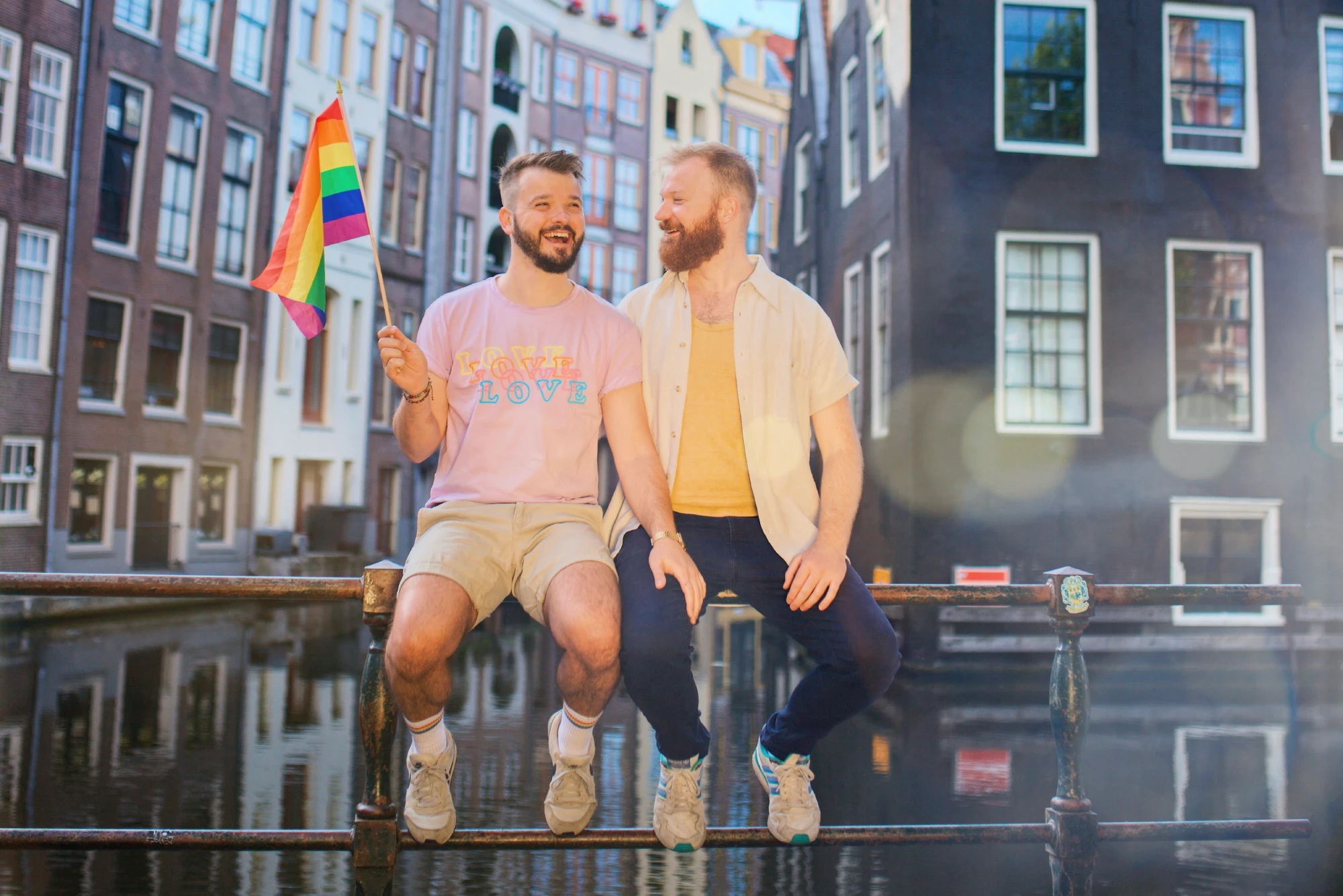
Same-Sex Marriage in the Netherlands and WorldPride 2026 in Amsterdam
Twenty-five years of same-sex marriage in the Netherlands is more than a legal milestone. It is a political signal, a cultural shift, and for us, the framework of our everyday life.
Our wedding in spring 2024 is just one small story within this much larger history. We question the institution, we benefit from its protection, and we try to hold both truths at once.
Enjoyed this article? Feel free to like it and share it with your friends!
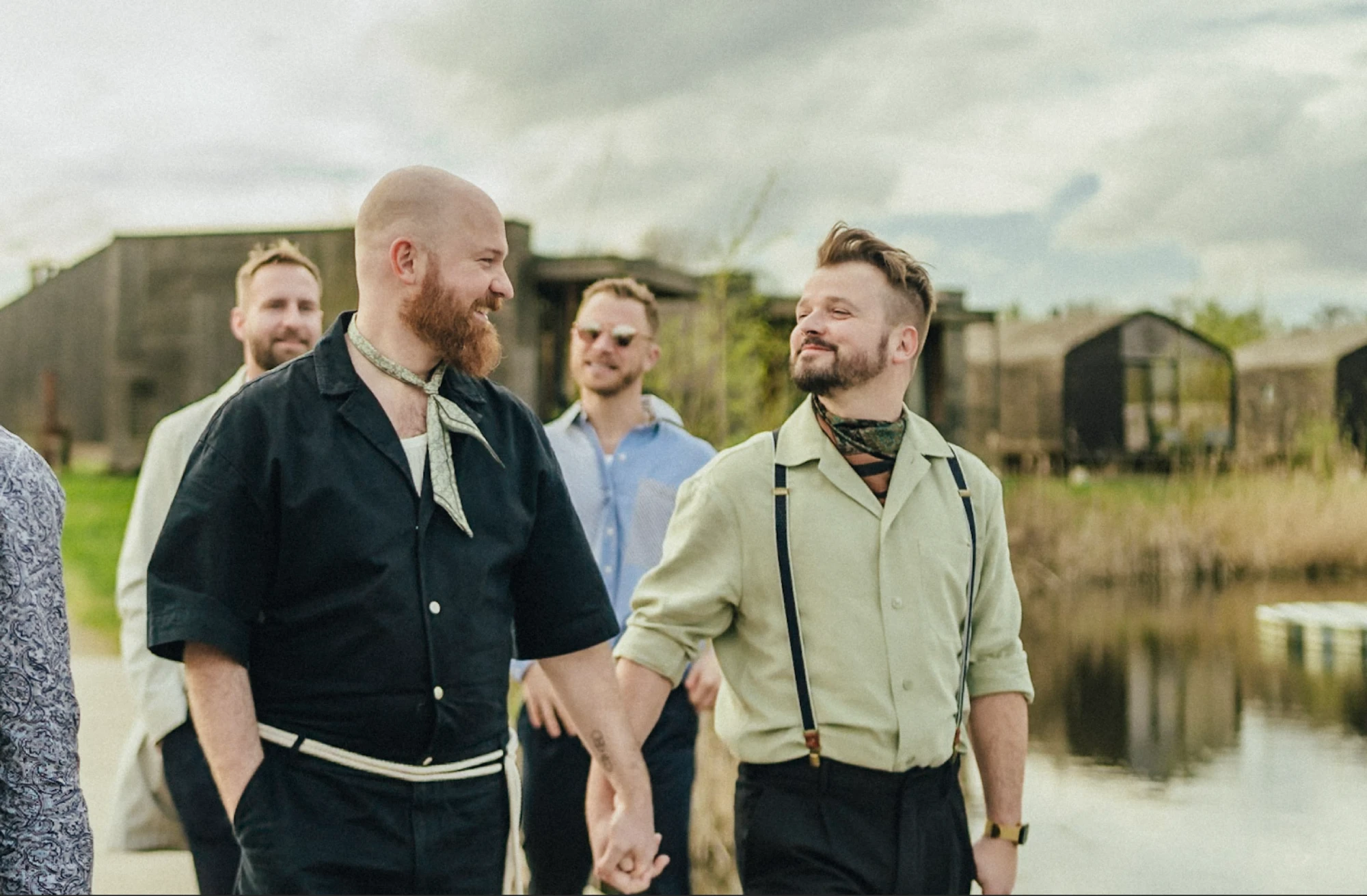
As Amsterdam prepares to welcome the world for WorldPride 2026, this anniversary becomes visible far beyond city halls and legal texts. It will be celebrated on canals, in museums, on stages, and in conversations between people who share very different realities of queer life.
And maybe that is what these 25 years are really about. Not just the right to marry, but the space to live, love, and define family on our own terms, whether inside or outside that institution. When we stand in the crowd during WorldPride, we will be two of many. Married, yes. But also part of a global community that is still writing the next chapter of this story.
Interested in our LGBTQ+ travels, queer outdoor experiences, ski weeks, or other destinations in the mountains? Then browse our travel guides or send us a message if you would like personal recommendations. You can also follow us on Facebook, Threads, TikTok, YouTube, Pinterest, and Instagram. We would love to connect with you! Karl & Daan.