
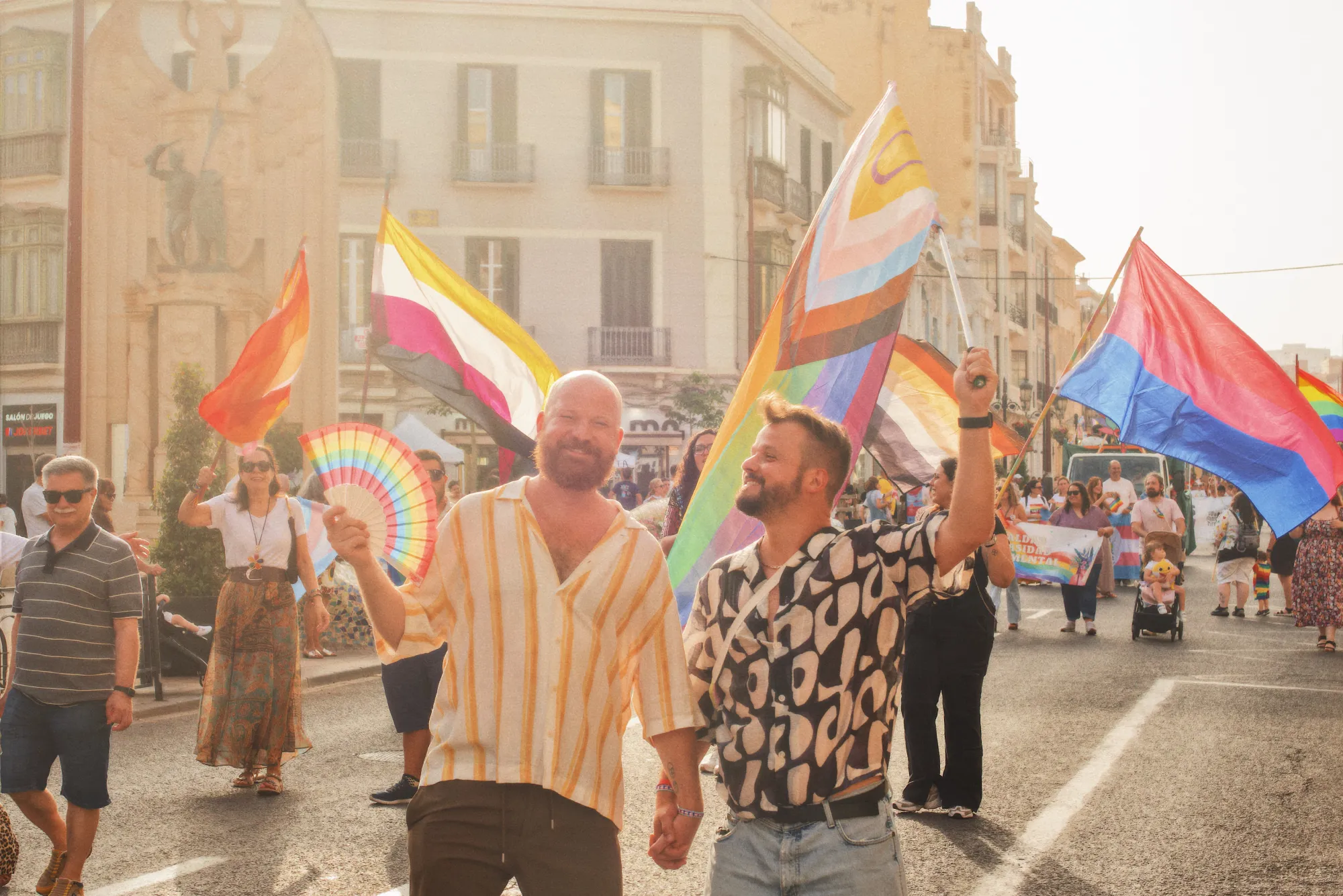
As LGBTQ+ travel bloggers, we are proud to support Pride in cities such as Amsterdam, Berlin, Cologne, and Los Angeles on an ongoing basis, year after year. These demonstrations, combined with massive celebrations, fill canals, streets, and boulevards with boats, floats, and parades and often appear on global LGBTQ+ travel lists. But it is not always the size of an event that makes it important and a necessity on the long journey toward equal human rights. Take our weekend at North Africa Pride in Melilla, Spain’s enclave on the African continent, as an example of how a small yet powerful march of a local community does its part to achieve the goal of freedom for everyone. It offered us a unique perspective, making it especially meaningful. Join us on our gay couple weekend trip to the Spanish enclave Melilla and experience this year’s Pride weekend through a Couple of Men‘s eyes.
– paid collaboration with Visit Spain –
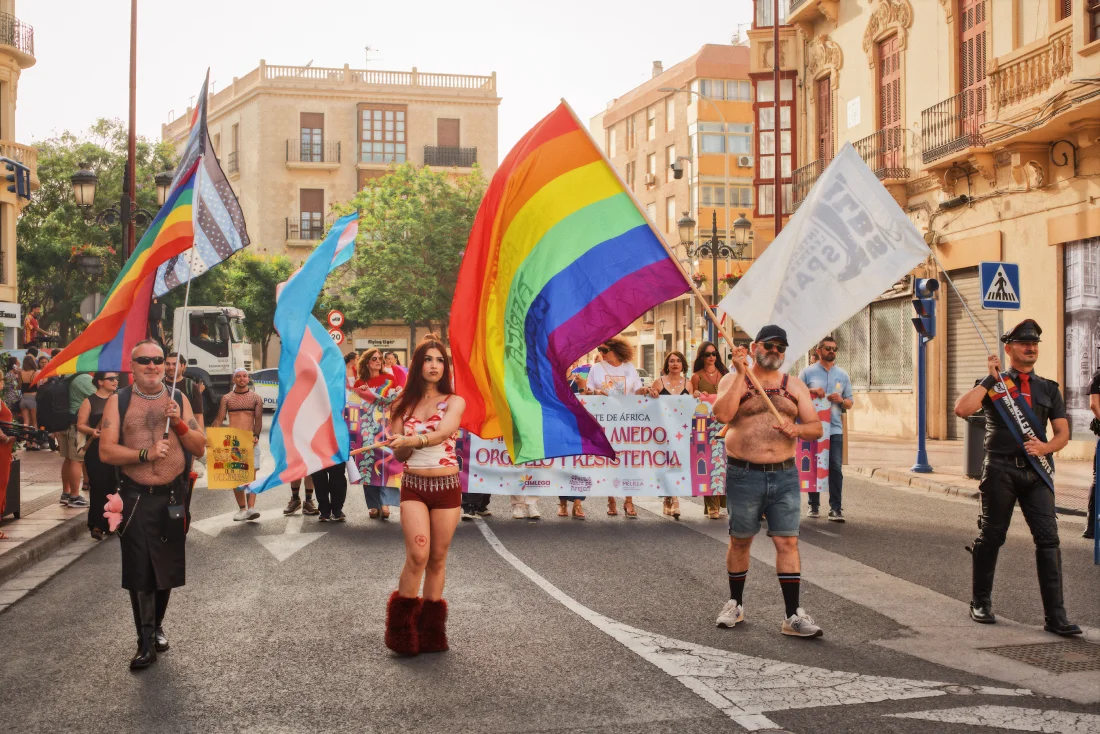
After weeks of organizing one queer event at a time, on a hot June evening, a few hundred people came together to march from Plaza Comandante Benítez along Avenida del Rey Juan Carlos I to City Hall and later to fill Parque Hernández with drag, music, and Pride flags. North Africa Pride in Melilla is a community event for people who cannot easily travel to major Pride destinations and for those watching from windows or the sidelines who need to see that they are not alone.
Advertisement
KLM Flight Deals
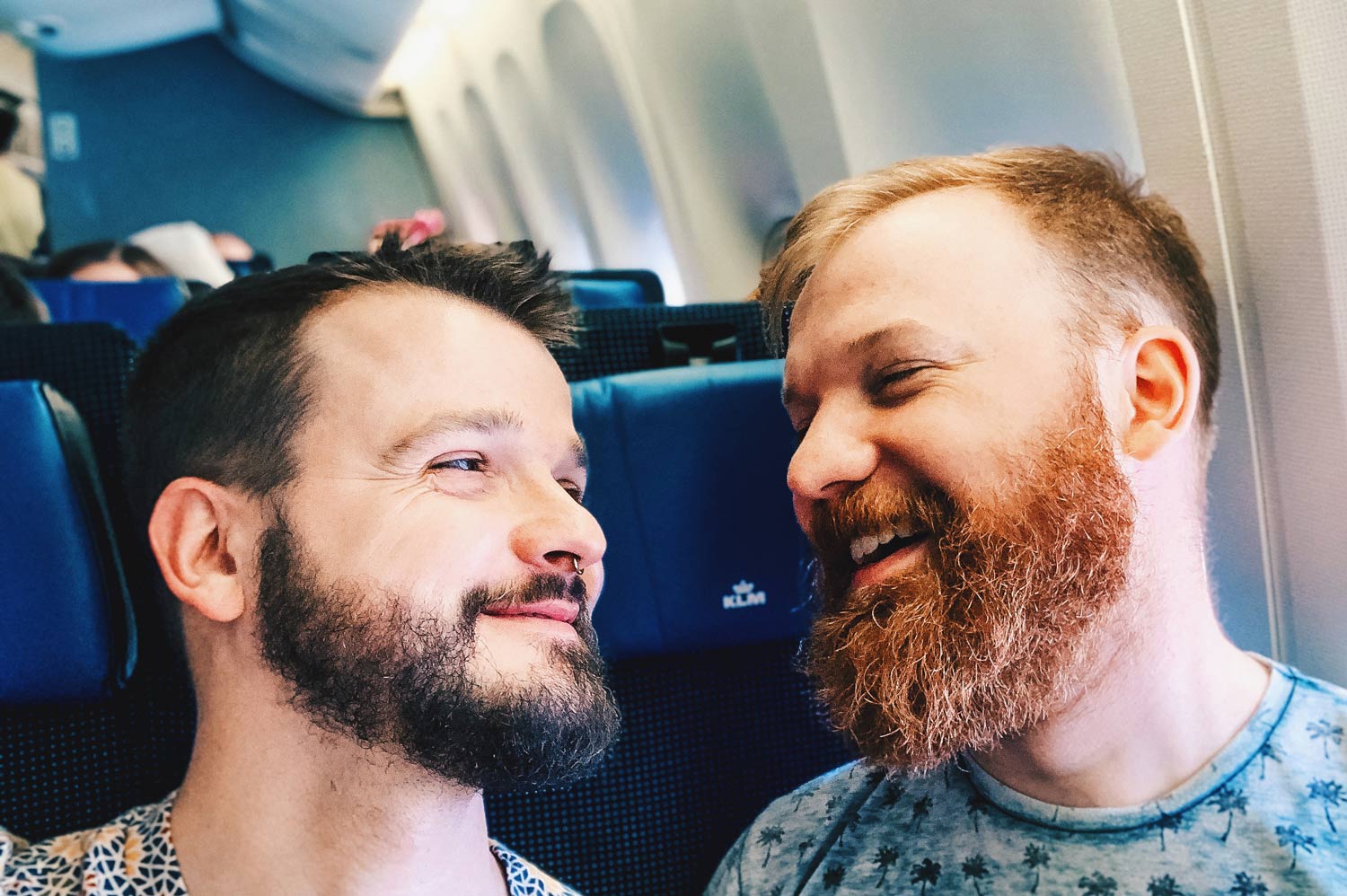
Fly around the world with our gay-friendly partner KLM Royal Dutch Airlines, and its partners Air France and Delta Air Lines in Economy, Premium Comfort and Business Class to LGBTQ+ welcoming destinations worldwide.
From big‑city Prides to North Africa Pride in Melilla
Our Pride calendar usually revolved around large, well‑known LGBTQ+ events, German CSD, and other queer festivals. We know the feeling of boats packed into Amsterdam’s canals, floats moving through Berlin’s streets, and parades along major boulevards with sponsors, screens, and global media coverage. It is easy to plan trips around places where Pride is already visible, firmly established, and widely promoted. Nevertheless, it remains necessary to support these Pride events as well.
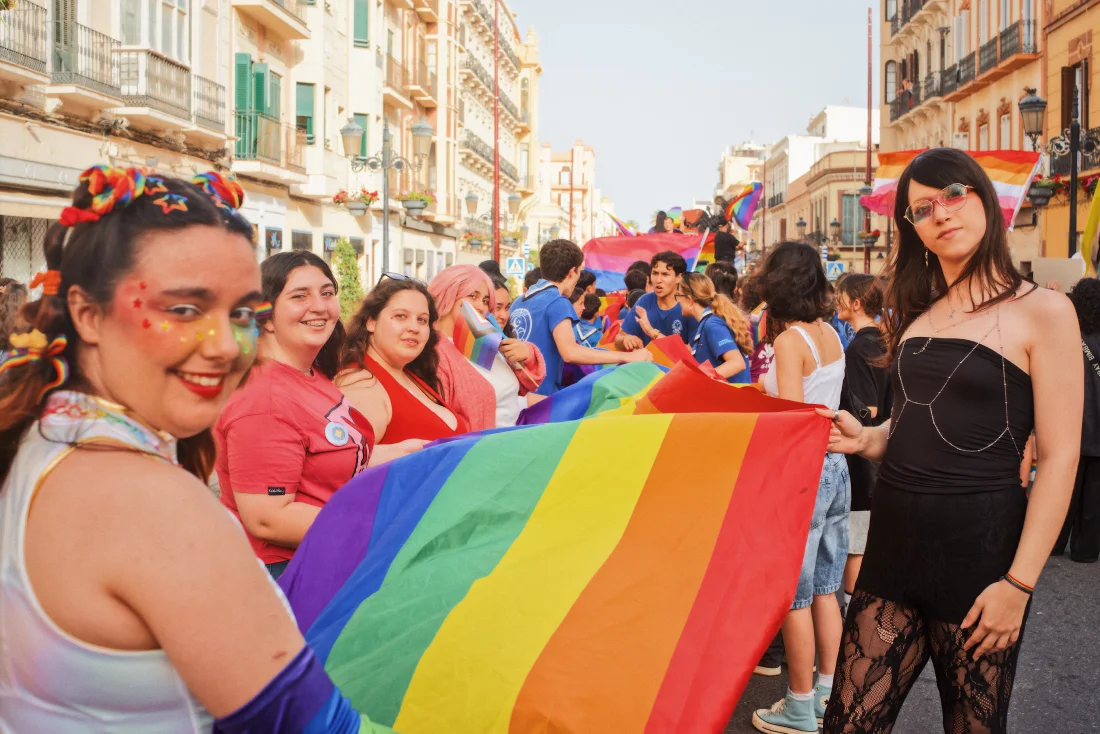
North Africa Pride in Melilla tells a different story. The march brings together a few hundred people rather than tens of thousands. There are no massive stages, widespread festival areas, or international headliners. The scale is smaller, and the whole event feels more like a local gathering with a demonstration character rather than a major queer festival.
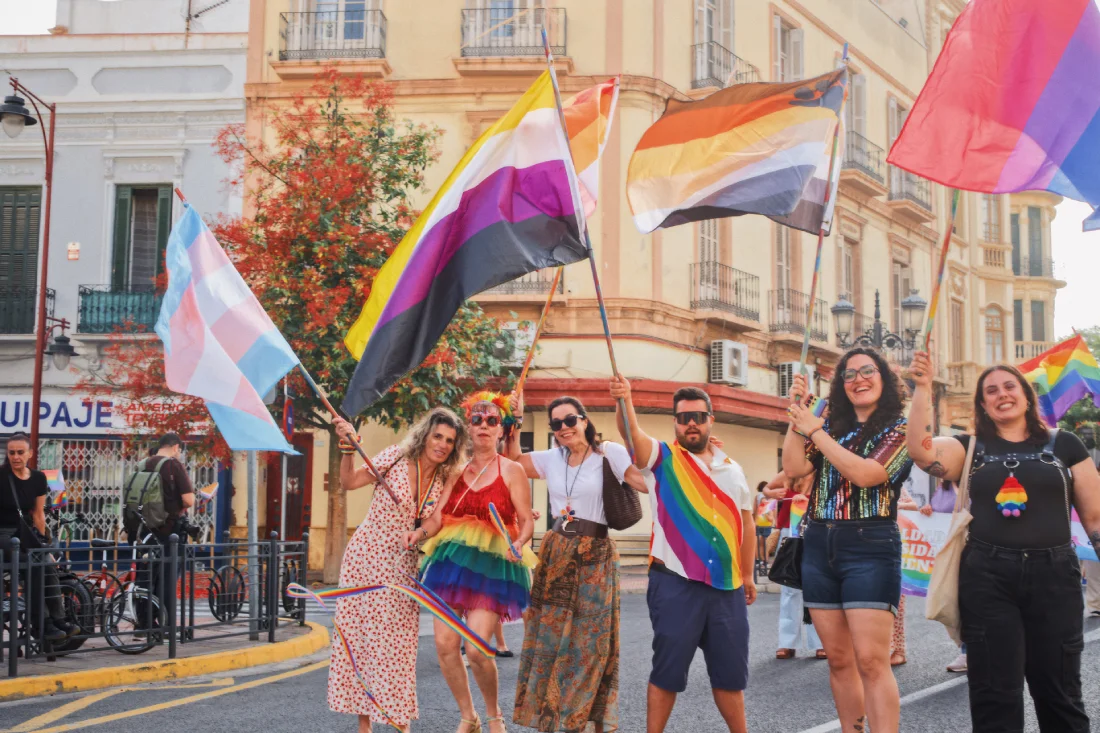
The purpose, however, is the same. People show up to make queer lives visible, to claim space in their city, and to create a moment in which LGBTQ+ people and their allies can stand together. We wanted to experience what Pride feels like in this kind of setting and spend a weekend with a community whose efforts rarely appear in international travel guides or Pride roundups.
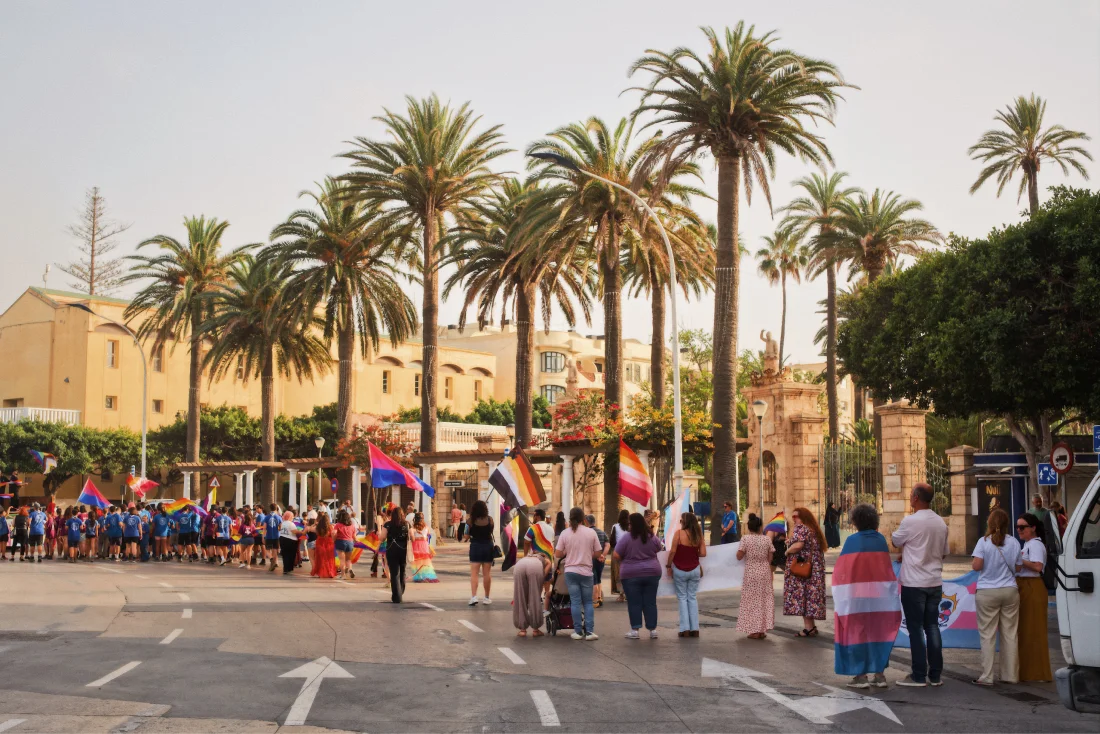
What is North Africa Pride (Orgullo Norte de África) in Melilla?
A local Pride at the edge of Europe and Africa
North Africa Pride, or Orgullo Norte de África, is Melilla’s annual LGBTQ+ celebration organized by AMLEGA, the local LGBTQ+ association. For over 20 years, it has taken place in a small city on African soil that is politically part of Spain and lies at the edge of the European Union. This mix of geography and politics shapes the character of the event. Orgullo Norte de África is a neighborhood Pride rooted in local streets and public squares and, at the same time, a statement that diversity and queer life are part of this border region.
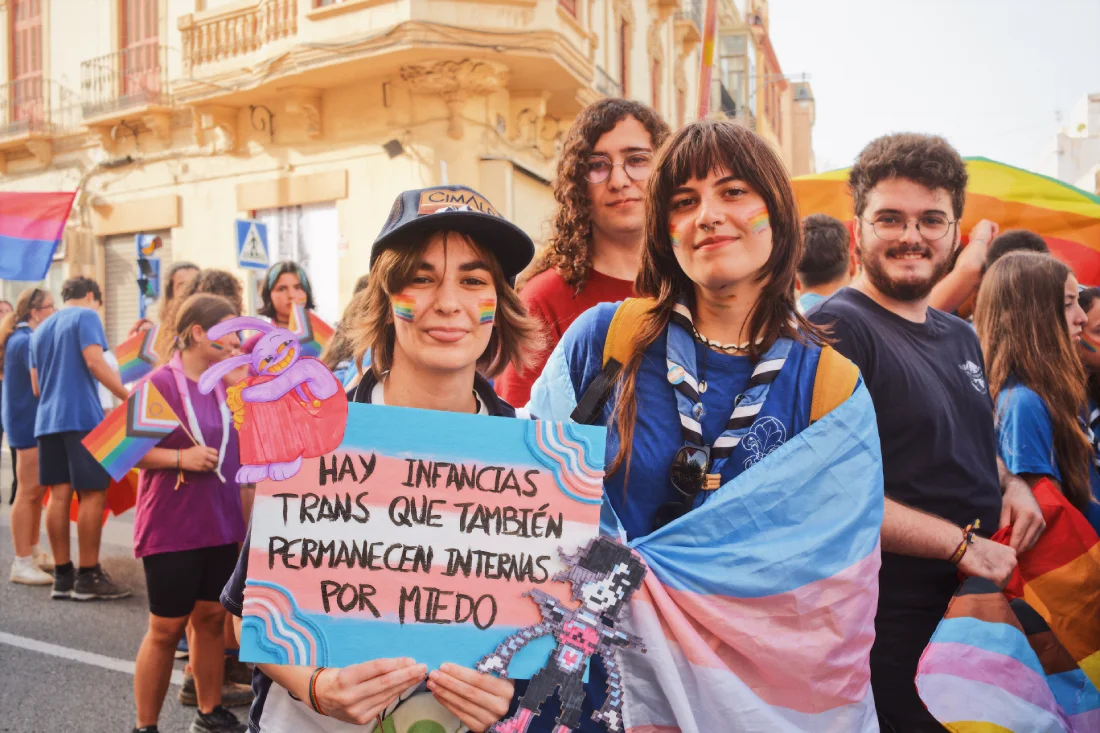
The Pride program runs over several weeks and includes workshops, talks, cultural events, and community activities. It builds up to Pride Day with a demonstration/parade, a gathering in front of City Hall, and a concert in a park. There are sports sessions, art projects, discussions about mental health and bullying, youth‑focused initiatives, and social gatherings. Instead of compressing everything into one weekend, the organizers create a series of moments across the city. Melilla’s queer community and allies appear again and again in different places, gradually building visibility long before Pride Day itself.
Gay Travel Index 2026
The Berlin-based Spartacus informs LGBTQ+ and queer travelers about how gay-friendly a holiday destination is, based on several ranking criteria.
Which country ranks first? Where is it safe to travel to as a gay and LGBTQ+ traveler?
You can use the GTI to prepare for your gaycation and to guide your choice of holiday destination.
Community, allies, and local organizations
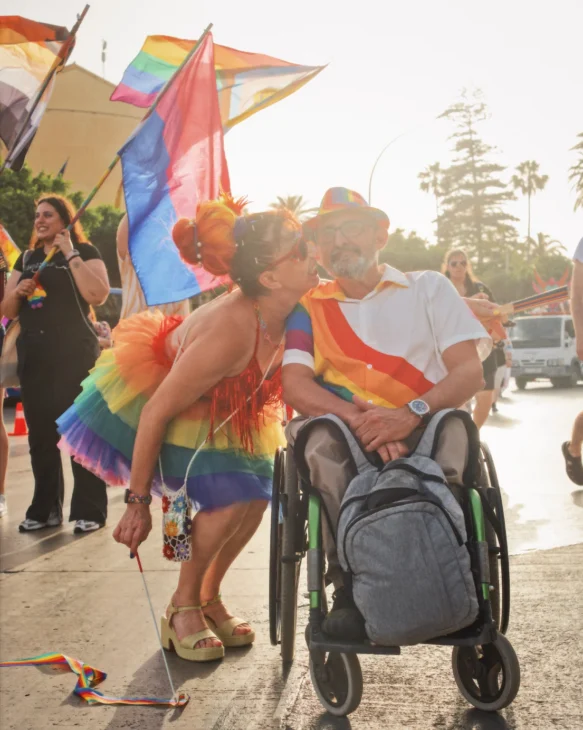
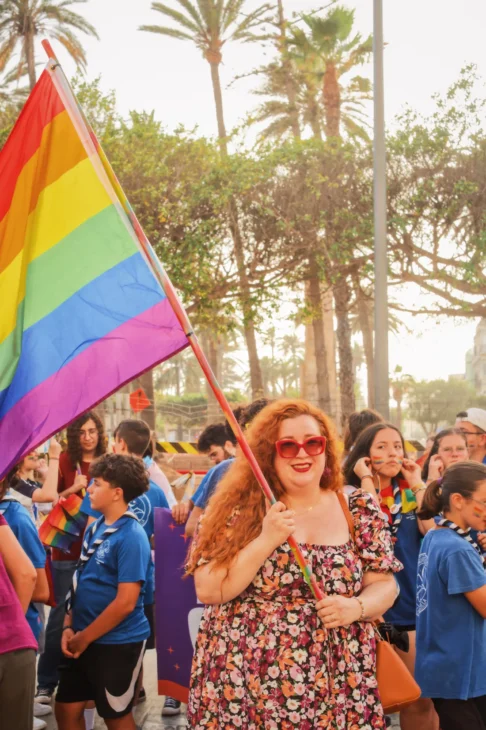
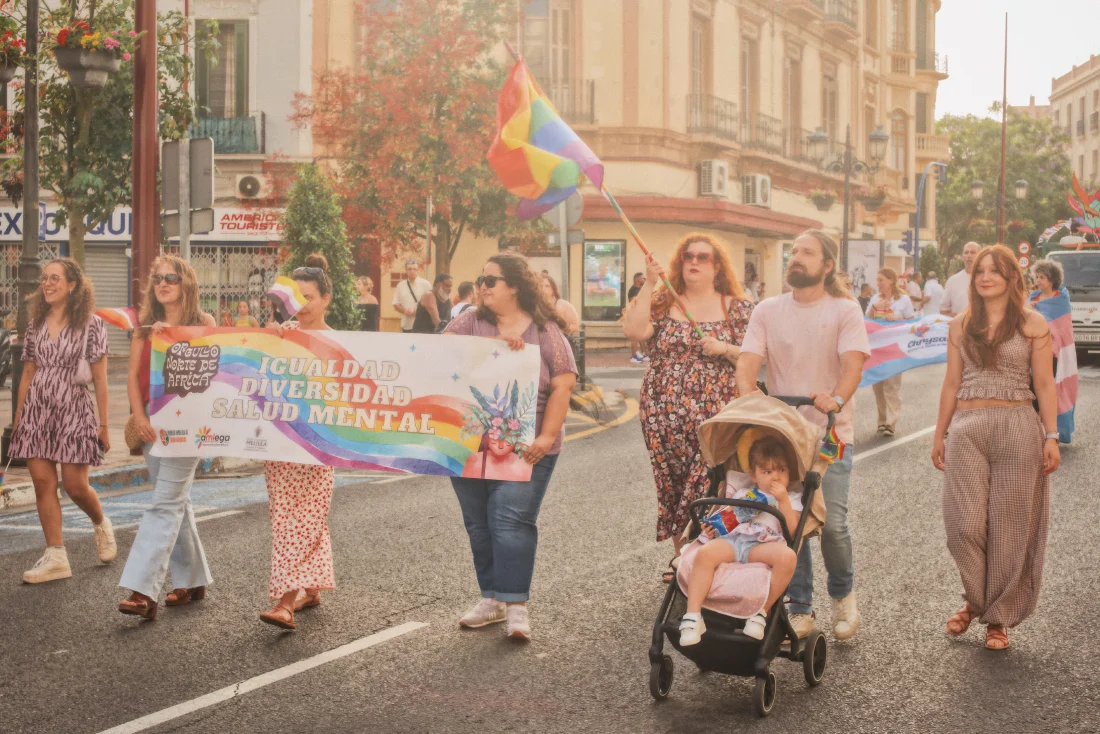
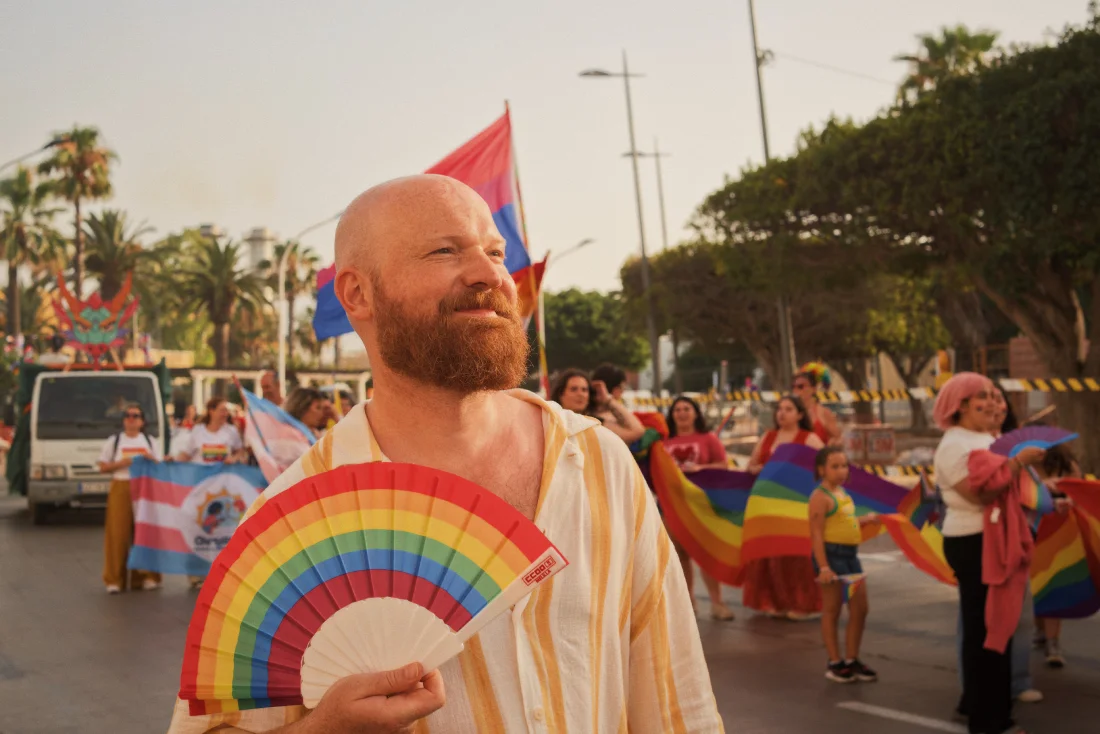
On Pride Day, North Africa Pride in Melilla gathers a few hundred people. We saw local LGBTQ+ residents, youth groups, trade unions, feminist organizations, families with children, and friends and allies lining the route or walking in the march. The energy comes from local organizers and volunteers who have spent years building trust, structures, and networks in a small and often conservative environment. Signs and banners refer both to global LGBTQ+ issues and to very local concerns such as school bullying, employment, housing, and everyday discrimination.
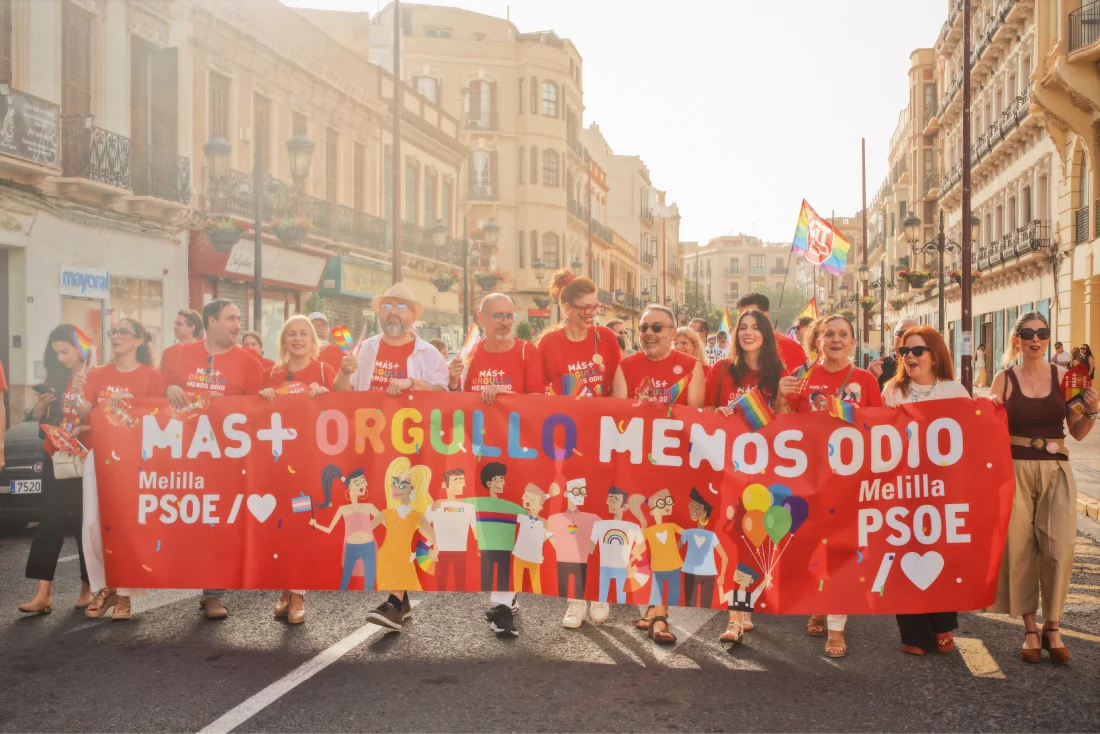
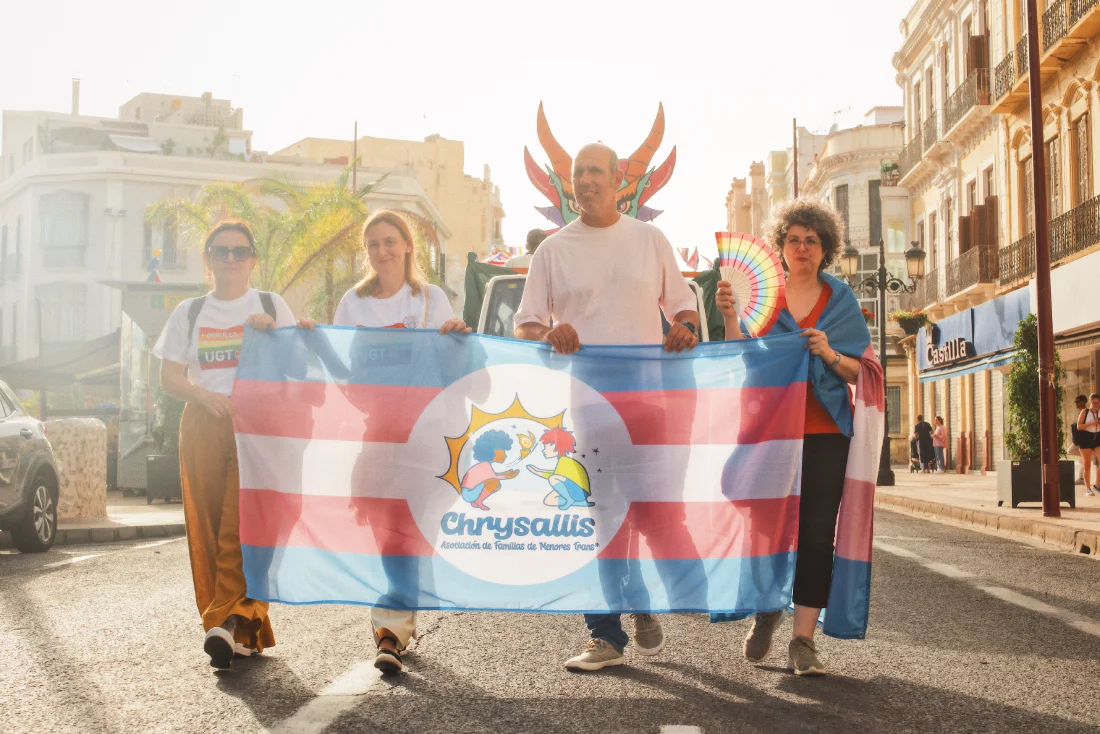
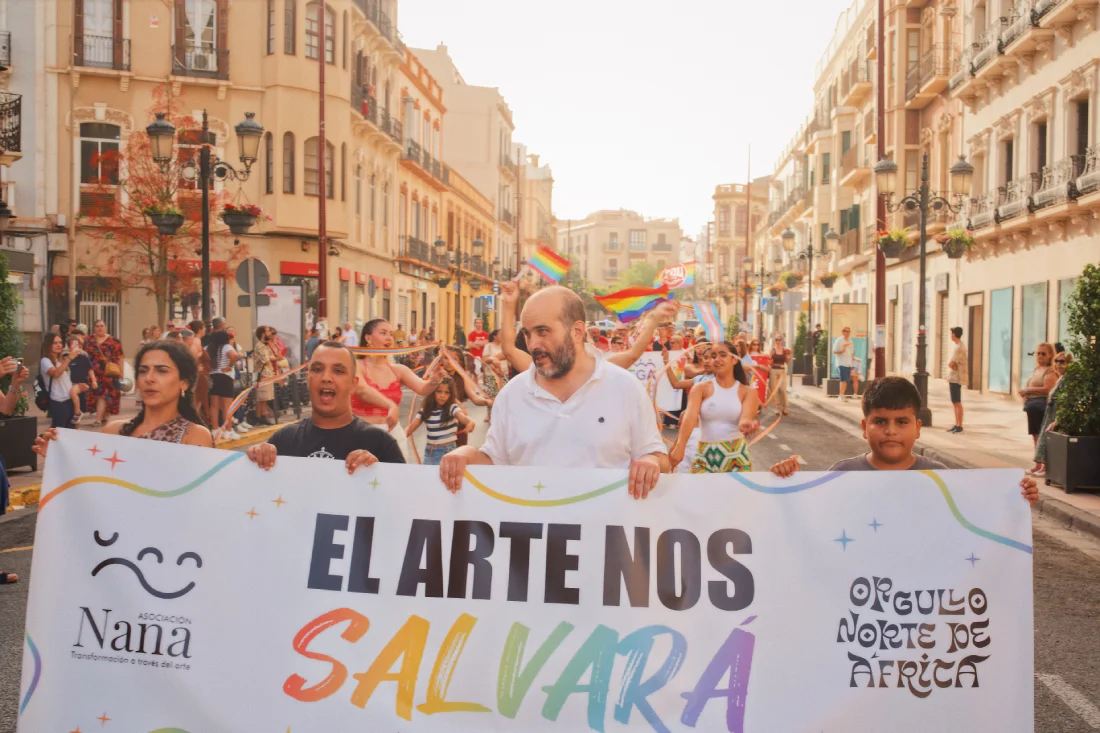
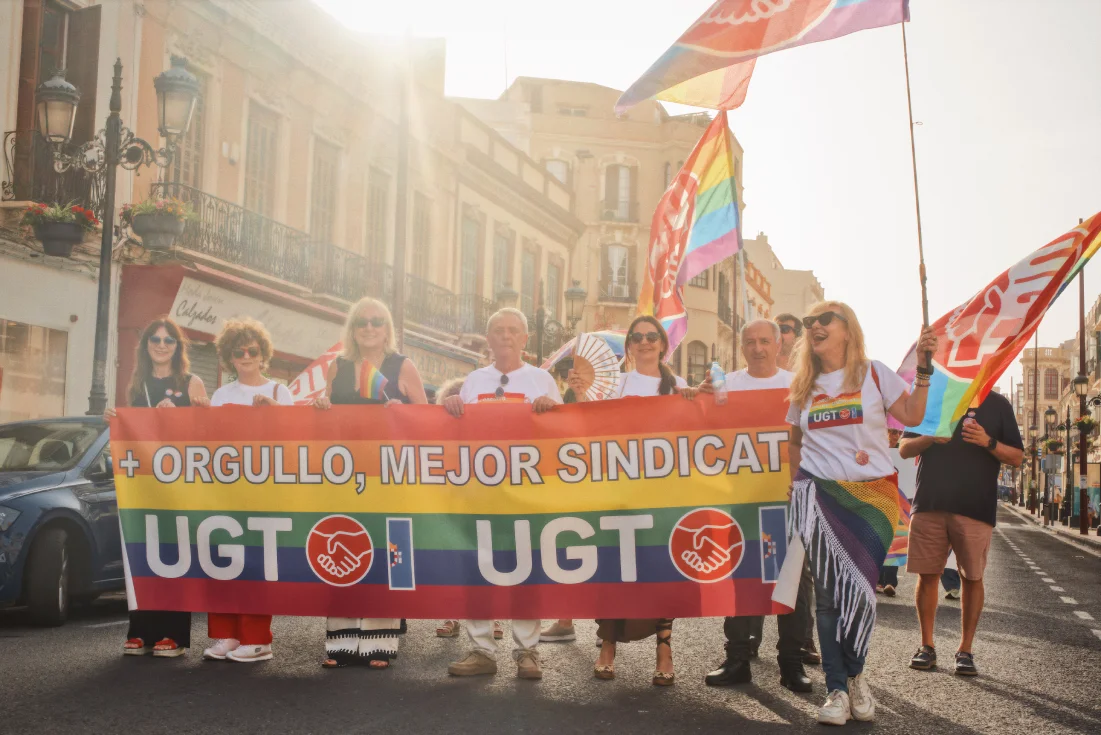
Public institutions also appear. Representatives of the city government attend key moments of the program and stand alongside AMLEGA and other organizers. This gives the event an official layer. Pride is recognized and supported by the city, even when the scale is modest. For us as visitors, this combination of grassroots work and institutional backing defines Orgullo Norte de África. It is a community‑driven Pride that has grown over more than two decades and that holds its ground in a place where visibility cannot be taken for granted.
Reading tip: Travel Stories of Southern Africa >
Our Pride Day in Melilla: march, manifesto, and gala
Pride parade route through Melilla’s city center
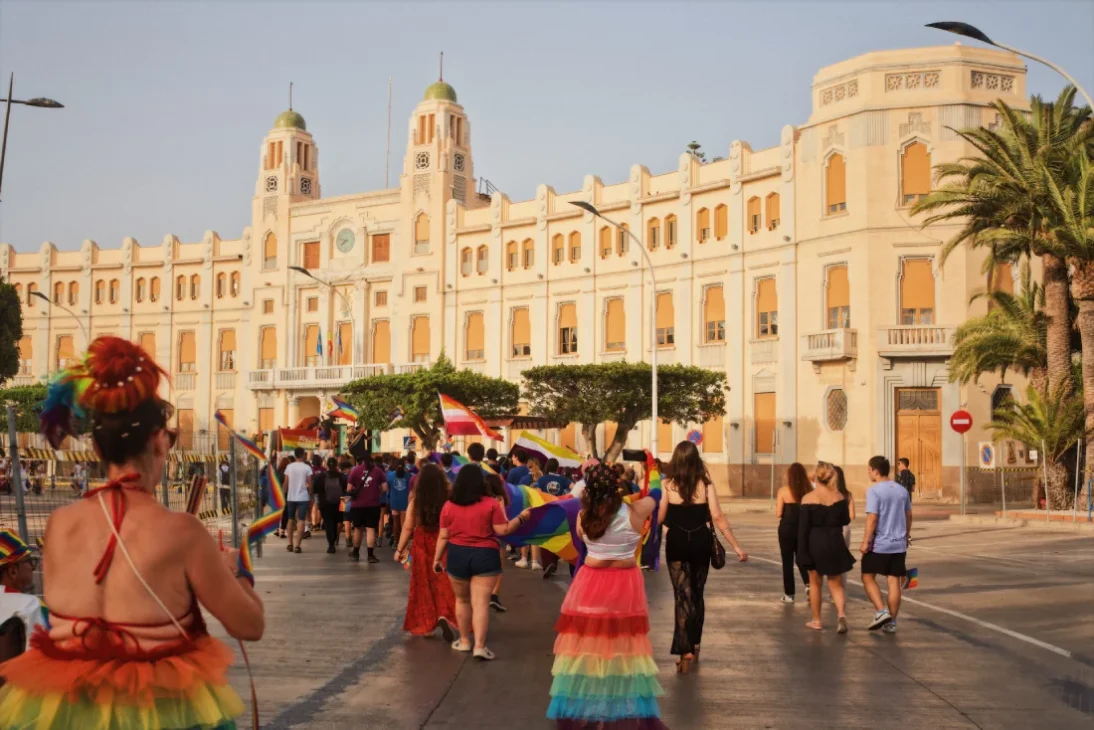
Pride Day in Melilla began under a bright June sun at Plaza Comandante Benítez. By seven in the evening, the square had filled with local LGBTQ+ residents, youth groups, unions, families with children, friends, allies, and politicians. As the march began, the neighborhood’s everyday rhythm fell silent for a moment, and one of Melilla’s main streets became a stage for the rainbow community. Flags, signs, chants, and music turned the evening into a peaceful, powerful, and colorful procession.
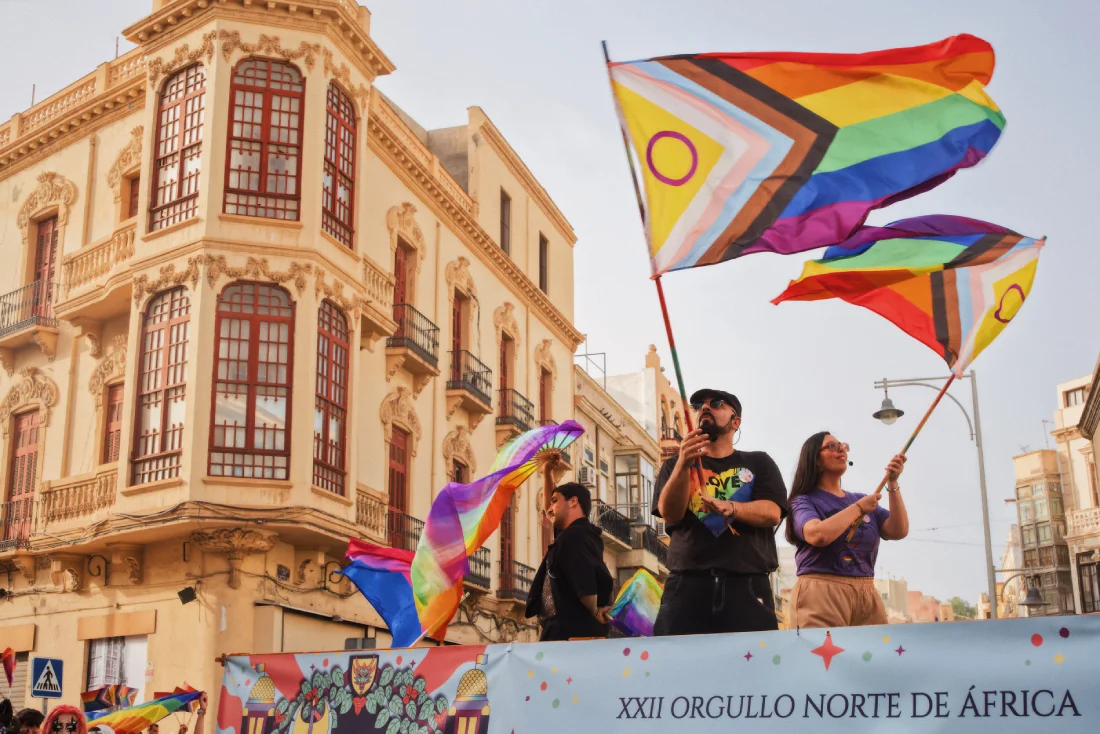
From Plaza Comandante Benítez, the parade followed Avenida del Rey Juan Carlos I. We walked past cafés, shops, and apartment buildings and noticed how many people watched from balconies and windows. Crossing Plaza de España, with its palms and monuments, we felt how the route placed Pride at the center of the city. The number of participants was modest compared to big‑city Prides, but walking this route made it clear that impact is not only about numbers. It is also about where you walk and who is watching as you move through the city.
Reading the Pride manifesto in front of City Hall
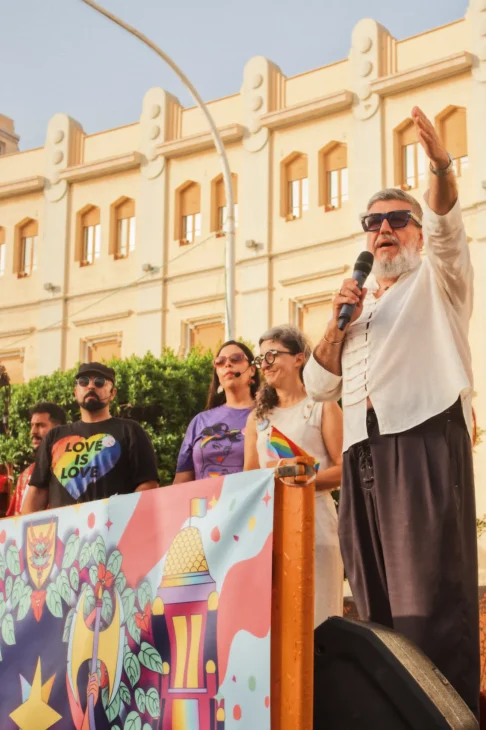
The march ended at City Hall, an Art Deco building that marks the political center of Melilla. In front of its facade, speakers and organizers read the Pride manifesto. They spoke about visibility, safety, mental health, discrimination, and the importance of continuing to show up in the face of silence and fear. These themes are familiar from many Pride events, but hearing them in a small Spanish city on African soil, at an external border of the European Union, gave them a different weight.
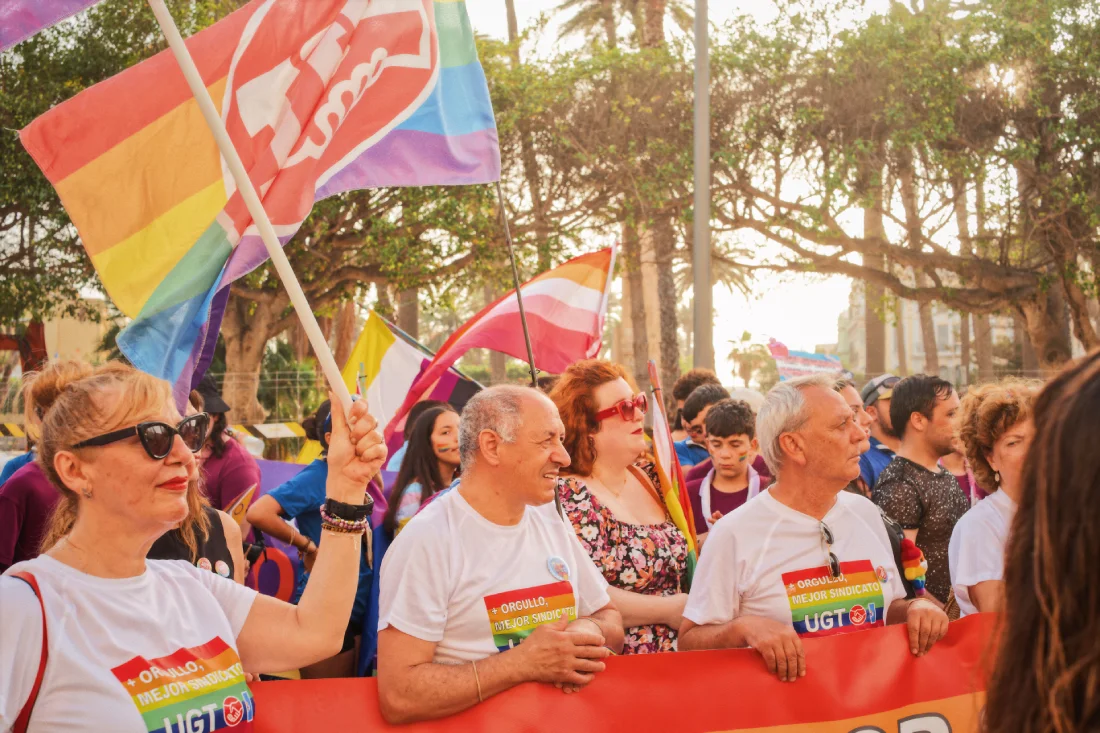
While we listened, we looked around the square. Some people stood directly in front of the speakers. Others remained farther back, near entrances and stairways, or watched from nearby windows. We thought about the teenager quietly questioning who they are, the person who has never met another LGBTQ+ person, and the individual who still believes that they are the only one. For them, the manifesto and the gathering in front of City Hall can be a strong sign that the city contains more than they had imagined and that there is a community they can one day be part of.
Reading tip: Karl’s coming-out story in Eastern Germany
Pride gala at Parque Hernández: drag, music, and a warm night
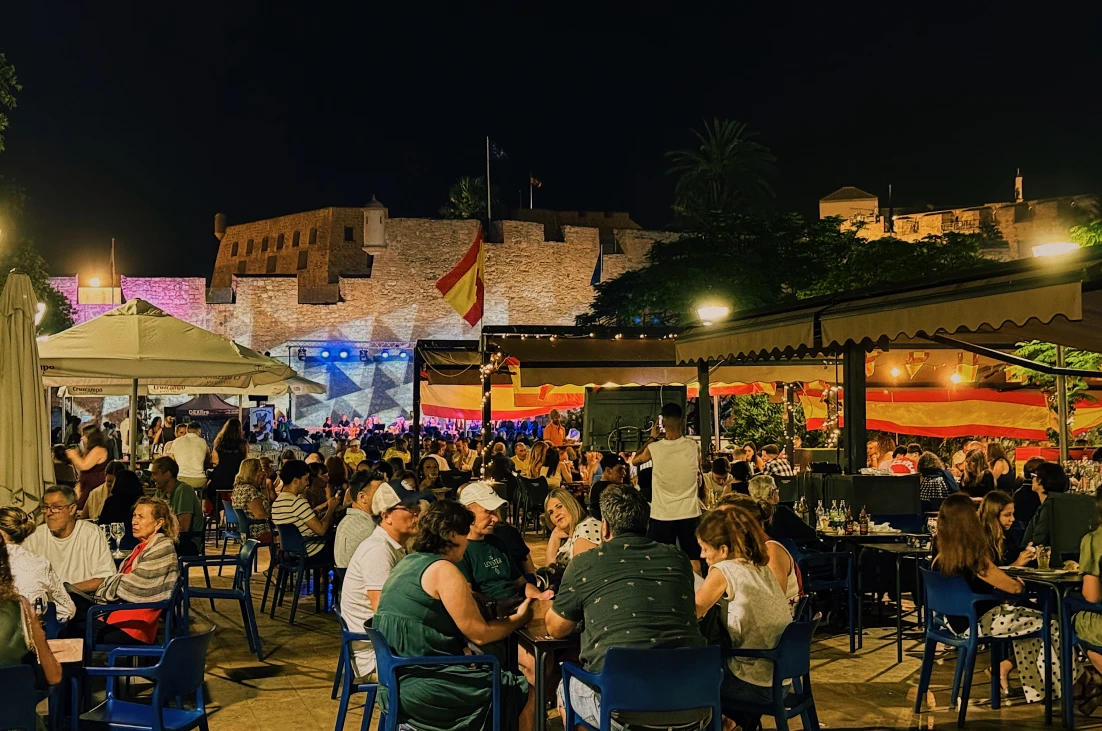
Later in the evening, Pride moved to Parque Hernández and Plaza de las Culturas for the gala. The mood shifted from march to celebration. Families and friends gathered under the trees, children played between groups of adults, and a small stage stood at the center of the park. Warm air from the sea and the city wrapped around the crowd as the performances began and the lights came on.
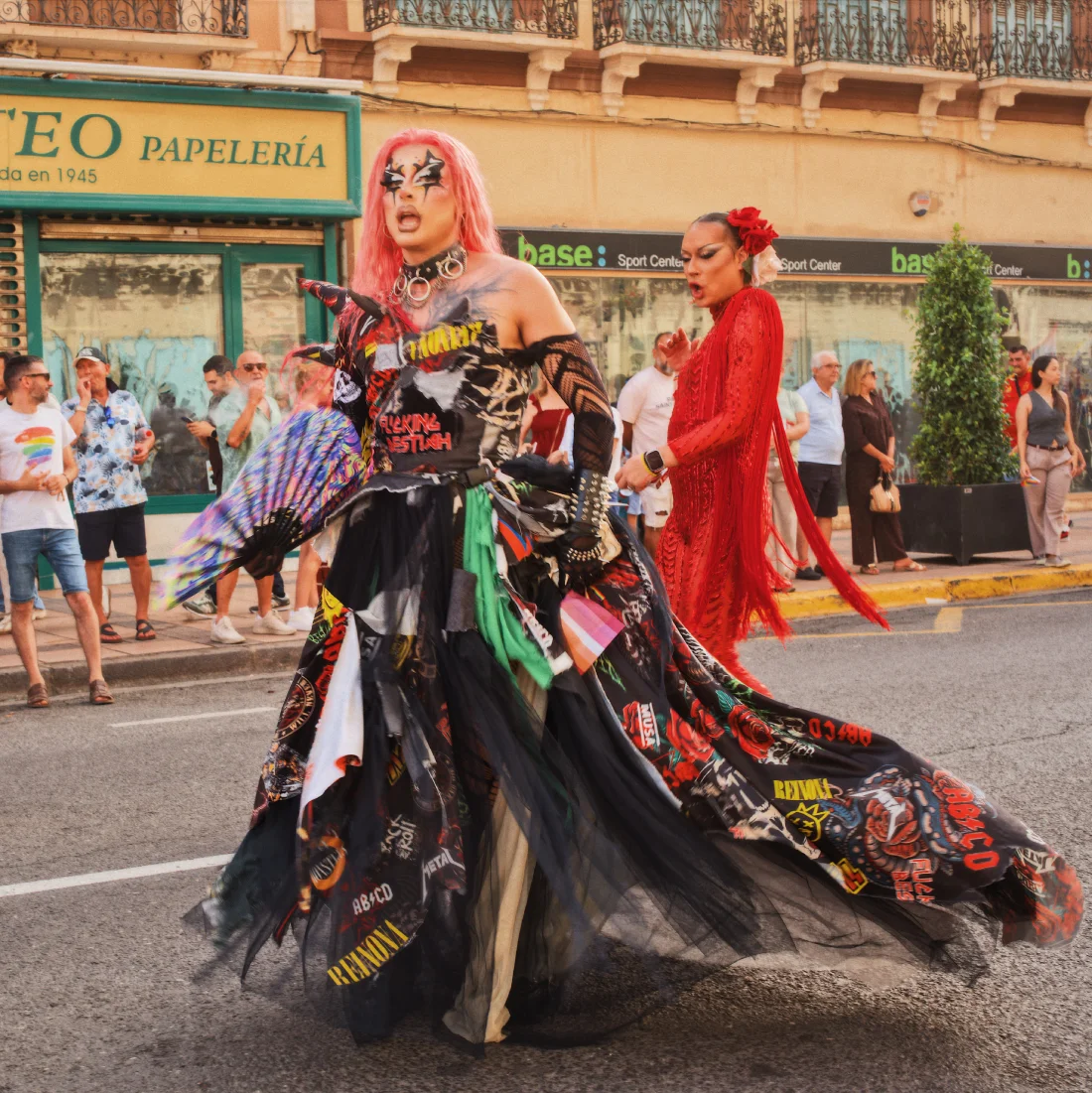
Roma Von Cis brought drag glamour, humor, and emotion and connected quickly with the audience. Bestiah added intensity and edge with a performance that felt larger than the space itself. Jason Jay, the white stilt walker visible in many of our photos, became a bright figure against the night sky with his fire performances as he moved along the stage. Raquelita La Torbe, in red glitter and flamenco‑inspired styling, added a clear Spanish touch to the show and linked Pride in Melilla to wider Spanish queer culture.
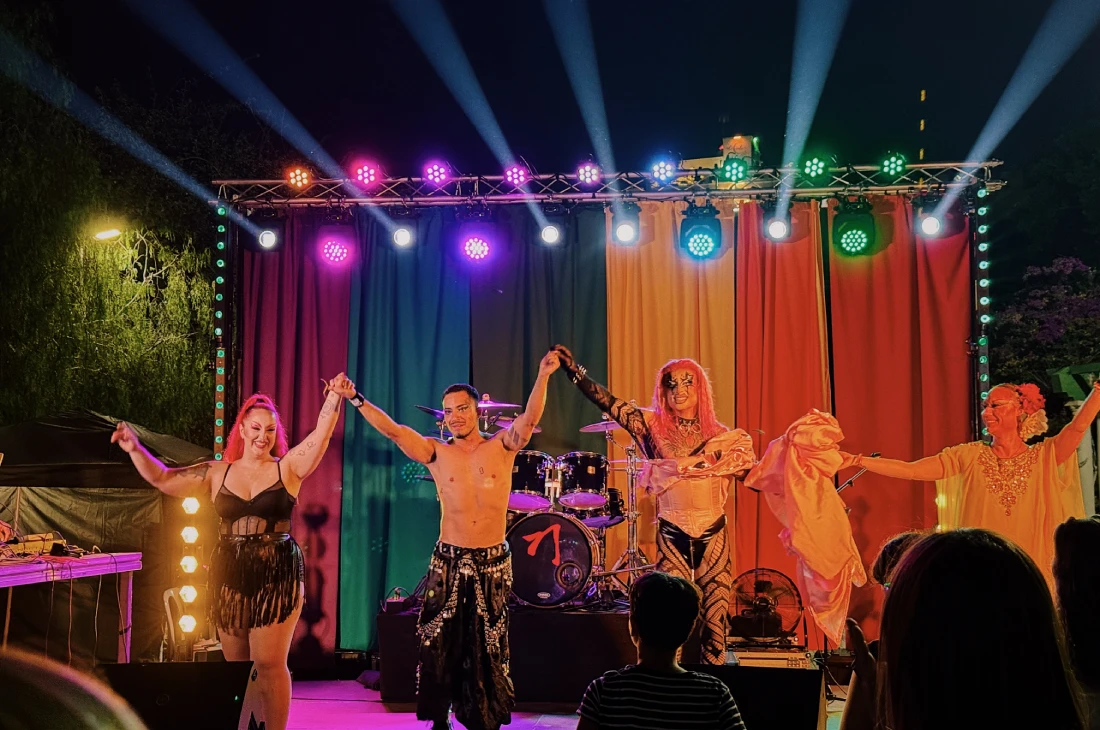
There were no huge screens or oversized sound systems in the park. The gala relied on a simple stage, lights, music, and the presence of queer artists and allies. Standing in Parque Hernández, we felt that this night scene captured the essence of North Africa Pride in Melilla. After marching through the city, people came together to celebrate, to see each other, and to create shared memories in a place where such moments are still rare.
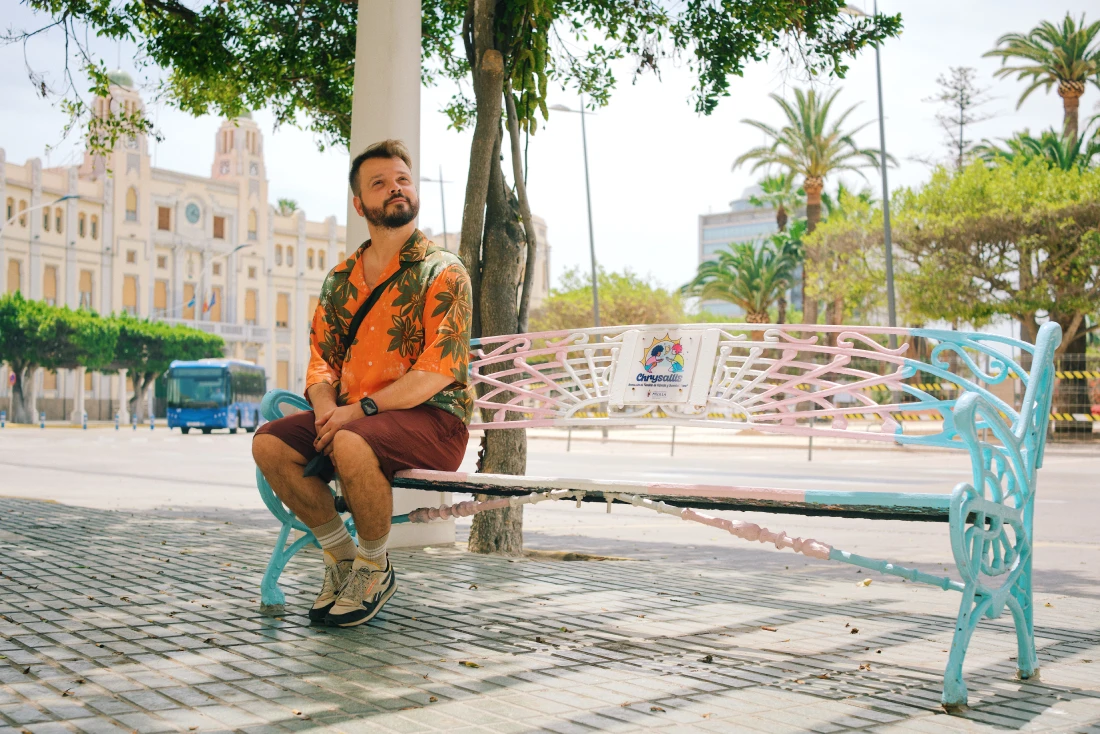
Why small Prides in North Africa matter
Visibility for those who cannot march
Large Pride events often highlight numbers. Organizers and media talk about how many people joined the demonstration, how many stages were built, and how many visitors traveled into the city for the weekend. North Africa Pride in Melilla highlights a different picture. When a few hundred people walk through a city, each flag, each sign, and each person stands out more clearly to both participants and those on the sidelines.
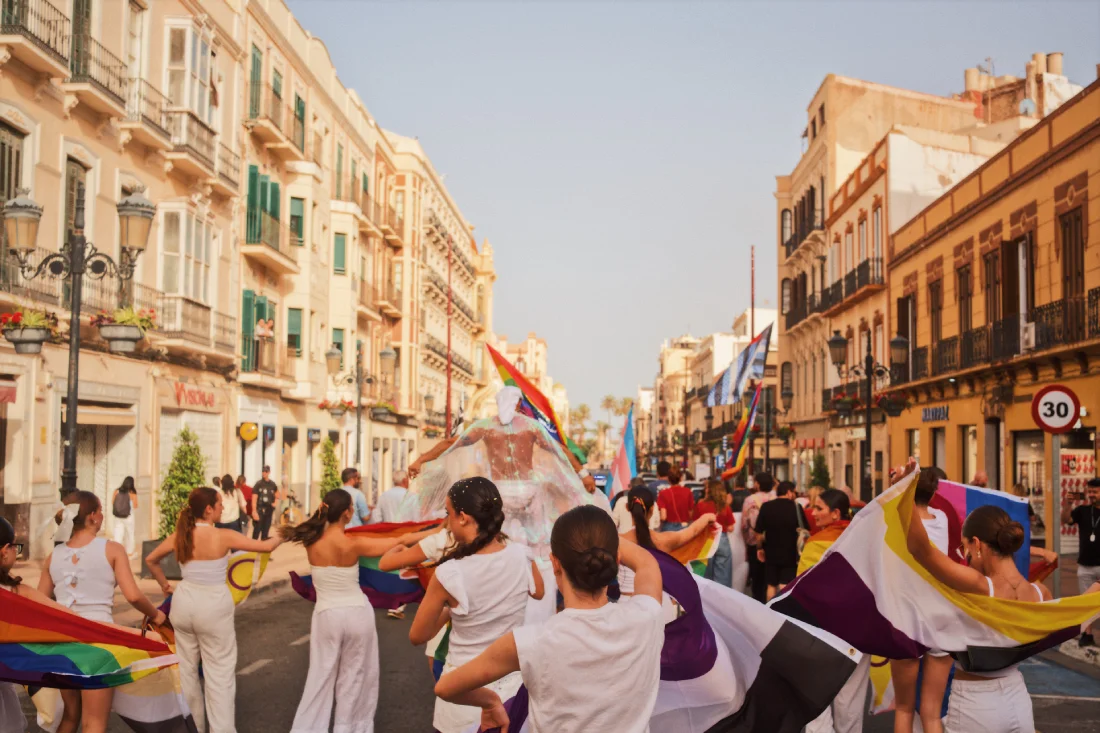
Along the route and at City Hall, we saw faces at windows, people leaning on balconies, teenagers standing near the edge of the square, and neighbors watching from doorways. For them, Pride is proof that others like them exist and dare to appear in public. Visibility in this context is about celebrating those who are already out and confident. Even more so, it reaches people who cannot safely march, who are still working out who they are, or who need a single clear moment to believe they belong. Small Pride events can have a strong impact on these people’s lives because they take place in the very streets where they live.
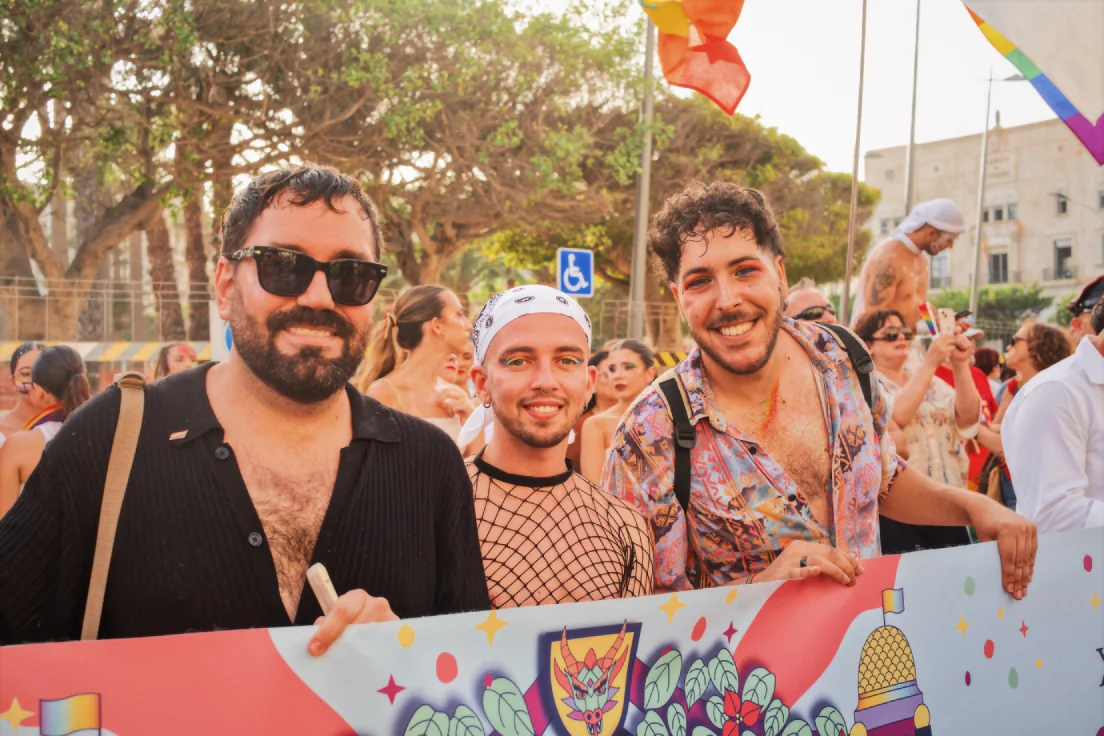
A Pride in a Spanish enclave on African soil
Melilla’s location adds weight to North Africa Pride. The city is not on the Spanish mainland with easy train connections to other queer hubs. It is a small Spanish enclave on African soil with a tightly controlled border facing Morocco. In a wider North African context, where LGBTQ+ rights and visibility are limited or unsafe in many places, a Pride celebration here has a symbolic dimension that goes beyond the city’s boundaries.
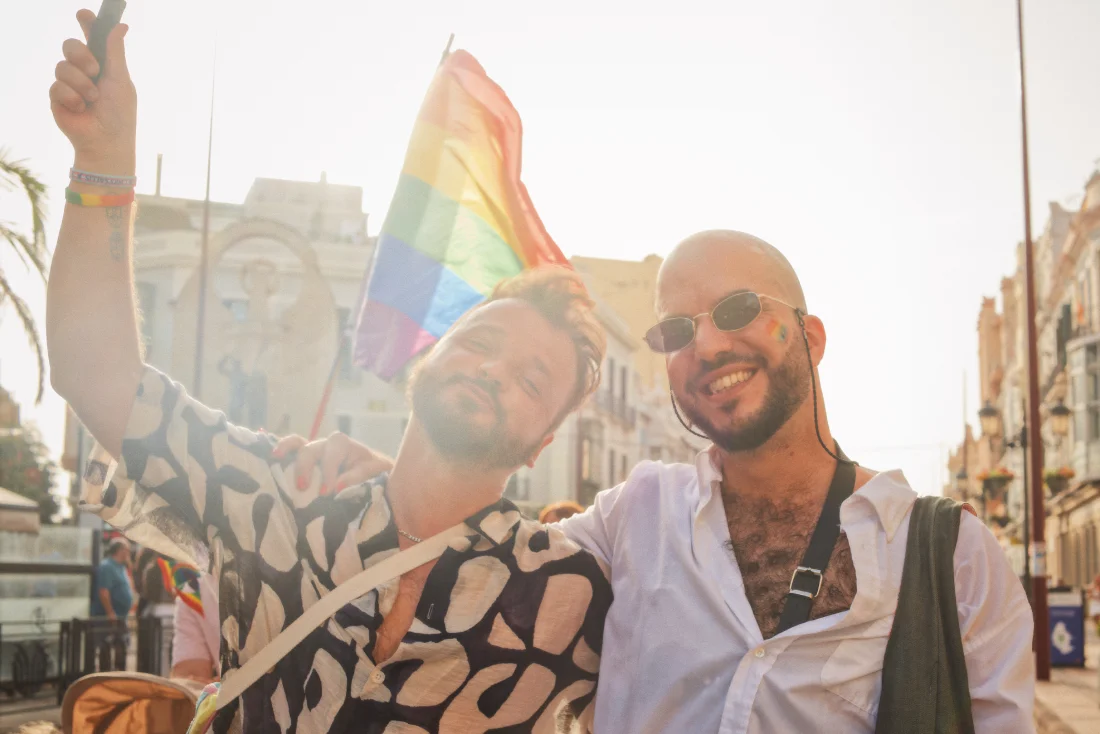
North Africa Pride in Melilla shows that queer communities and allies exist in places many global travelers do not consider when planning Pride trips. The celebration sends a quiet message across borders that diversity, solidarity, and LGBTQ+ life are present in this part of the Mediterranean, even when they are rarely in the spotlight. For us, this awareness is one of the main reasons this Pride matters. It keeps a space open, even a small one, for people in and around this region who need to see that other realities are possible.
Architecture, parks, and the old citadel
Melilla covers only a small area and has fewer than one hundred thousand inhabitants, yet the city holds a surprising amount of architecture and history. It developed from a strongly militarized outpost and tax‑free harbor into a bourgeois center toward the end of the nineteenth and the beginning of the twentieth century, when officers and wealthy families commissioned larger and more decorative homes.
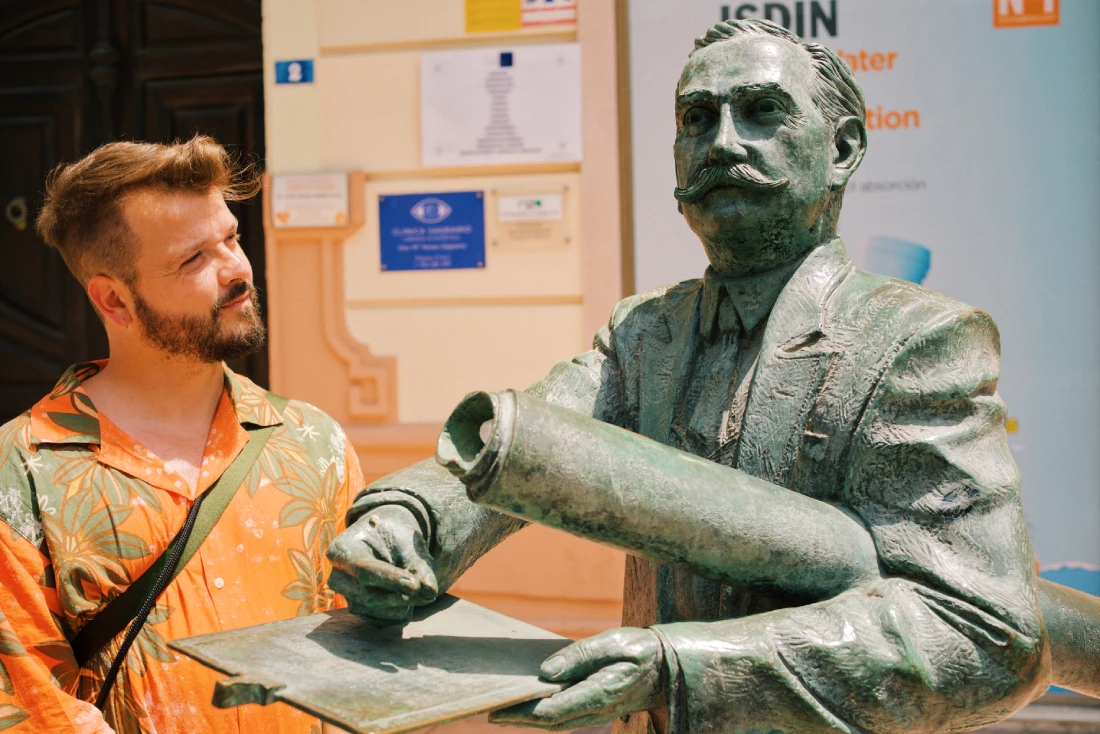
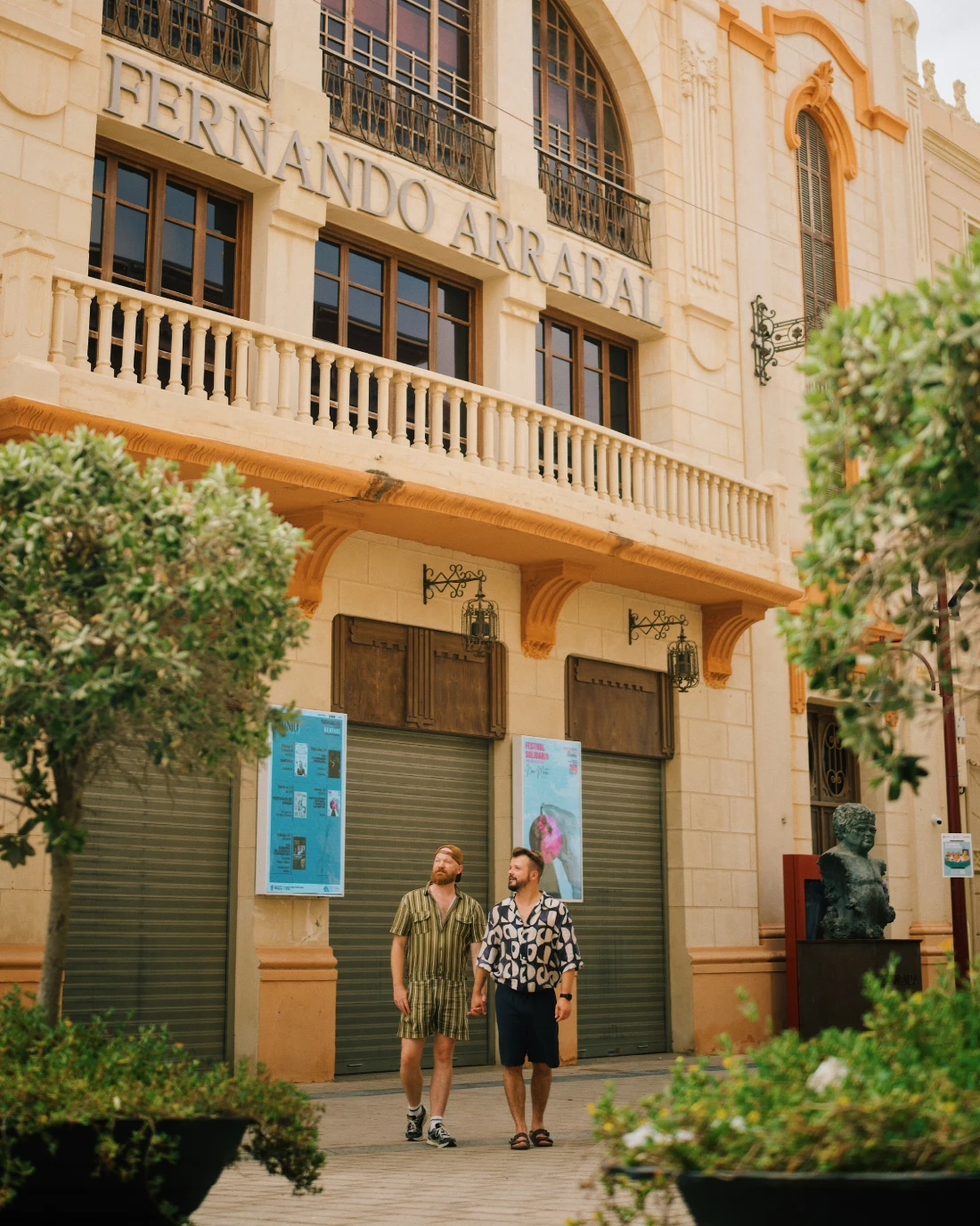
Today, streets in and around the center are lined with early twentieth‑century facades that recall elements of Catalan modernism, with curved balconies, floral details, and colorful tiles. Much of this built landscape is associated with Enrique Nieto, the architect whose work is found throughout Melilla. His projects range from residential buildings to public structures, including the city hall, a striking Art Deco landmark from the 1930s.
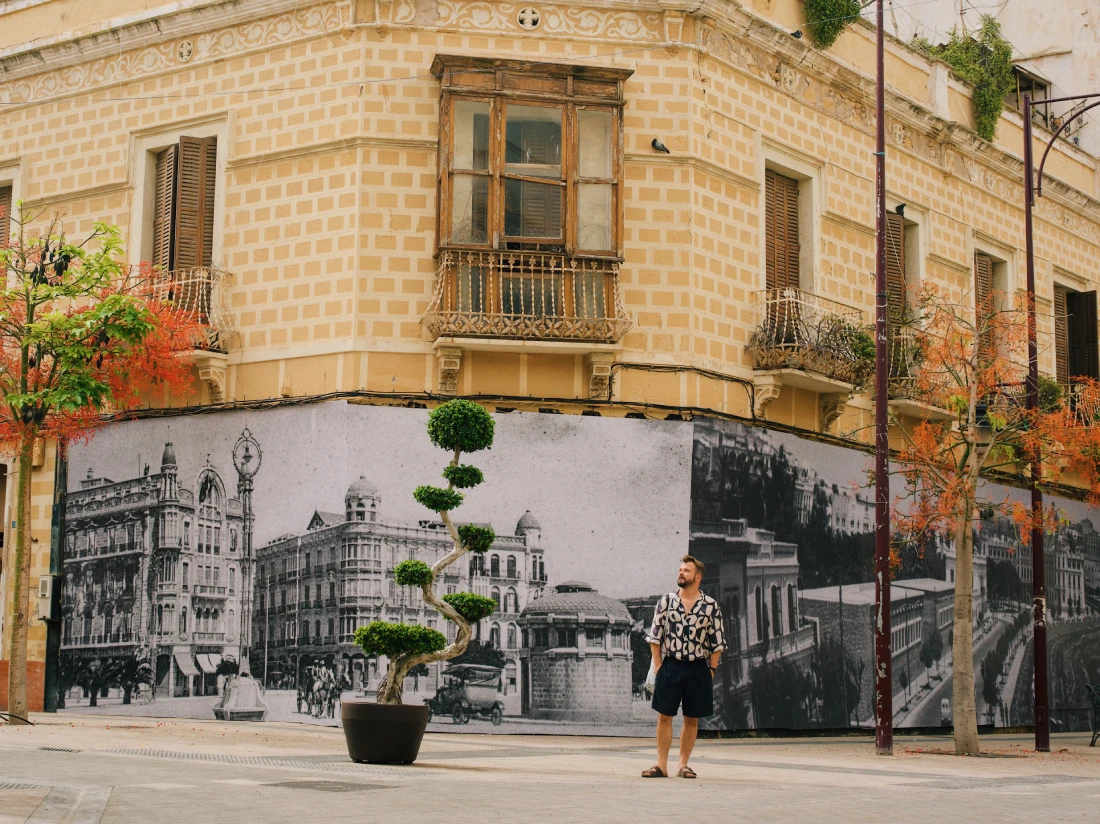
So much to see: The modernism buildings in Melilla © Coupleofmen.com 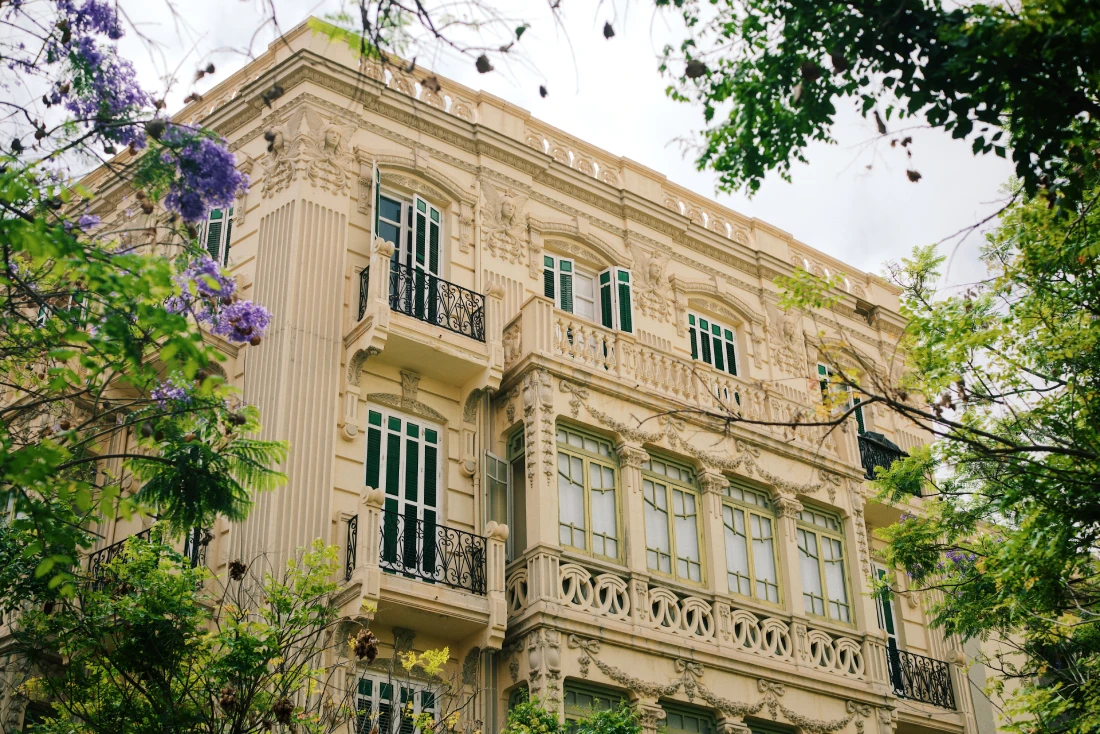
A mix of Modernism and Art Nouveau: Malilla’s architecture is a stunning © Coupleofmen.com 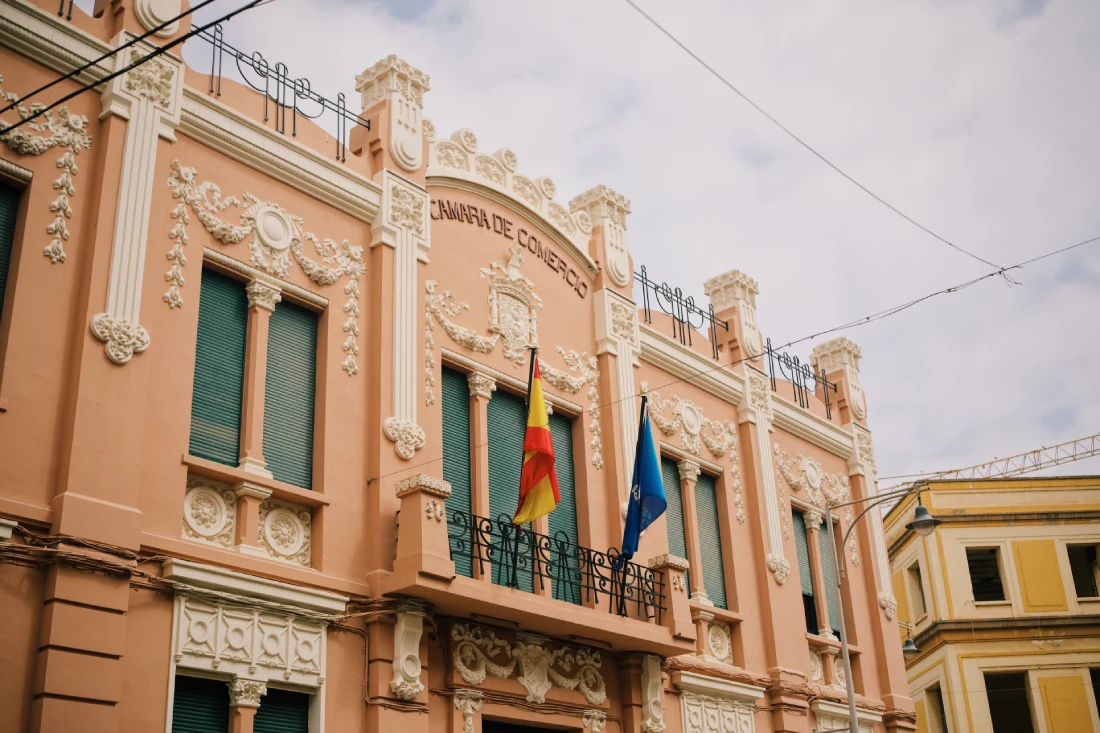
Beautiful facade of the building Camara de Comercio © Coupleofmen.com 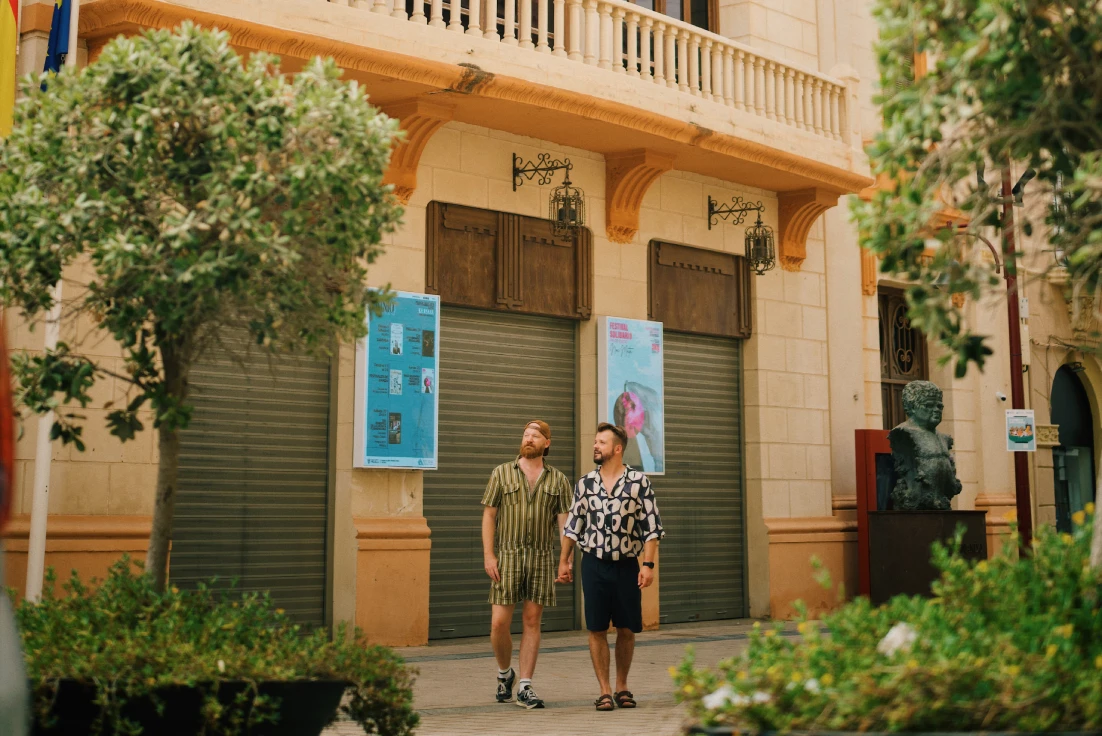
Travel moment in front of the beautiful building of Teatro Kursaal – Fernando Arrabal 1930 © Coupleofmen.com 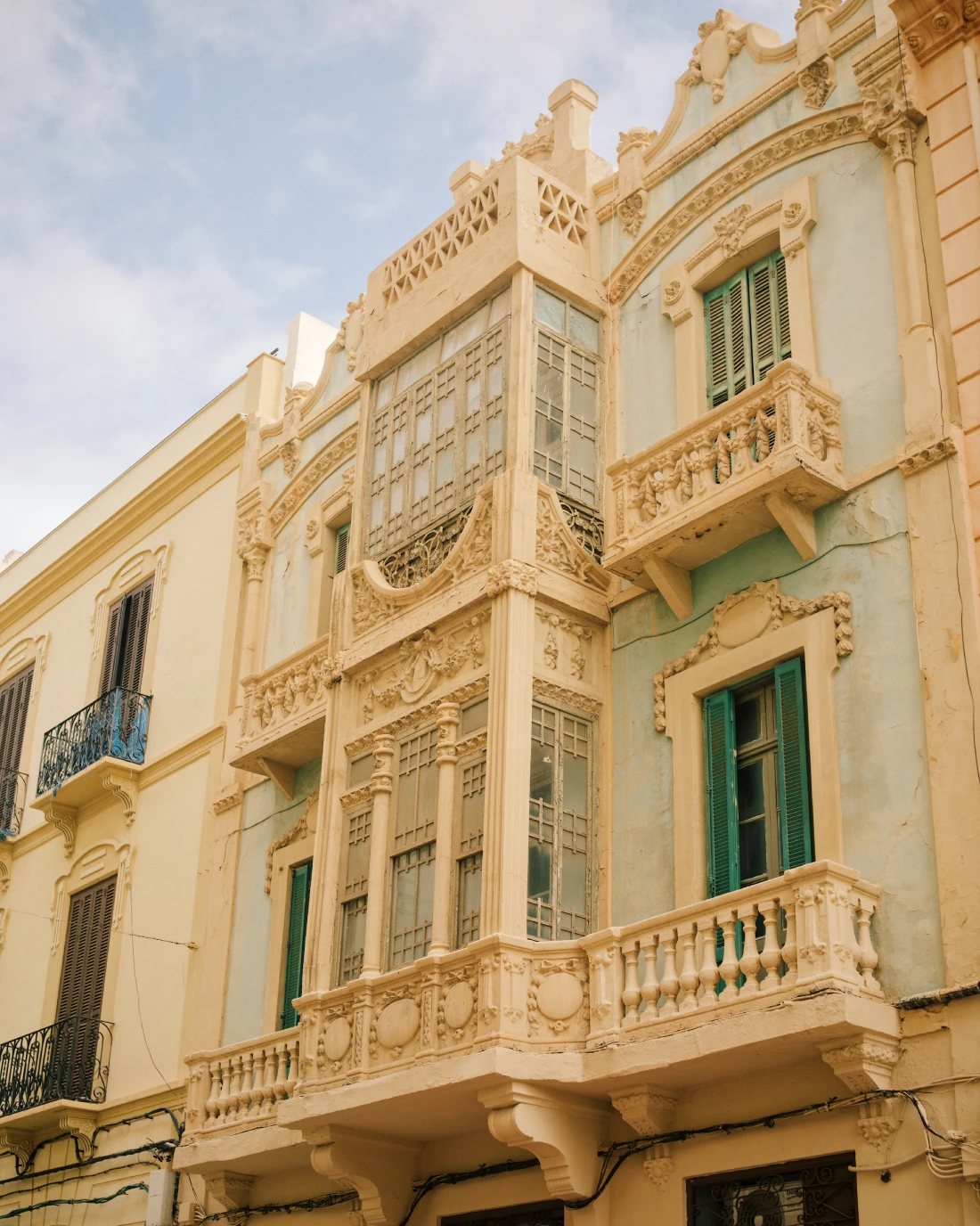
Impressive Modernism house facades © Coupleofmen.com 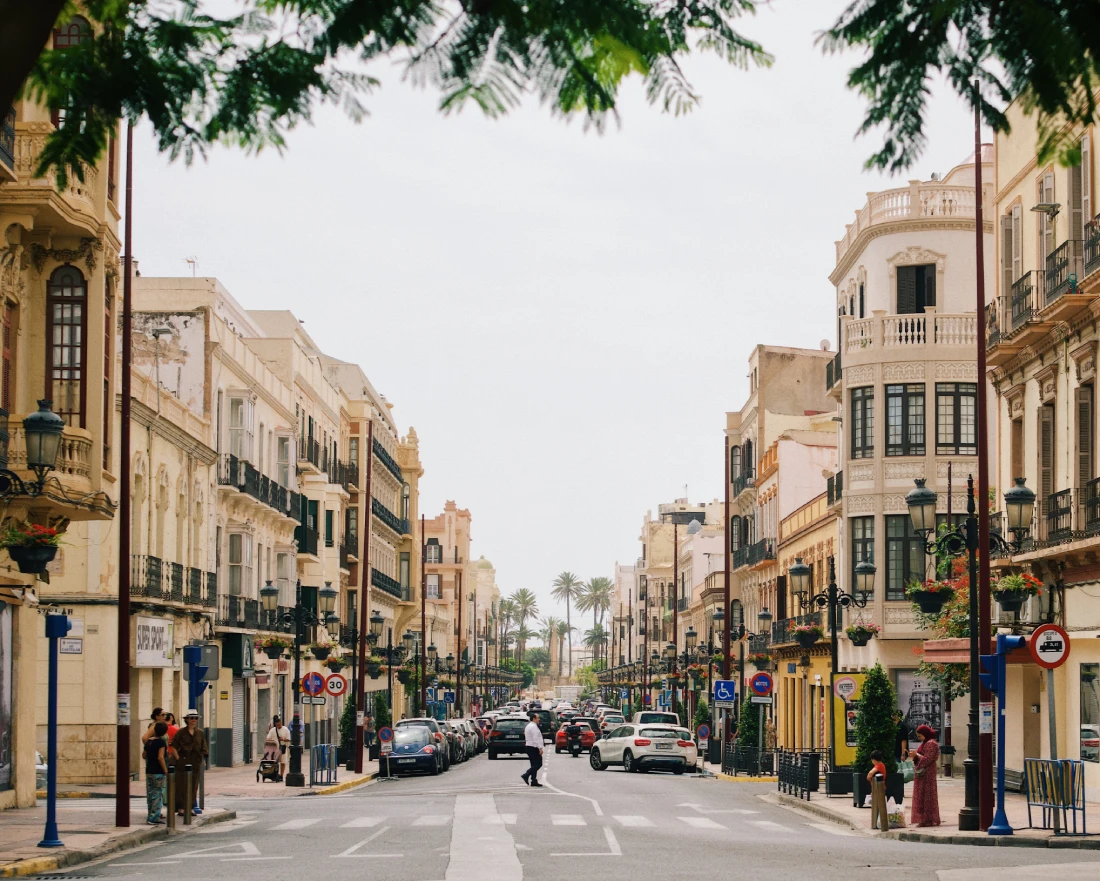
Avenida del Rey Juan Carlos I—one of Melilla’s main streets © Coupleofmen.com
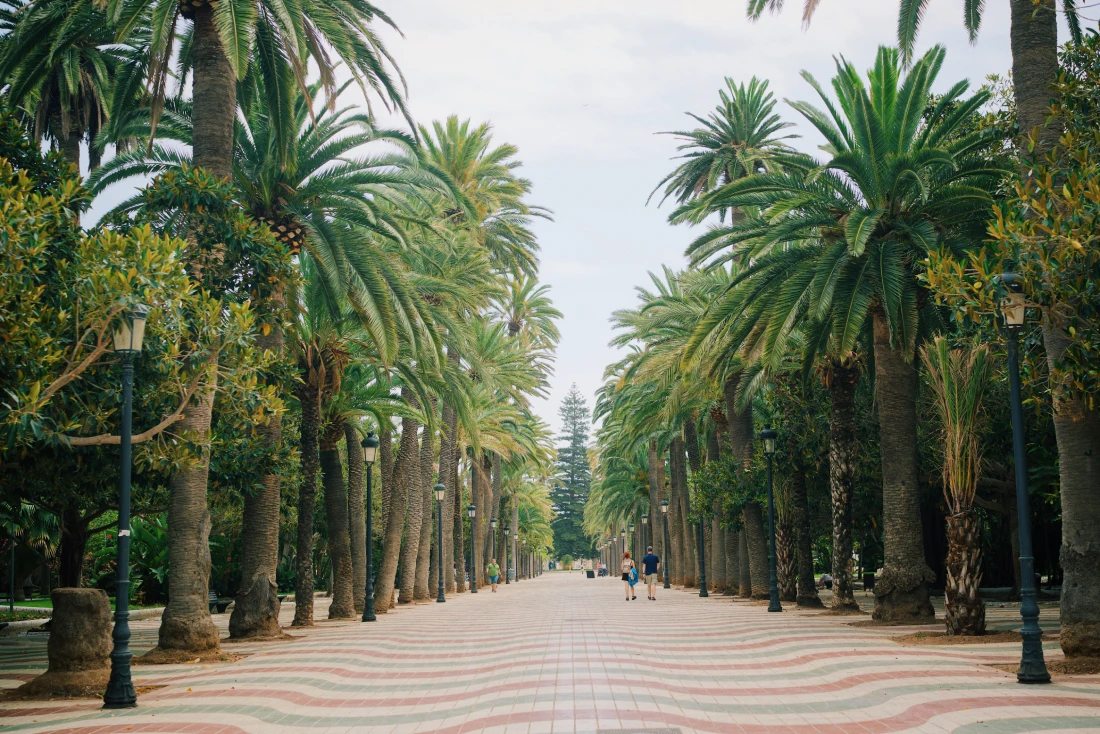
Parks and the beach added another dimension to our stay. Parque Hernández and other green spaces provided shade and quiet corners. The beach offered space to step away from the city, and we had the opportunity to take a refreshing dip in the Mediterranean Sea between Pride activities and city walks. These spots became important pauses in the North African heat.
Advertisement
Order our book now!
The perfect present to inspire (German-speaking) LGBTQ+ travelers and their allies to travel the world open-minded, respectfully, and with a happy heart.
Order our book online or purchase it in bookstores in Germany, Austria, and Switzerland.
The citadel and Melilla’s layered history
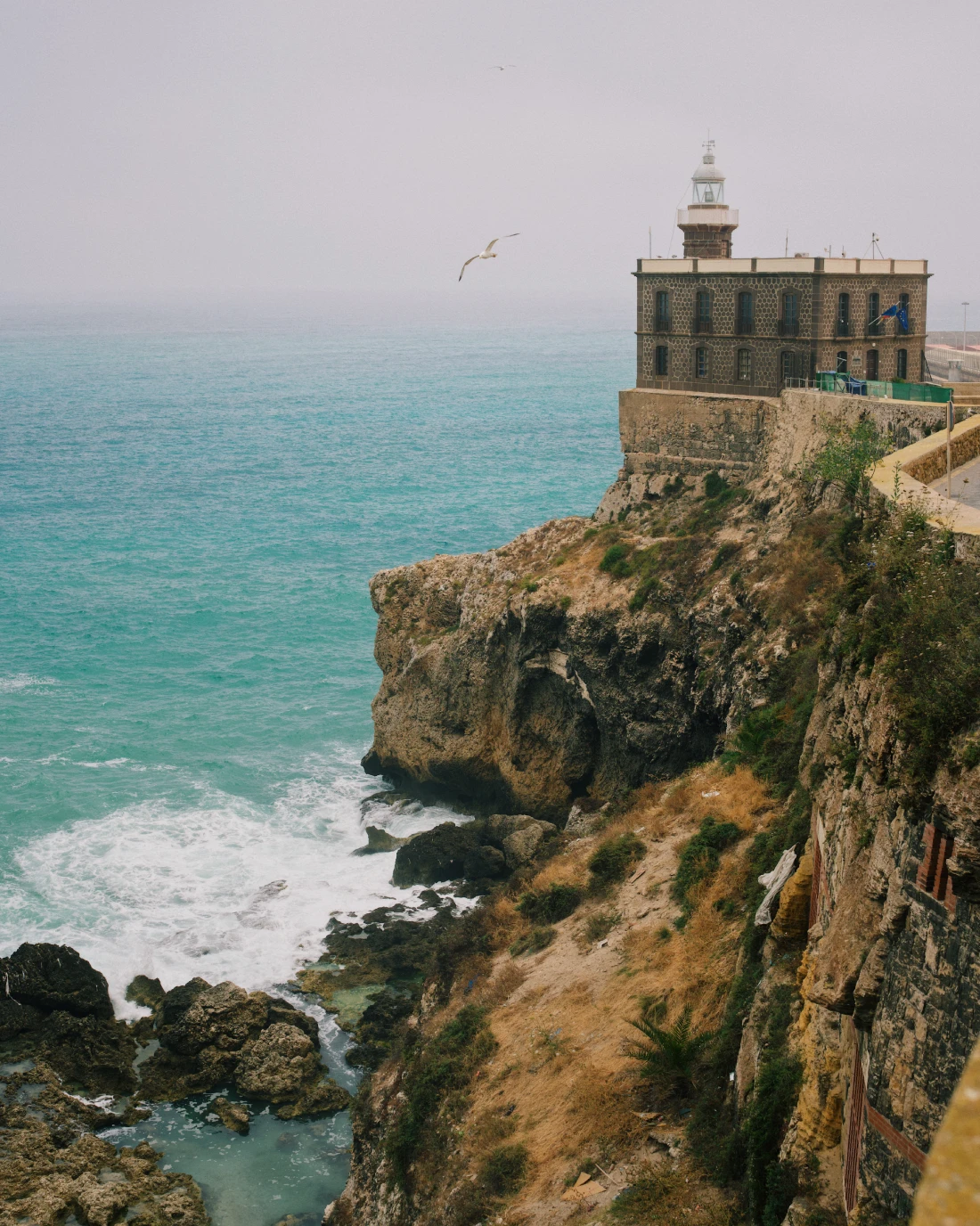
Above the newer quarters, the old citadel, known as Melilla la Vieja, looks out over the harbor and the sea. Its narrow streets and stone walls hold most of the city’s museums, many of which are free to visit. While walking through the citadel, we found it easier to connect the present‑day Pride route to earlier layers of power, trade, and conflict that shaped this small place.
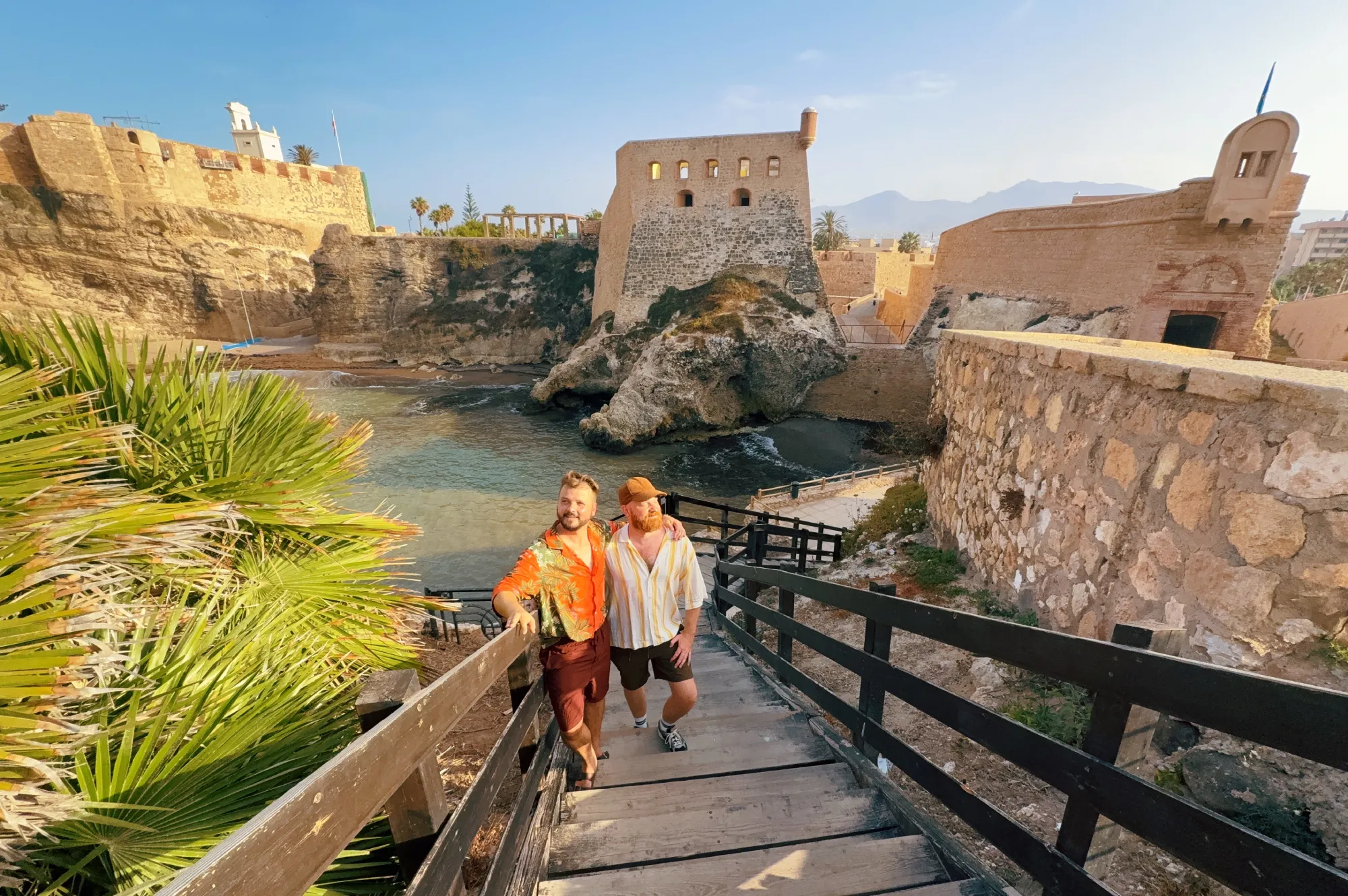
Long before modernist facades and the city’s economic advantages, Melilla’s position on the Mediterranean made it a point of contact and control. Over the centuries, different powers used this rocky cliff as a foothold: traders, empires, and armies saw value in a fortified harbor facing North Africa. In the late fifteenth century, Spanish forces established lasting control, and the walled citadel above the sea became the heart of Spanish military and administrative life.
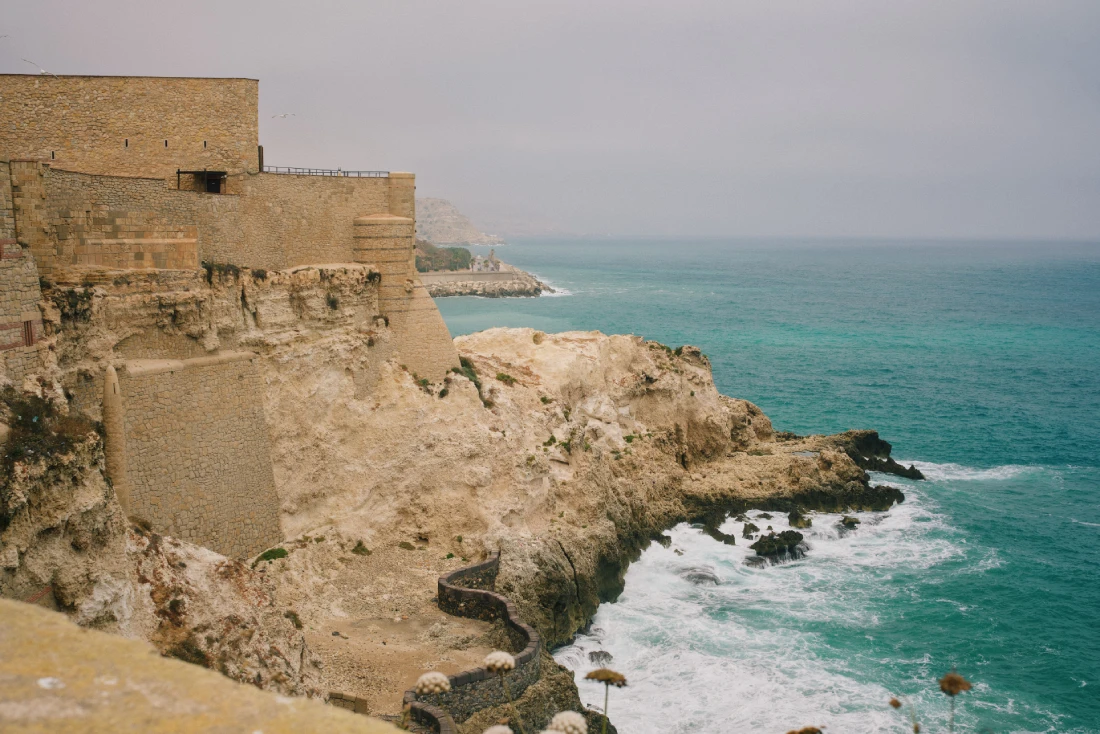
Today, that citadel feels for us like a concentrated history lesson. Its stone walls, tunnels, and viewpoints overlook the harbor, the modern city, and the coastline beyond. Walking through the narrow streets, we moved between bastions, old gates, and small squares that had historically shaped the city and determined who could enter or leave it.
Museums in the citadel: where we walked through history
Most of Melilla’s museums cluster inside Melilla la Vieja, often just a few steps apart. During our visit, we used them as starting points to understand the city beyond the Pride route and to connect the present with the past of power and trade.
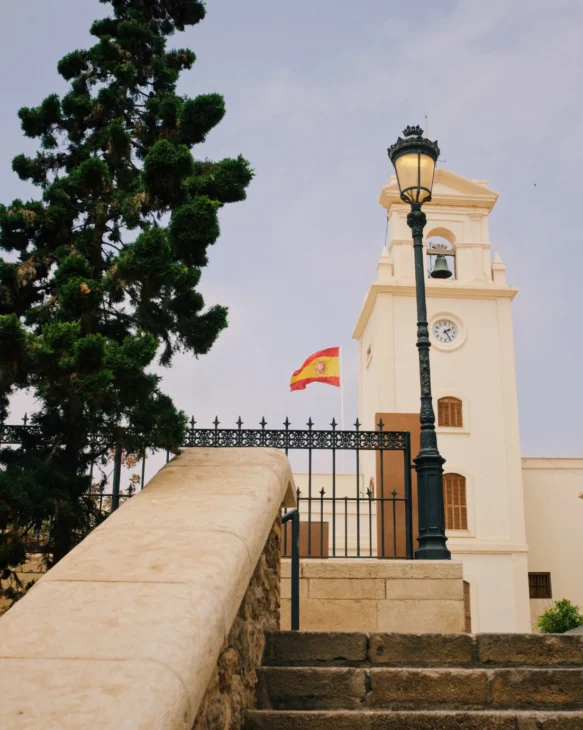
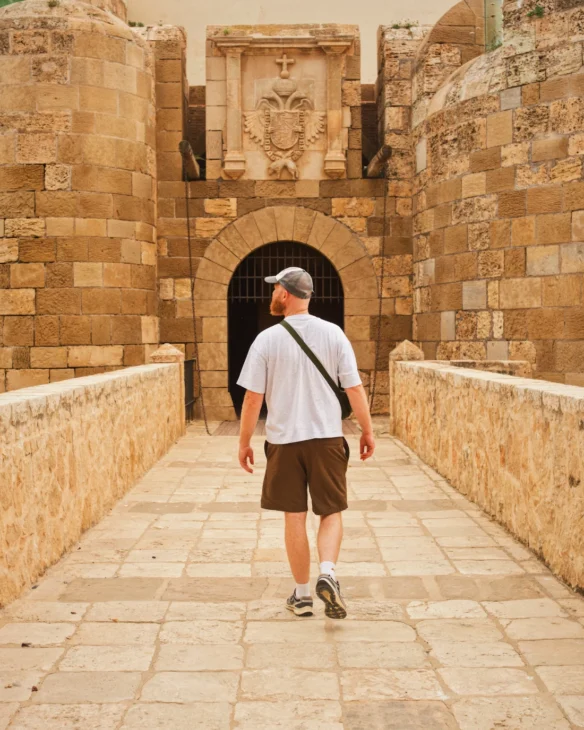
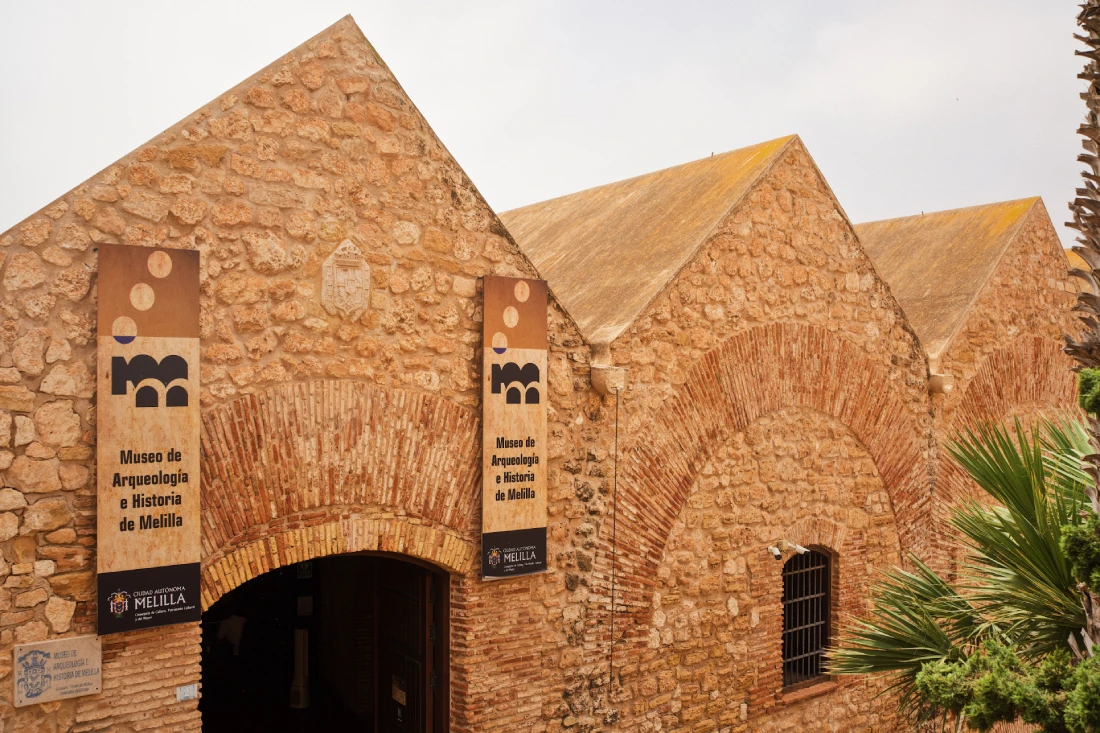
One of the key stops was the Melilla Museum of History, Archaeology, and Ethnography, housed in the restored Almacenes de las Peñuelas, within the citadel’s first fortified enclosure. Here, maps, everyday objects, and archaeological finds trace Melilla’s development from early settlements and a fortified harbor to the modern enclave, including stories of trade, migration, and daily life. You can find an overview of this and other city museums on the official tourism page Museos – Melilla Turismo.
We also visited the Museo Histórico Militar de Melilla (Military History Museum) in the Baluarte de la Concepción, at one of the highest points of Melilla la Vieja. This museum focuses on Melilla’s role as a strategic outpost, with uniforms, weapons, plans, and models showing how the fortress and its defenses were built and used over time. More information is available on the official Defense heritage site Museo Histórico Militar de Melilla. Our special tip: The view from the museum roof is spectacular.
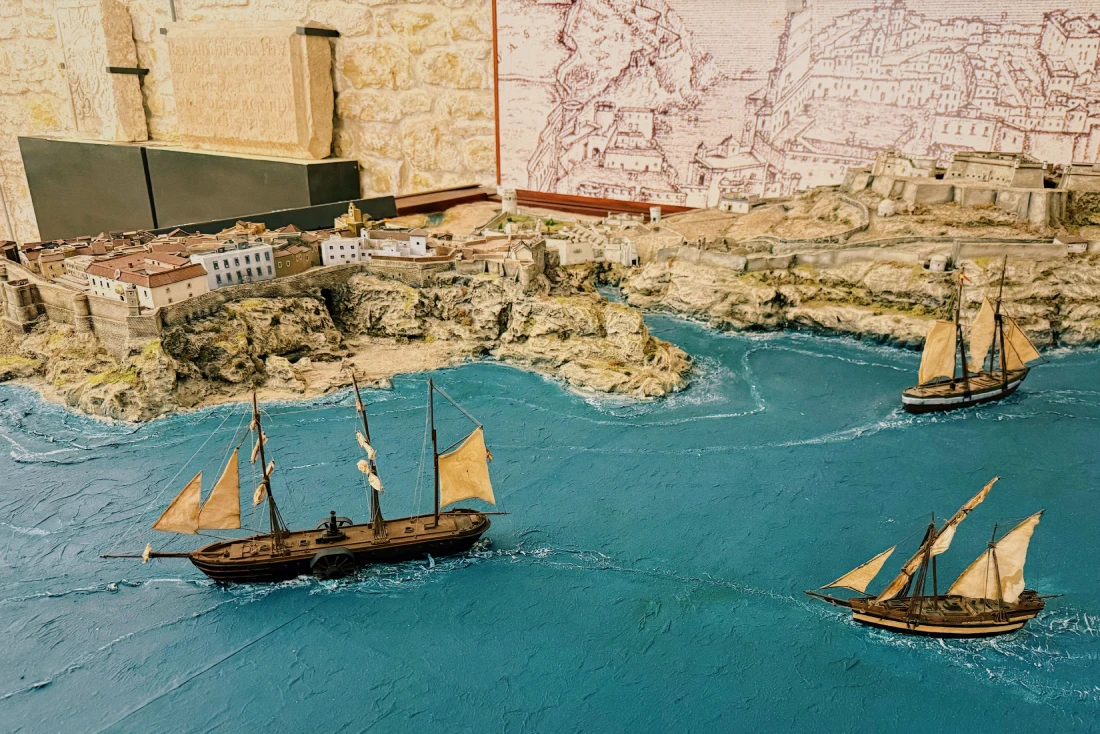
In and around these spaces, smaller archaeology and ethnographic exhibits highlight how different cultures and religions have lived side by side in Melilla. Displays of pottery, tools, clothing, and everyday objects helped us see the city not only as a border point on the map but also as a place shaped by many communities over centuries.
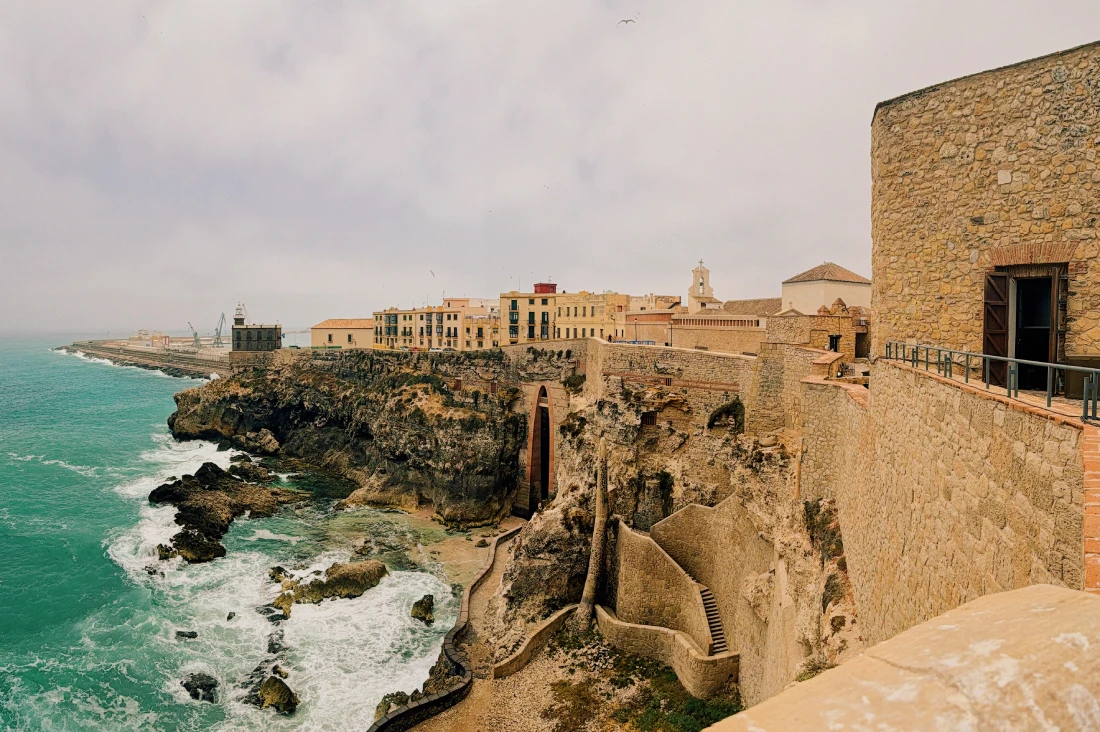
From what we learned, the museums in Melilla la Vieja are free to enter, which made it easy to step inside between walks along the walls and viewpoints. Our goal was to explore the citadel and less about ticking off every exhibit.
Food, vegetarian options, and being creative
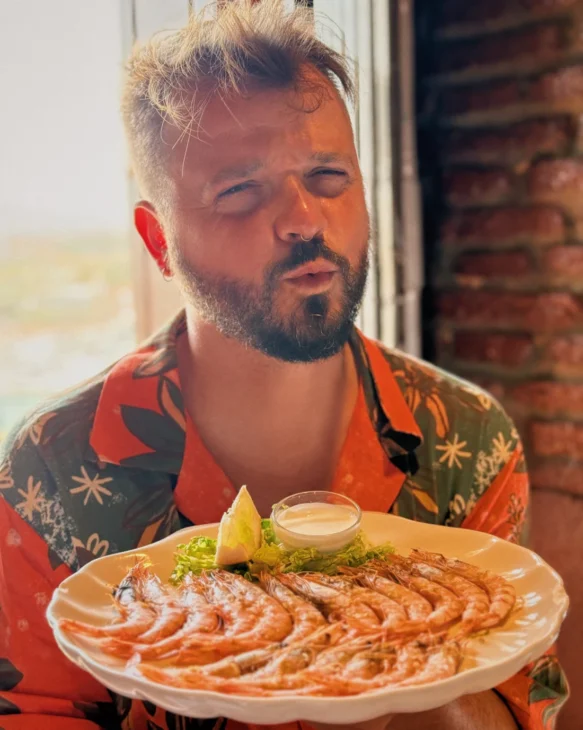
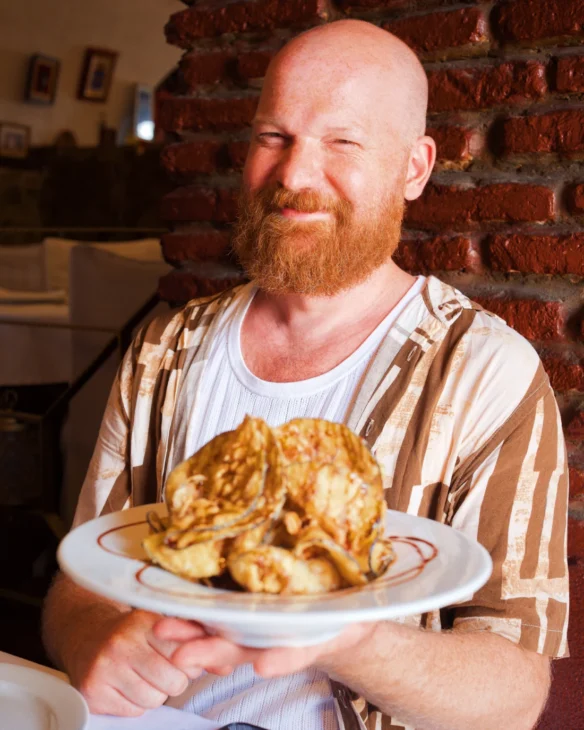
Our time in Melilla was not only shaped by Pride moments but also by everyday experiences. One of them was food. The local dining culture felt very traditional to us. Meat and fish play a central role, and the idea that a proper meal should include meat seemed common. For Daan, who is a vegetarian, this was a clear difference from larger Spanish cities, where plant‑based options are more visible and easier to find.
With some creativity, however, we managed well. We found grilled and fried vegetarian dishes, simple vegetable plates, and tapas that could be ordered without meat. It helped to ask questions, explain preferences, and combine several small dishes instead of expecting a separate vegetarian menu. Melilla will not feel like a dedicated plant‑based food destination, but travelers who are vegetarian or vegan can still eat comfortably if they are flexible and communicate clearly with staff in bars and restaurants.
Restaurant tips:
- Restaurante La Muralla (Spanish, traditional)
- Bar-Restaurante La Brasileña (Spanish, with an outdoor patio)
- Restaurante La Flaca (city life on La Plaza de las Culturas)
- Discoburguer Melilla (good for a late evening burger & sandwich snack)
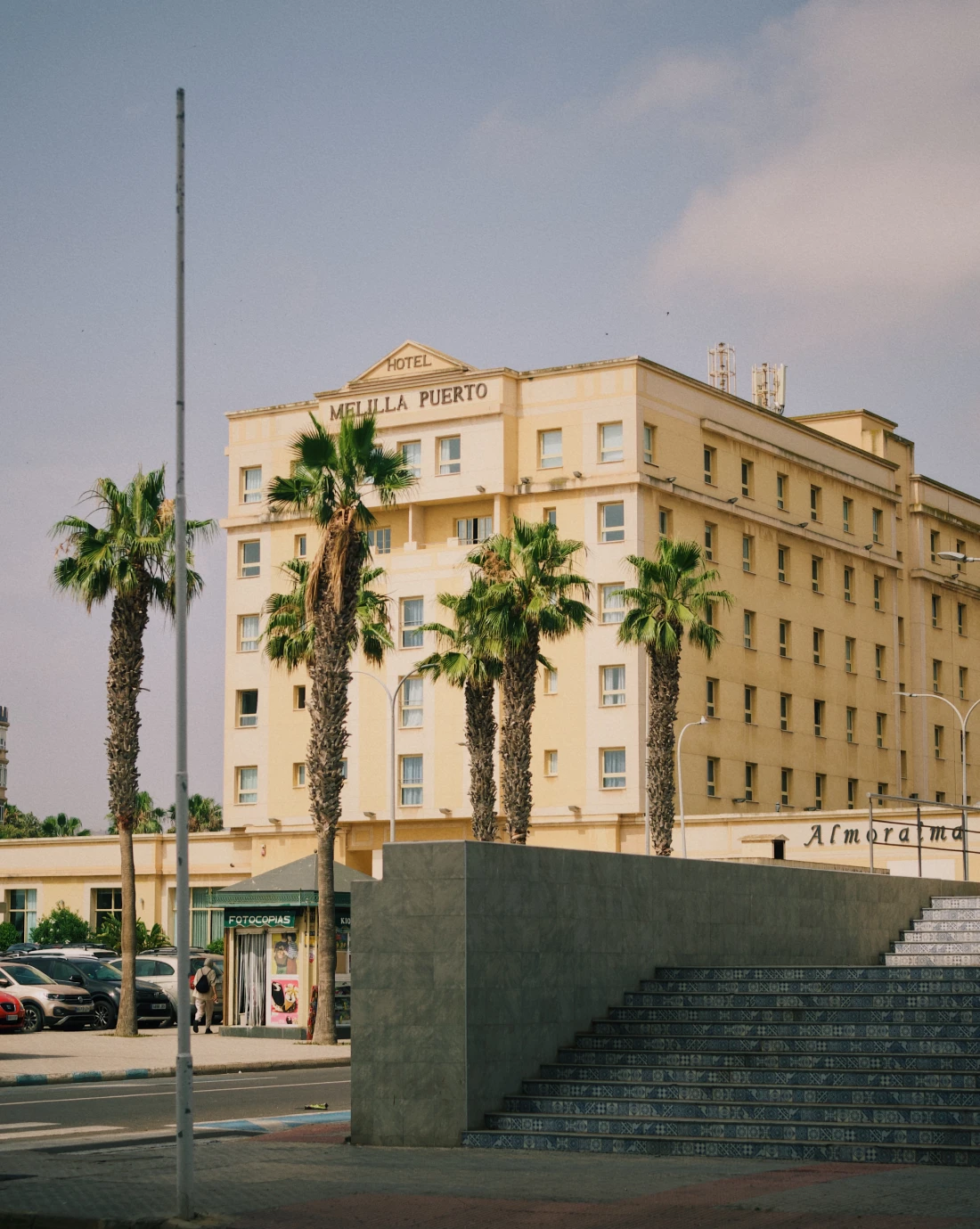
- La Almoraima Tryp (first floor of the Hotel Melilla Puerto)
Getting there and where we stayed
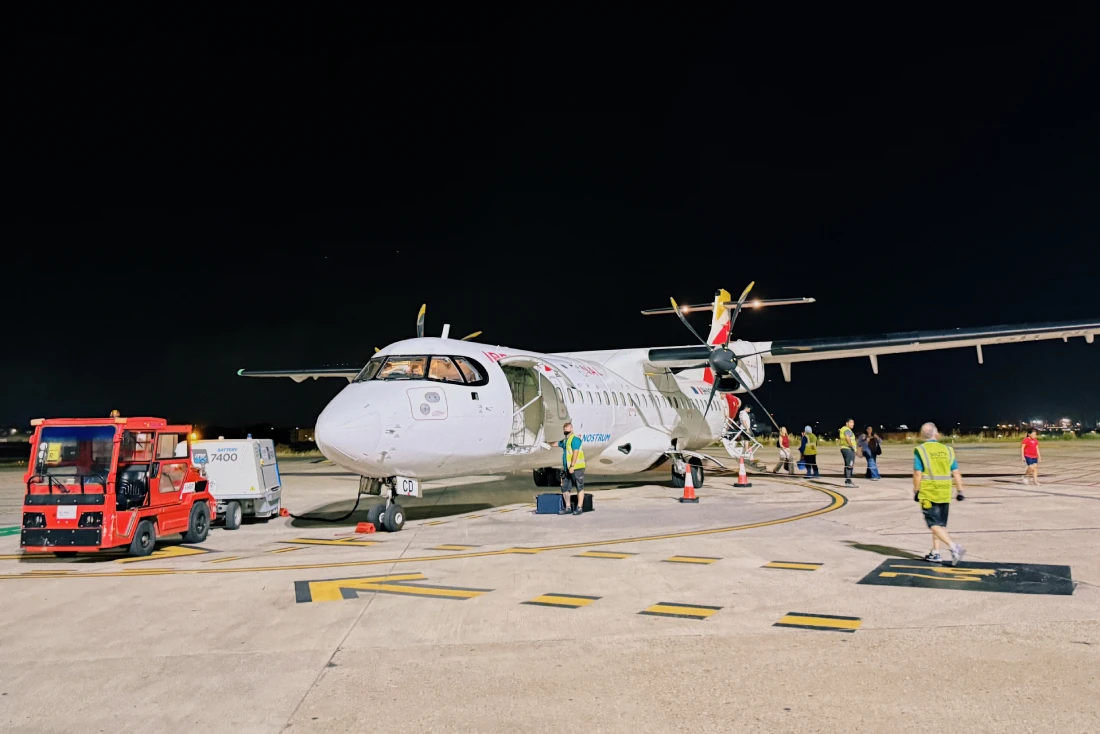
Traveling to Melilla helped us better understand where North Africa Pride takes place. We did not simply change trains to reach another European city. We crossed water and air to arrive in a small enclave on the African continent. From mainland Spain, Melilla can be reached by ferry from ports such as Málaga or Almería or by plane from selected cities such as Madrid, Barcelona, or Málaga, with airline Iberia and its partners. The journey itself makes the border situation tangible and reminds you that you are entering a very specific geographic and political space.
Within the city, several hotels lie in and around the center, close to parks, the beach, and most Pride locations. We stayed at Puerto Melilla Hotel with a view of the shoreline. The property carries Booking.com’s Travel Proud certification and offers a generous breakfast. It gave us a calm base for Pride and for exploring Melilla’s architecture, parks, and the old citadel. Having a quiet hotel by the beach helped us balance the queer event with time to rest, reflect, and process what we had seen.
Affiliate link to booking.com Hotel Puerto Melilla >
North Africa Pride in Melilla: A small Pride with a big message
When we left Melilla, we did not think first of a checklist of sights. We thought about specific moments.
We remembered the small crowd moving through the city center under the June sun, rainbow flags in front of modernist buildings, the Pride manifesto at City Hall, the show at Parque Hernández, and the faces watching from balconies and windows.
Enjoyed this article? Please like it and share it with your friends!
North Africa Pride in Melilla rarely appears on international Pride calendars, but its message is familiar. A few hundred people, including local organizations, youth groups, unions, families, friends, and allies, come together to say that they are present, that their lives have value, and that they deserve respect and protection. That message reaches beyond the march and the gala and speaks to anyone who needs to see that such a space exists.
For us as LGBTQ+ travelers, being part of this Pride was a reminder that queer visibility is not limited to famous destinations. It lives in large parades and in small marches, in big cities and in border towns where communities keep showing up year after year. Wherever you are and whichever Pride you join, whether in major capitals or in places like Melilla, the promise is the same: you belong, you are not alone, and you deserve love, dignity, and safety.
Interested in our LGBTQ+ travels, queer outdoor experiences, ski weeks, or other destinations in the mountains? Then browse our travel guides or send us a message for personal recommendations. You can also follow us on Facebook, Threads, TikTok, YouTube, Pinterest, and Instagram. We would love to connect with you!