
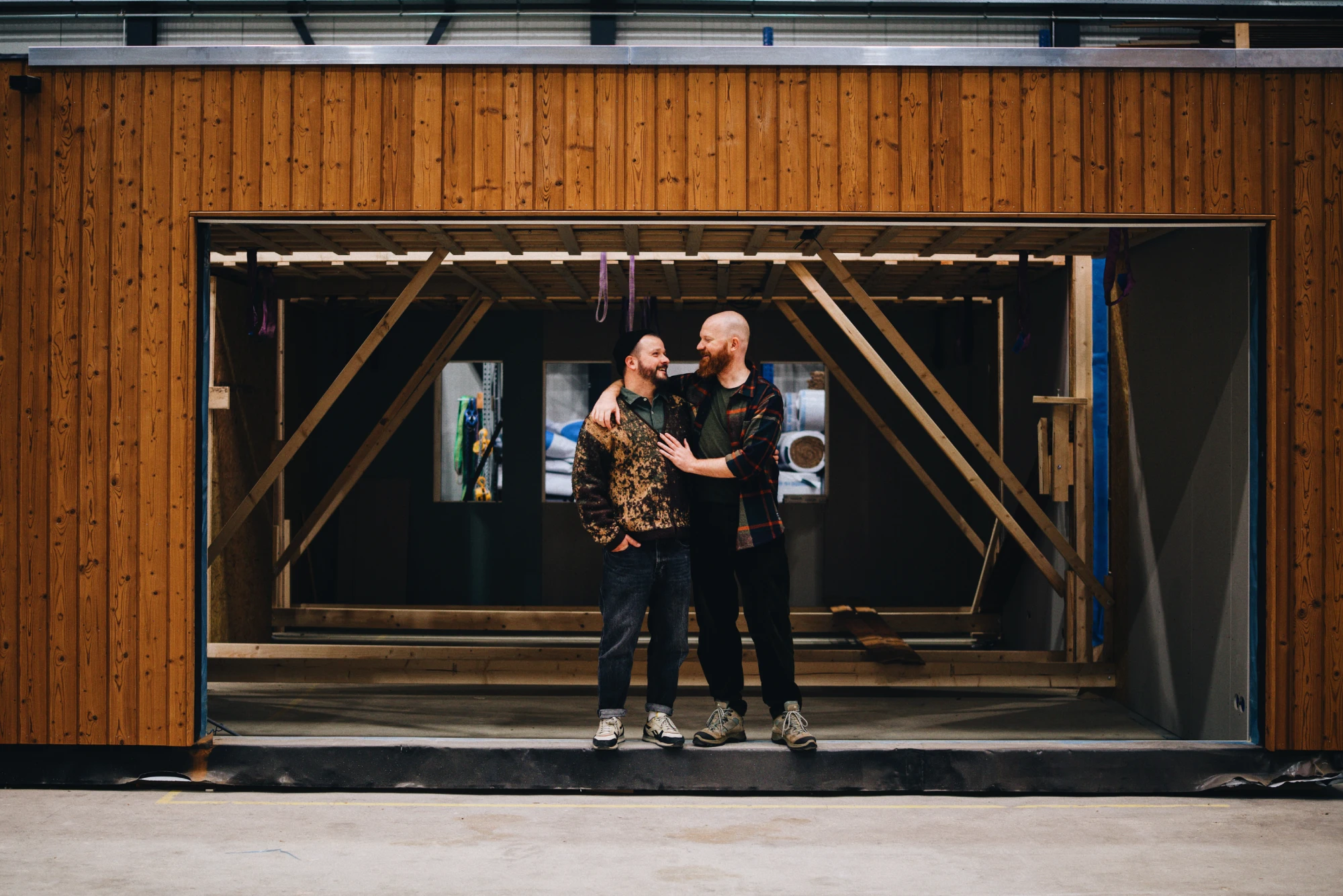
A roof extension in Amsterdam means creating space, taking responsibility, and investing consciously in the future. For the past year, we have been planning to expand our tiny 49 m² apartment in Amsterdam West by 35 square meters, including a balcony and rooftop terrace. In this Couple of Men article, we want to explain why we are taking this step and what challenges expats and non-Dutch citizens might also face. Additionally, we share insights into how adding a prefab roof extension on top of a historic building in Amsterdam works, telling you more about the decisions that underlie it, from personal choices to legal and practical ones, step by step.
– in collaboration with several construction companies –
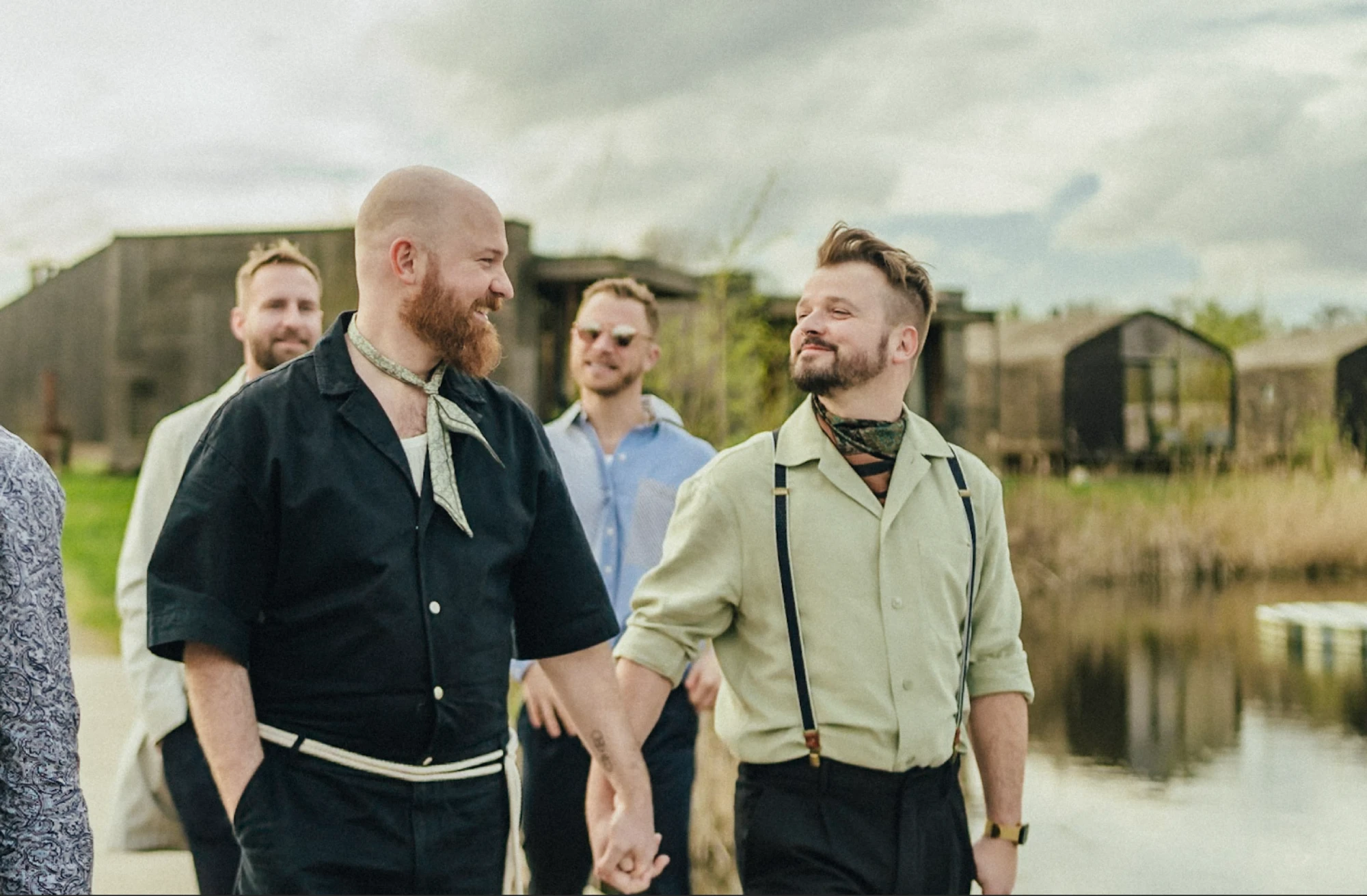
How we are expanding our home in Amsterdam West as a German-Dutch gay couple
Anyone living in Amsterdam, and in many other desirable European cities, knows the reality: living space is limited. And anyone lucky enough to secure even a small home eventually starts looking at ways to create more room. Here in Amsterdam, there are usually two options: extending a ground-floor apartment into the garden or adding a roof extension to a flat-roofed historic building. Even a prefab roof extension does not happen overnight. It grows out of conversations, sketches, calculations, patience, saving money, and a great deal of organization.
We also decided to expand our existing home rather than move. We really love living in our neighborhood, Bos en Lommer. We want to stay. And if everything goes well, we intend to grow old here. For that to happen, our home needs to evolve with our shared life. We are writing this article in the middle of the process. Some things have already been decided. Others will only become clear once construction begins. That is precisely why we want to document it. This article marks the beginning of a slightly different kind of travel story on our gay couple travel blog.
Advertisement
Order our book now!
The perfect present to inspire (German-speaking) LGBTQ+ travelers and their allies to travel the world open-minded, respectfully, and with a happy heart.
Order our book online or purchase it in bookstores in Germany, Austria, and Switzerland.
Amsterdam is our home
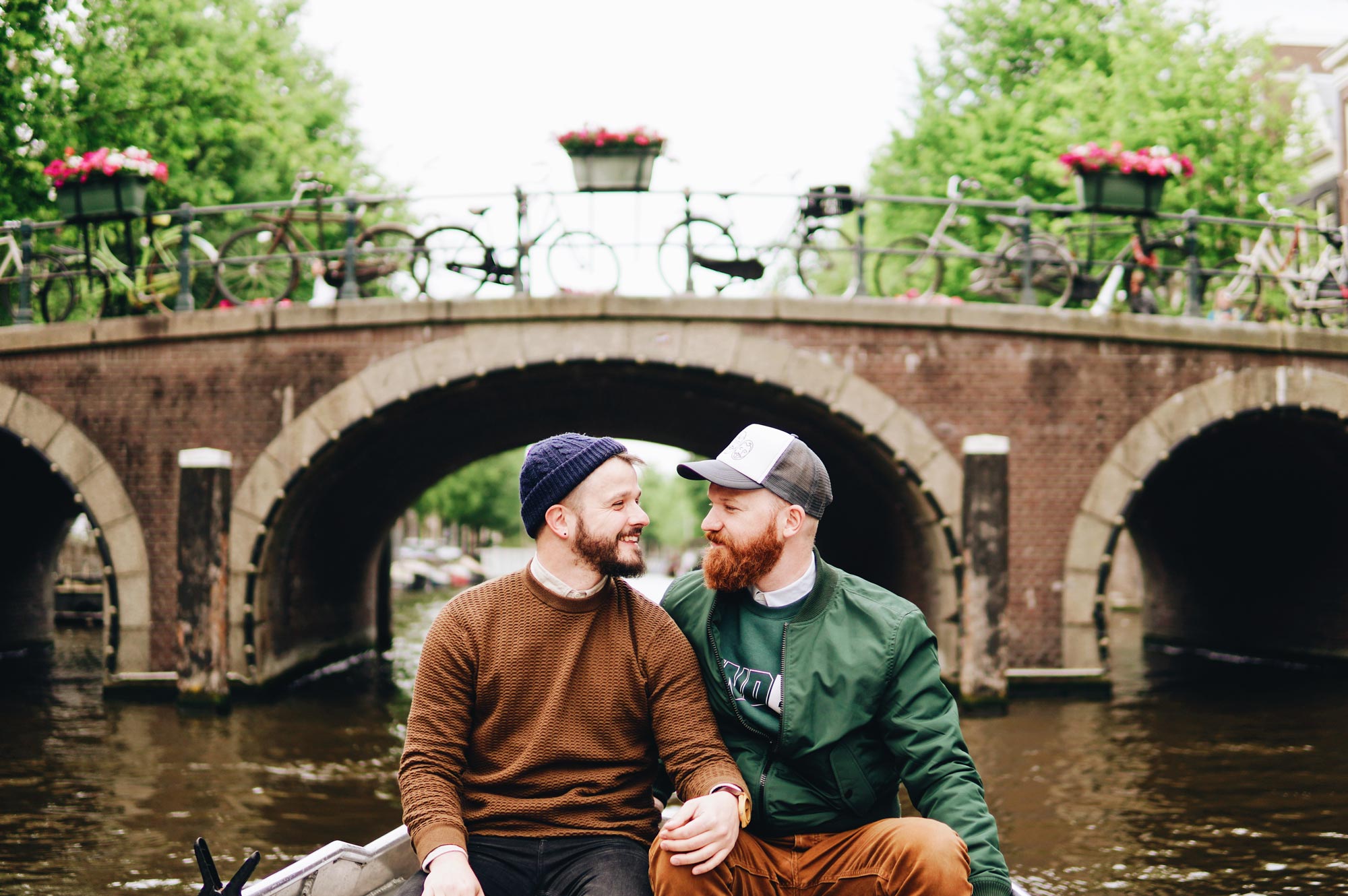
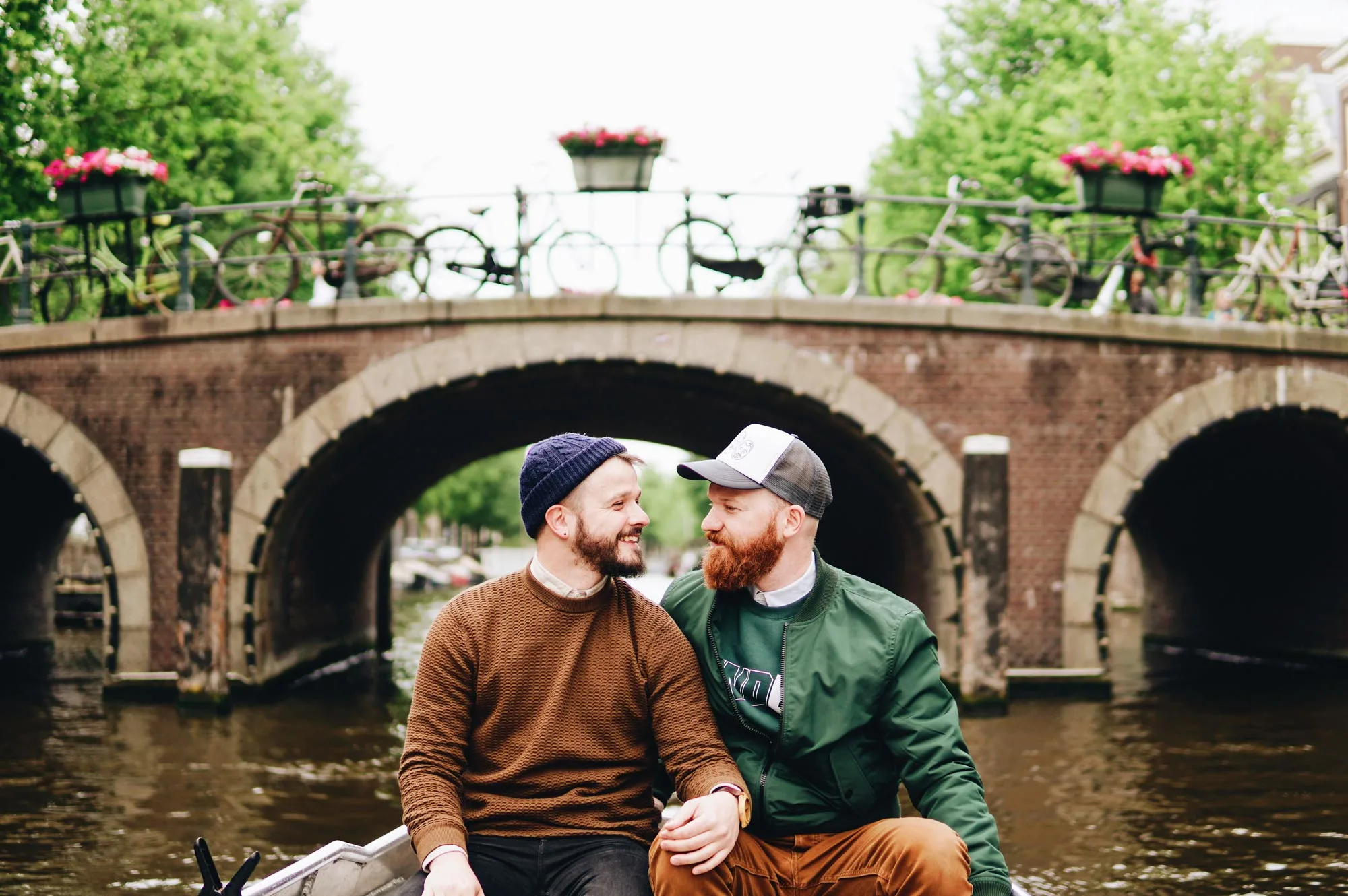
Amsterdam is not just a mailing address for us. For Daan, this city means roots, family, and identity. His grandparents ran one of the flower shops along the Singel canal area, which made the city center so famous. Early-morning market visits, deliveries by bicycle, and regular customers returning for decades: these are stories he heard again and again from his grandparents. Even his mother grew up right along that canal. His connection to Amsterdam runs deep through his family history.
For Karl, who originally comes from Dresden in eastern Germany, Amsterdam came later. First as a chosen home, then as everyday life, then as belonging. There was no single dramatic moment when everything clicked. It was more a collection of smaller ones: a familiar route home, a favorite café, a summer evening by the water. At some point, “living here” became truly feeling at home. The fact that he now speaks Dutch fluently is simply part of that story.
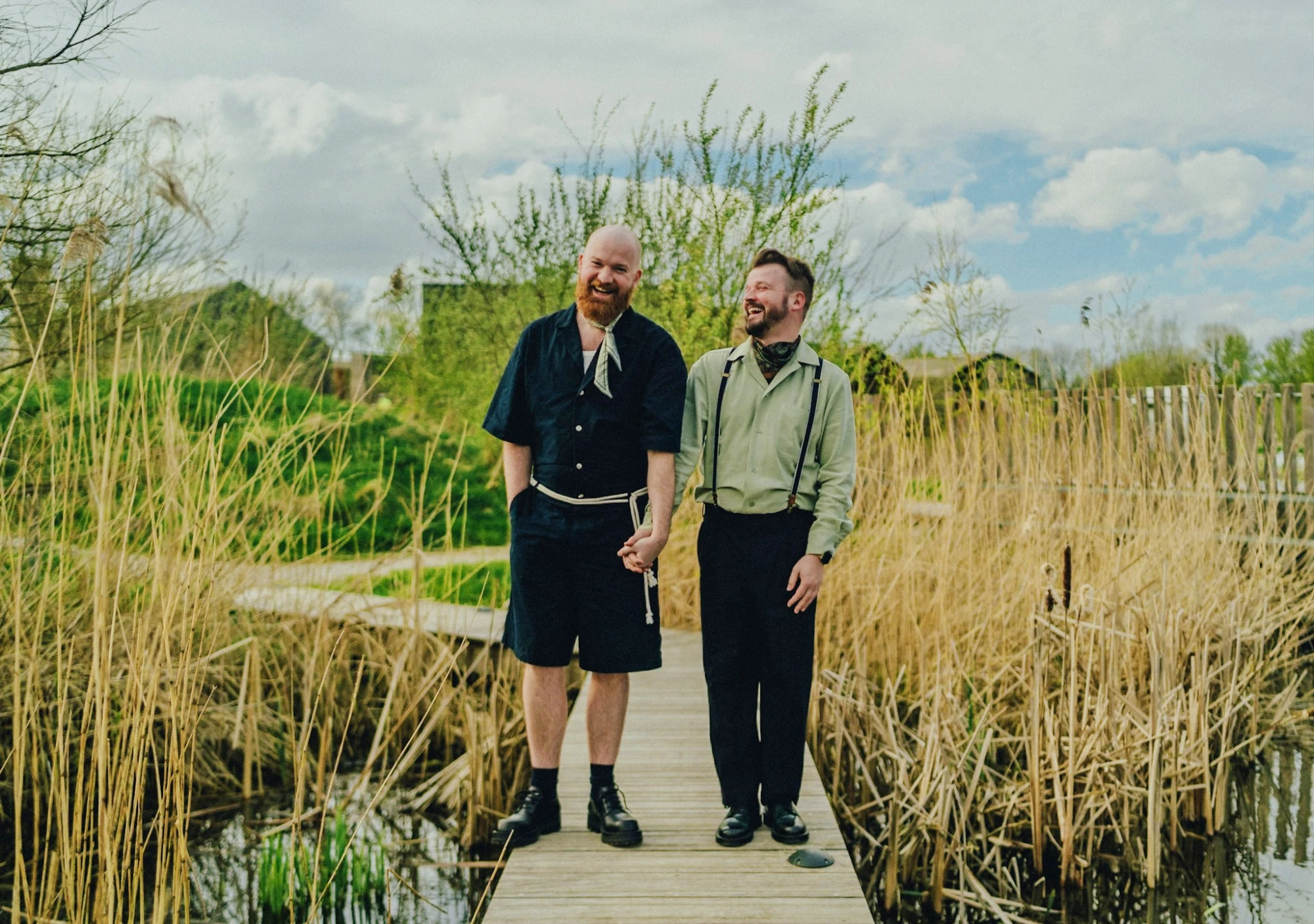
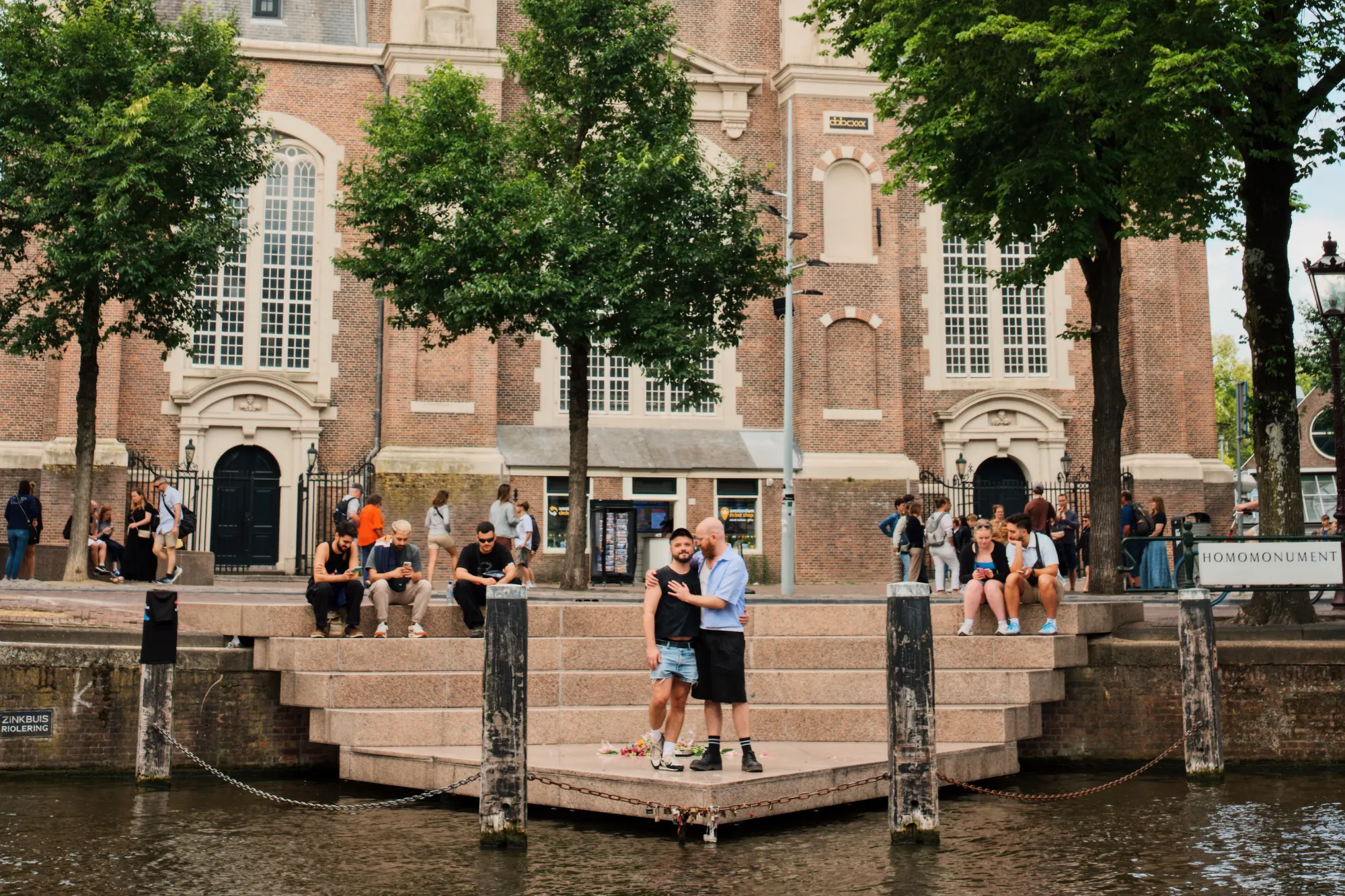
We have been together for 13 years. On March 29, we celebrate not only our anniversary but also our wedding day from two years ago. Our wedding in Amsterdam was an adventure all its own. It meant a lot to us to get married in the country that became the first in the world to legalize same-sex marriage back in 2001. We live here very consciously and very gladly. Amsterdam is part of our story. We are also incredibly proud that Amsterdam will host WorldPride 2026.
What we may love even more about Amsterdam are the actual experiences: summer evenings by the canals, cycling out toward the dunes, queer festivals stretching across whole weekends, and the LGBTQ+ Canal Parade on the Prinsengracht. As travel bloggers, Amsterdam also means a connection to the wider world. Through Amsterdam Schiphol Airport, we can get moving quickly, not least thanks to our long-time partnership with KLM Royal Dutch Airlines. At the same time, it is only about an hour by plane to Karl’s family, who live south of Berlin. Internationally connected and still close to family: that mix is precisely what keeps us here.


Advertisement
KLM Flight Deals
Fly around the world with our gay-friendly partner KLM Royal Dutch Airlines, and its partners Air France and Delta Air Lines in Economy, Premium Comfort and Business Class to LGBTQ+ welcoming destinations worldwide.
Our house and respect for the existing historic building
Like many major European cities, Amsterdam’s housing market has been pressured for years. Before we were finally able to buy our current apartment, we spent more than six months bidding on at least 16 other homes, often at prices far above market value. Every viewing brought hope. Every rejection was sobering. In the end, we got the apartment on exactly the street where we had placed our very first offer: the Bestevâerstraat. Somehow, that felt fitting. What we value most about “our” street is its calm atmosphere, its proximity to Erasmuspark, Rembrandtpark, and Westerpark, and a neighborhood that keeps evolving without losing its character.
Our historic Amsterdam building dates back to 1924/25 and is part of a continuous block of brick architecture shaped by the spirit of the so-called Amsterdam School. Jordanus (“Daan”) Roodenburgh was the architect of our building, which stands out through its long façades, carefully laid brickwork, and clear proportions. If we are now expanding our small apartment, which is more than 100 years old, we want to do so with respect for what is already there. In Amsterdam, architectural changes are expected to continue the building’s logic rather than disrupt it.
Why we are expanding our apartment in Amsterdam
Our apartment is a tiny home of just 49 square meters, with neither an attic nor a basement. When we bought it in 2021, we knew it was compact, which is really just a polite way of saying small. Still, it was our beginning. Our first shared property. A space we could shape ourselves. Since then, our daily lives have changed. We both work as freelancers, often from home. Two workspaces, video calls, parallel projects. Sometimes that works perfectly. Every so often, you feel clearly how little room there is to retreat.
There is also our wish for space for guests, family visits, and our two young children. Space that does not need to be renegotiated every single time. A space where one of us can focus while the other can step away. With the roof extension, we are adding around 35 square meters. In practical terms, that means a larger bedroom, storage space, an additional workspace, and a bigger living room connected to the outdoors through the balcony and the rooftop terrace.

Sustainability as a personal decision
A roof extension is always an energy decision as well. If we build a new space, we want to do it consciously. For years, the city of Amsterdam has been working to reduce fossil fuel use in everyday life and lower energy consumption in the existing building stock. The year 2040 is often mentioned as a target horizon. City-level building regulations have also been adjusted, and those rules affect our project. For us, this means taking responsibility now and not cutting corners where it matters most.
Wood as the structural material, carefully planned insulation layers in the walls and roof build-up, and the long-term goal of moving away from gas all belong together for us. The new upper floor and the new roof will be built with a high level of insulation. That is considered one of the most important conditions for switching, for example, to a heat pump in the future. In that way, we are not only improving our home but also the historic building’s overall sustainability profile and, in a small way, the surrounding city.
Sustainability in the urban context
Our step does not stand alone. Amsterdam works with a wider urban sustainability strategy that includes reducing space for cars, expanding pedestrian and cycling space, introducing more 30 km/h zones across many neighborhoods, and gradually rolling out zero-emission areas. Public space is changing. More room for bicycles and people. Less room for parked cars. We notice that in daily life, especially when cycling through the city or walking in greener neighborhoods with quieter streets. Our prefab roof extension fits into that broader transformation.
Roof extension in Amsterdam: not a sprint, but a marathon
Exactly one year ago, we started looking into this topic seriously. At first, everything was about conversations. We contacted neighboring homeowner associations, collected experiences, and asked people to explain where the typical stumbling blocks lie. At the same time, we were looking for a reliable prefab construction company with real-world experience in roof extensions in and around Amsterdam. Personal connection, proven expertise, and reliability mattered more to us than speed. Only once the first concrete drawings were ready and the planned extension was fully understood did we ask our partner Zicht Bouw to begin the permit process.
That first year took a great deal of energy because we had to understand the sometimes complicated legal framework and the decision-making process. Approval within the homeowners’ association is especially important, since it involves addressing various questions and taking individual perspectives seriously. We had to learn how to listen, how to explain decisions clearly, and how to keep the broader interests of the VvE in mind. We honestly cannot imagine how many hours we have spent planning, thinking, and discussing what our shared paradise could look like. But without that phase, there would be no next step.
We are not even talking about building the roof extension in Amsterdam yet. Over the coming months, we will publish additional articles to explore the most important topics in more detail:
- Omgevingsvergunning: the Dutch environmental and building permit. When is it required? Who applies for it? How does the process work?
- VvE: homeowner association. How do you inform the VvE? What do you need to share? When do you need formal approval?
- Splitsingsakte: deed of division. What is it? Do you need to change it for a roof extension, even a prefab one? How does that amendment process work within the VvE and with a notary?
- Erfpacht: Dutch leasehold. Is the building your apartment is in located on leasehold land? If so, do you have to request an adjustment? Under what circumstances can you be exempt from changes to the leasehold conditions?
- Verduurzamen: sustainability. How can you build more sustainably? Which Dutch rules apply? Is there state support available? If yes, how do you apply?
Why we are building with Zicht Dakopbouw
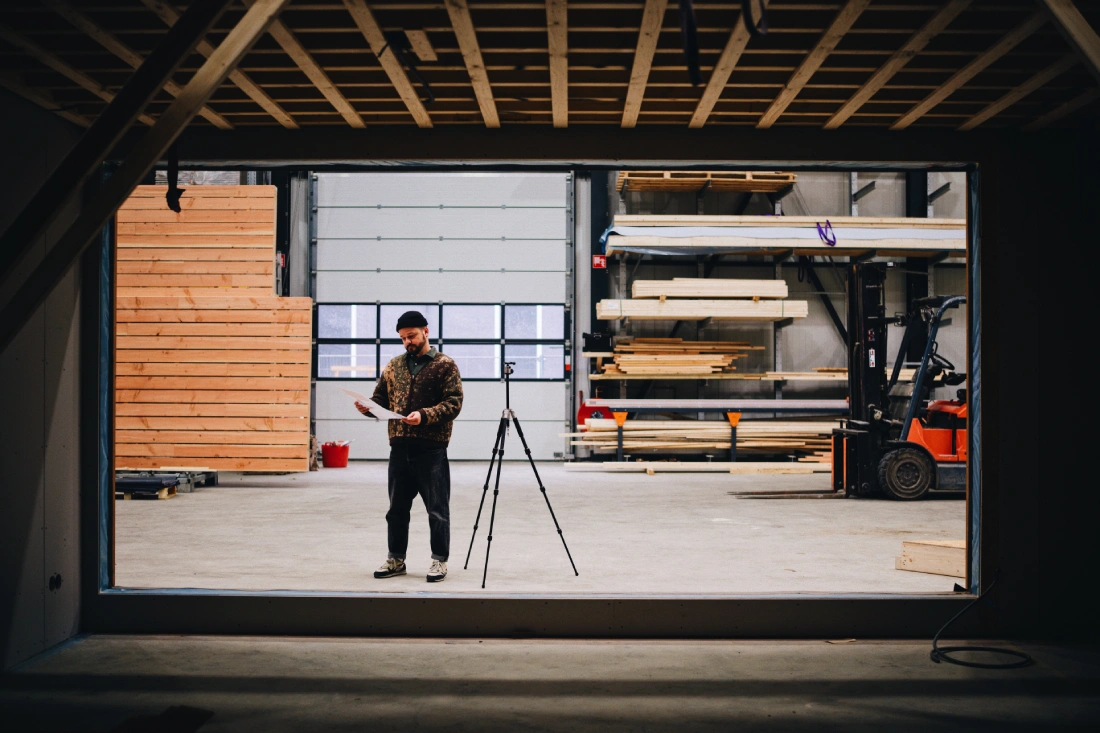
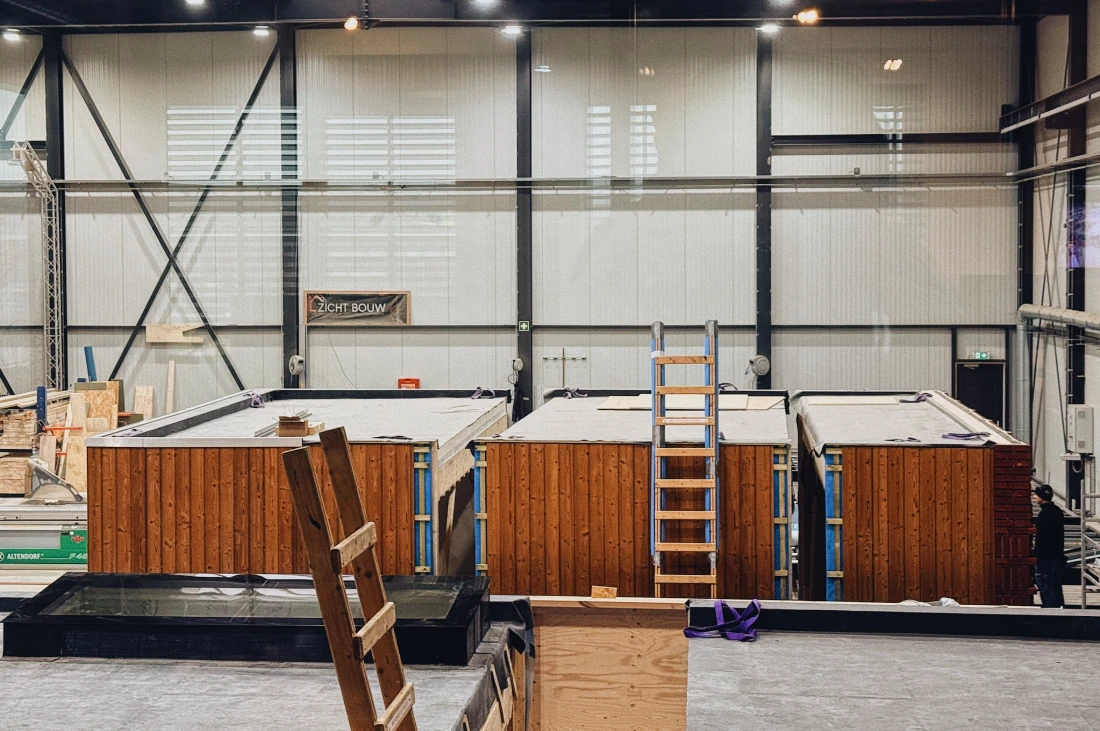
For the realization of our prefab roof extension, we are working with Zicht Dakopbouw B.V.. The family-run company specializes in extensions, rooftop additions, and prefab construction for existing historic buildings, also in Amsterdam. Zicht Bouw was founded in 2021 through the merger of two smaller companies led by Sybren and Koen. The company is based in Zwaag in the Netherlands. We visited the production hall in advance and, through personal conversations, gained a strong sense of how respectfully they treated us as a gay couple and how highly they value professional work. From architectural drawings and permit support to coordinating with third-party contractors, we clicked with everyone involved, from the founders to the technical draftsman. It all felt right.
A little more about our prefab roof extension in Amsterdam
Our extension consists of three prefabricated modules. Once the roof and beam structure have been inspected, reinforced, and prepared, our new home will arrive in “bite-sized” sections by truck and be lifted onto the building by crane in a single day. By the end of that crucial day, the structure will be wind- and watertight. For us, the prefab solution meant precise preparation, clear procedures, and a limited phase during which the building is open and construction noise affects the surroundings. In a densely built city, that matters. Prefab is also a lighter construction method, which means less structural load on the foundations of our very specific building.
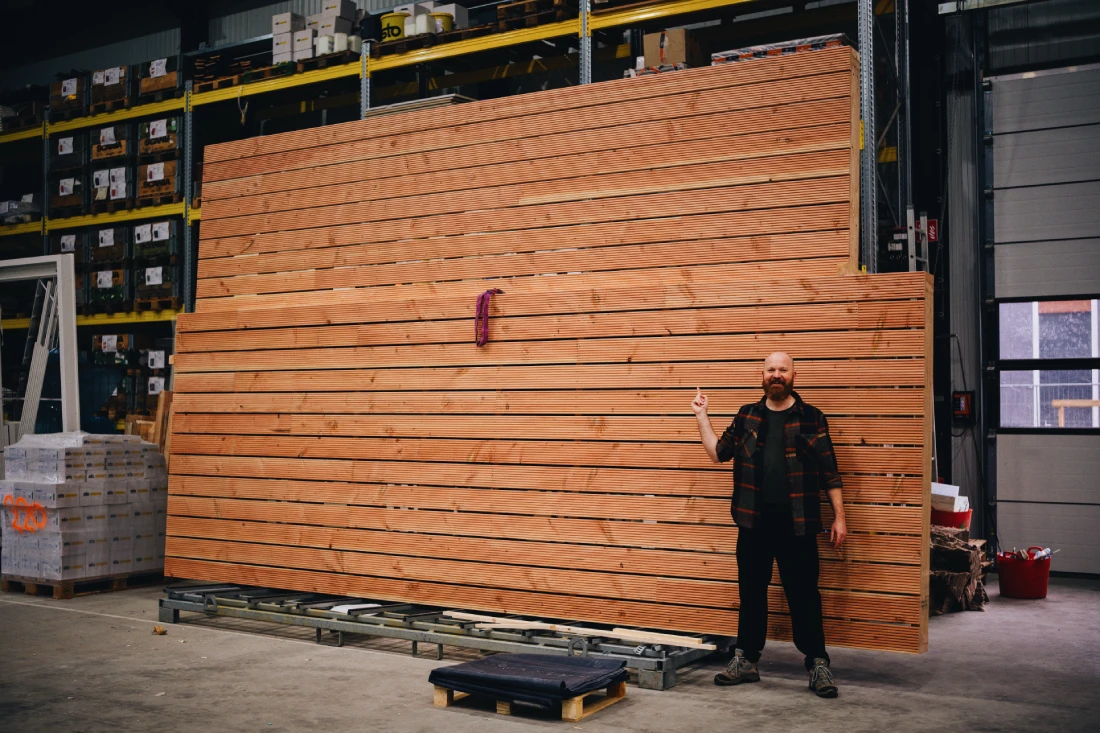
What does “prefab with Zicht Bouw” mean? A prefab roof extension in Amsterdam by Zicht Bouw is a timber rooftop addition that, in our case in three modules, is fully prefabricated in the company’s production hall, delivered, and assembled on site. This sustainable solution, “Made in the Netherlands” offers an extremely short construction time, high quality, and minimal disturbance for the neighborhood thanks to its precise prefabrication. It is considered an ideal way to create more living space.
Zicht Bouw
The companies we are working with
Of course, that is not the whole story. Once the main shell has been completed, which should take only a few weeks, the next phases begin: the walls need to be finished and painted, the new bathroom needs to be prepared, and the flooring and heating systems must be installed. For the interior work, we plan to collaborate with additional companies. That also includes finding a skilled carpenter who can create details such as our movable partition wall between the living and sleeping areas. We may even be able to install a heat pump. That will depend on our budget.
In this article, we will continue to share more information about the companies involved and introduce them in separate posts.
If you would like, follow us along on this journey. Karl & Daan.
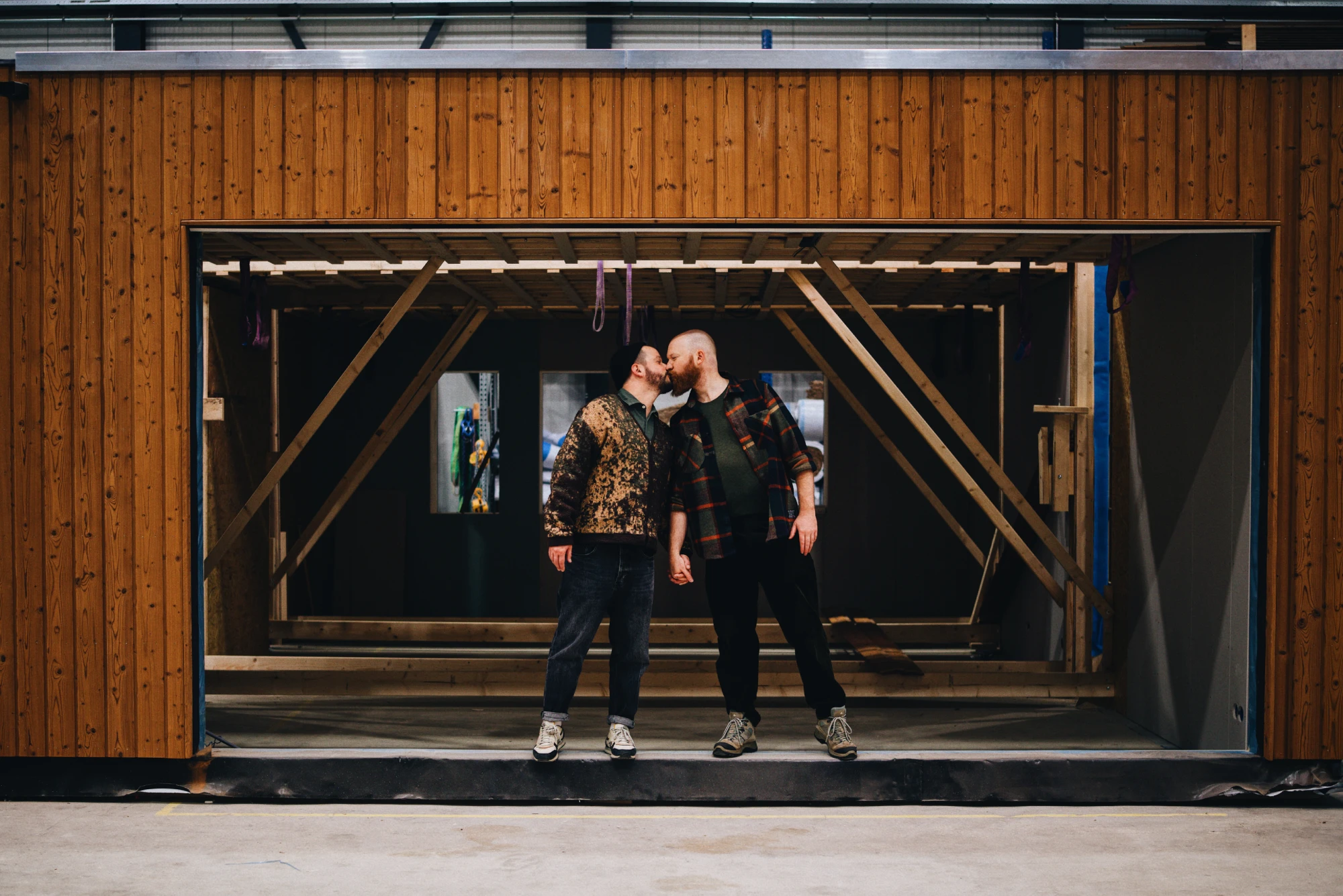
The next steps for our prefab roof extension in Amsterdam journey
We estimate that the full construction phase will take around two to three months. Part of it will be loud. Part of it will be organizationally demanding. The crane day marks a visible turning point. After a year of planning, a new level will take shape within just a few hours.
We will stay in the apartment during part of the construction period. What is practical and manageable, we will decide as we go. This article is the beginning of a series. We will show how a prefab roof extension in Amsterdam develops step by step, together with all the decisions that come with it.
Do you like this article? Then please like and share it with your friends!
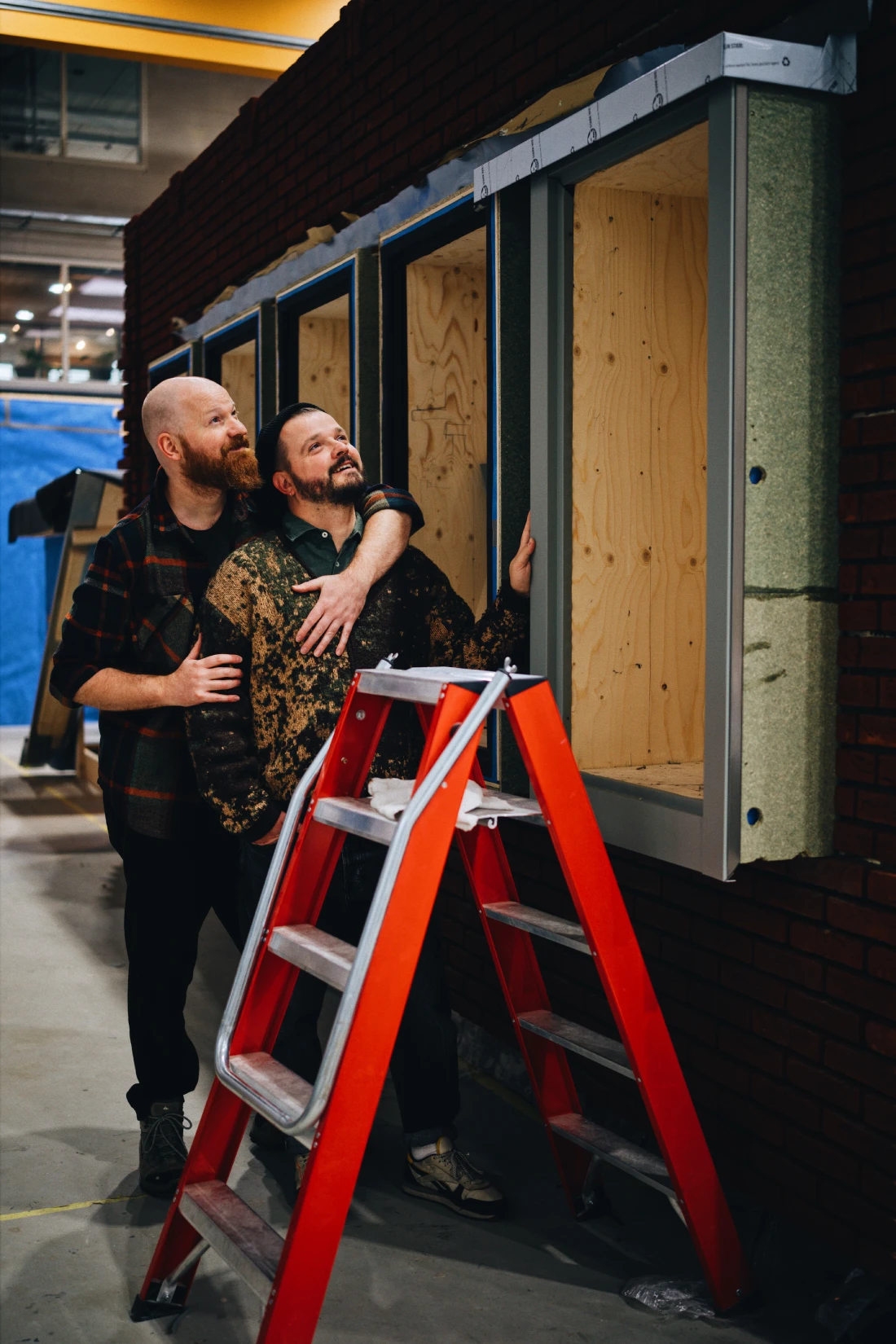
Are you interested in our LGBTQ+ travels, queer outdoor experiences, ski weeks, or other mountain destinations? Then browse our travel guides or write to us directly if you are looking for personal recommendations. You can also follow us on Facebook, Threads, TikTok, YouTube, Pinterest, and Instagram. We would love to hear from you.
Important note: Our building project has been supported by Zicht Bouw and several other construction companies in Amsterdam and across the Netherlands. A special thank-you goes to our parents, parents-in-law, and friends who supported us from the planning stage to the final coat of paint on our living room wall. As always, our opinions and texts are based exclusively on our personal experiences. All photos and videos in this article were created by us.