
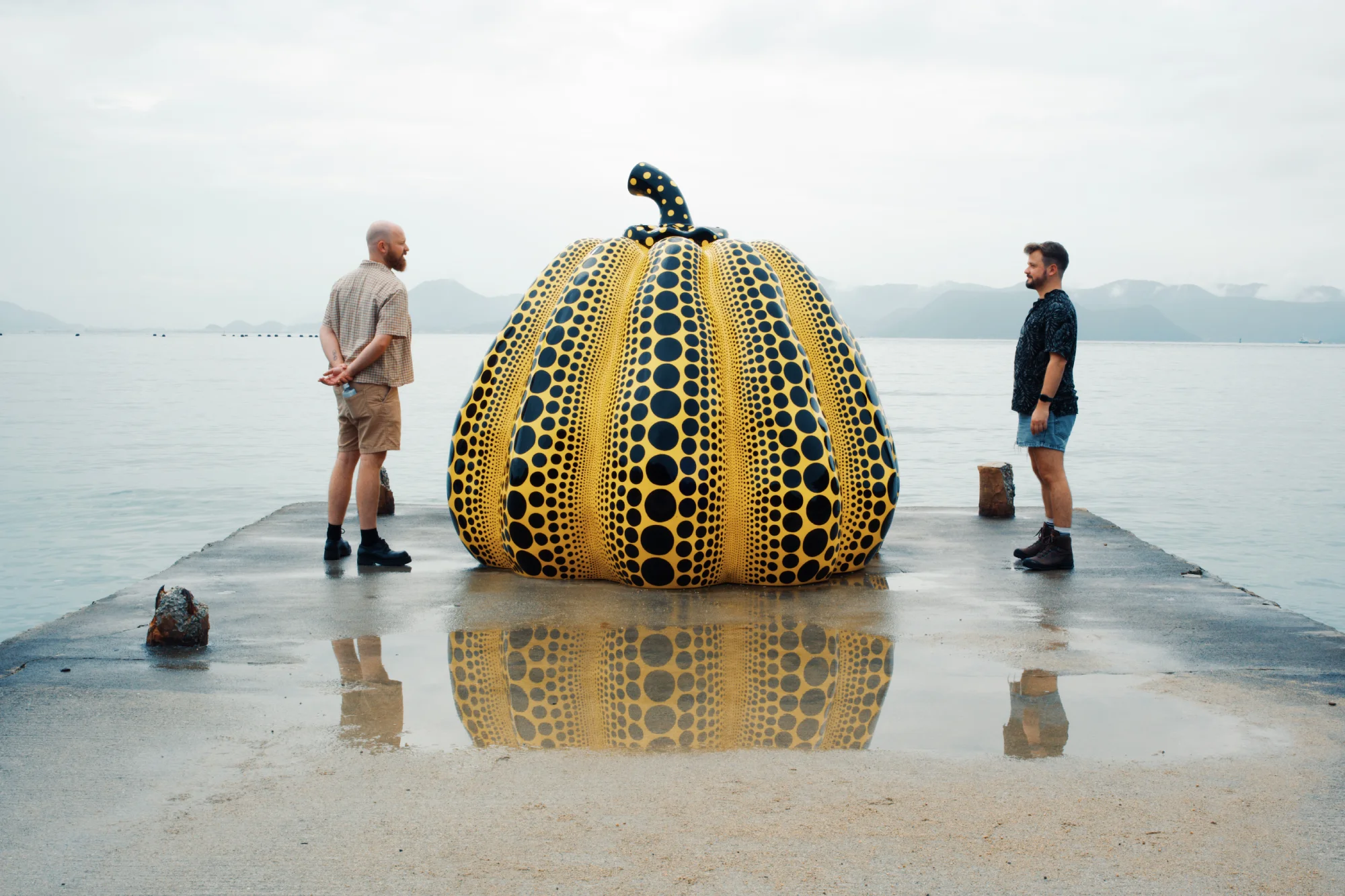
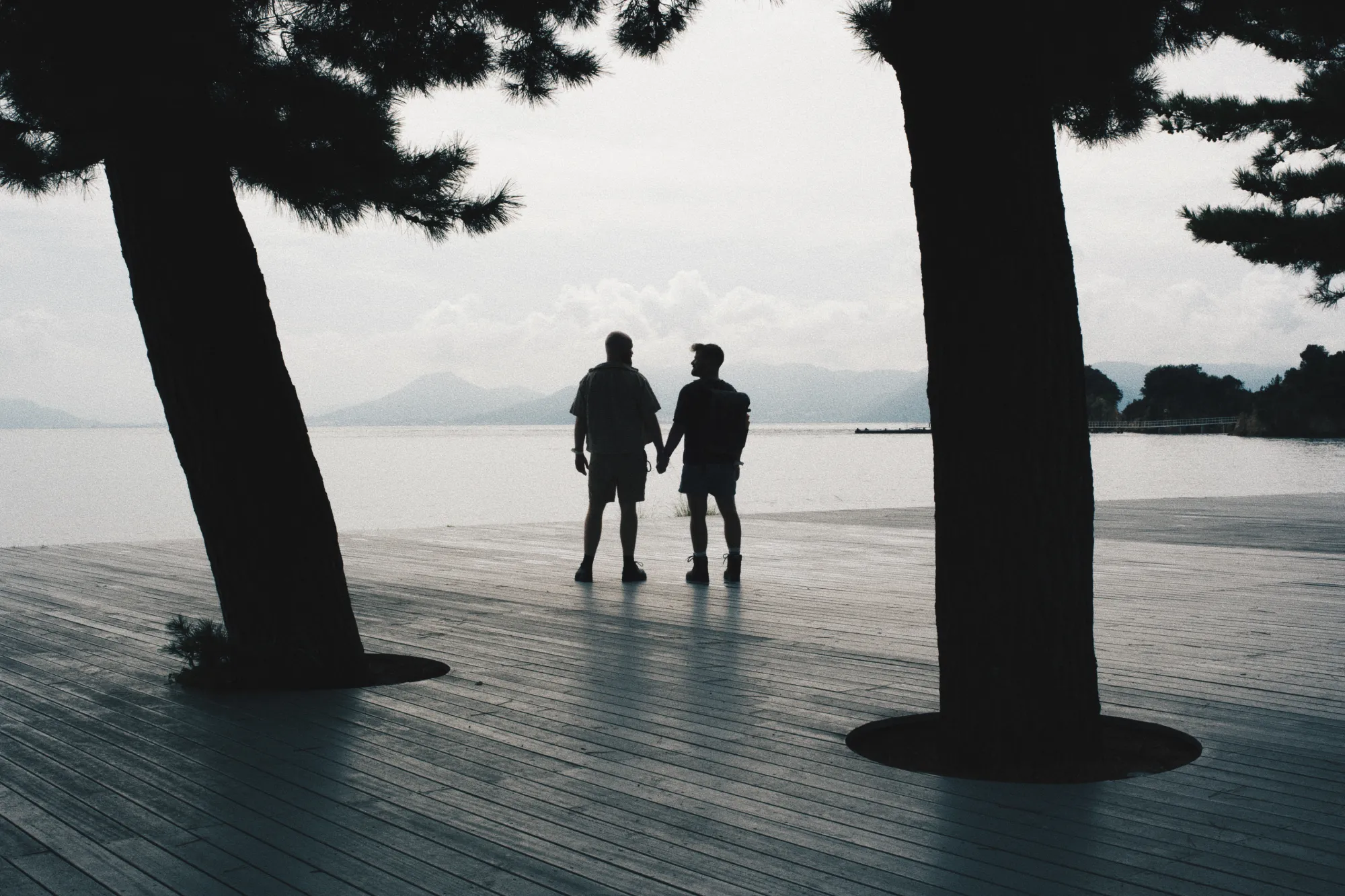
As gay couple travelers with a penchant for art, design, and architecture as well as a yearning for tranquil escapes, we embarked on a three-day journey to Naoshima, the Japanese “Art Island,” during our honeymoon trip across Japan in October 2024. Tucked into the Seto Inland Sea, this small island has quietly earned a reputation among art lovers worldwide for combining contemporary art, striking natural beauty, and a mix of modern and traditional Japanese architecture into a single destination. It was definitely not a typical ‘gaycation’ with LGBTQ+ bars and queer clubs. It was three days of walking, cycling, and standing in front of art, exactly the kind of trip a couple of art-loving men had been waiting for. This is our Naoshima gay travel guide, including the artworks of the late Yayoi Kusama.
Update: A Yayoi Kusama Retrospective Opens in Amsterdam
As we publish this guide, there’s a reason to bring Kusama’s art a little closer to home. The Stedelijk Museum in Amsterdam opens a landmark retrospective of her work on September 12, 2026. The exhibition is scheduled to be running through January 17, 2027, after stops at Fondation Beyeler in Basel and Museum Ludwig in Cologne. As we live in Amsterdam ourselves, we are of course planning to visit the retrospective in person. We are planning to update this guide with our photos afterward. Until then, here is more about her work and other artists on Naoshima.
Advertisement
KLM Flight Deals
Fly around the world with our gay-friendly partner KLM Royal Dutch Airlines, and its partners Air France and Delta Air Lines in Economy, Premium Comfort and Business Class to LGBTQ+ welcoming destinations worldwide.
Traveling to Naoshima Part 1
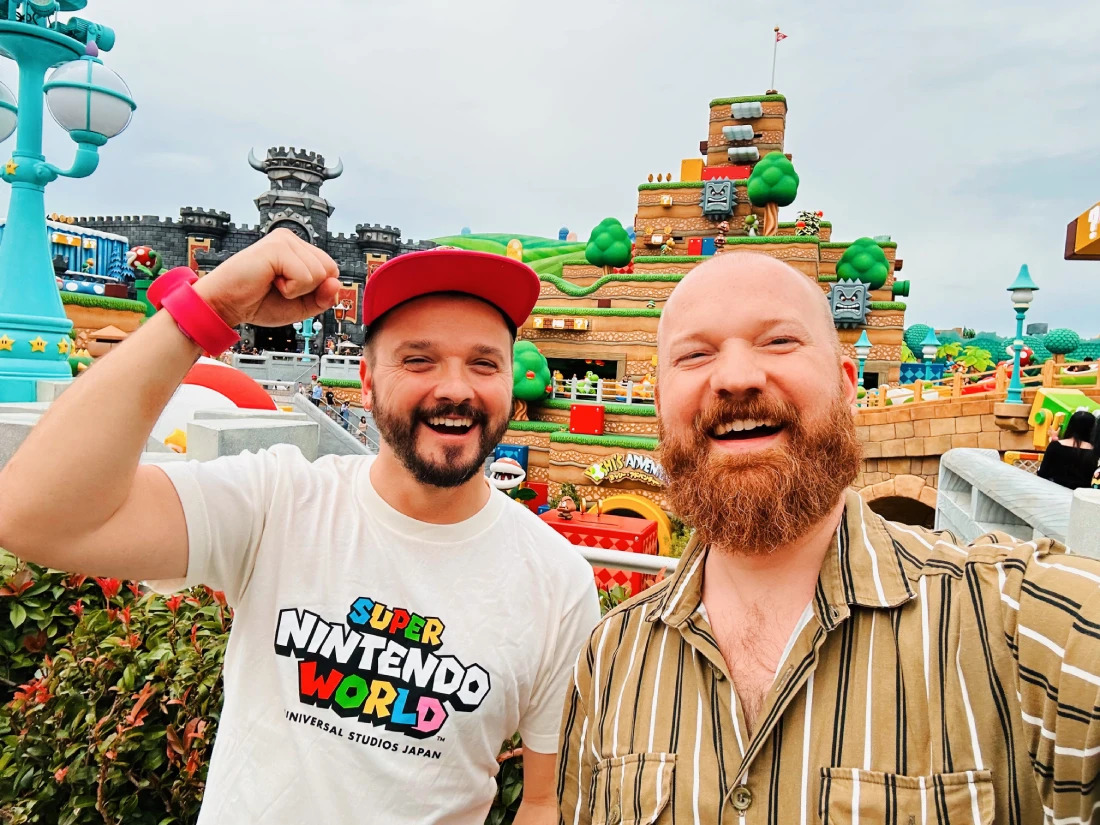
Reaching Naoshima is a little adventure in itself. We arrived at Kansai International Airport in Osaka after an 11-and-a-half-hour flight from Amsterdam with our partner airline, KLM. The airport was built on an island and is comfortably connected by JR train to Osaka’s main station. From there, we had to make our way south to the city of Okayama by bullet train, called the Shinkansen in Japan. In Okayama, we stayed at the ANA Crowne Plaza Okayama for one night, tired from the long journey and the eight-hour time difference.
Our Naoshima gay travel guide tip: For reservations and information at ANA Crowne Plaza Okayama, click on the booking.com affiliate link.
Traveling to Naoshima Part 2
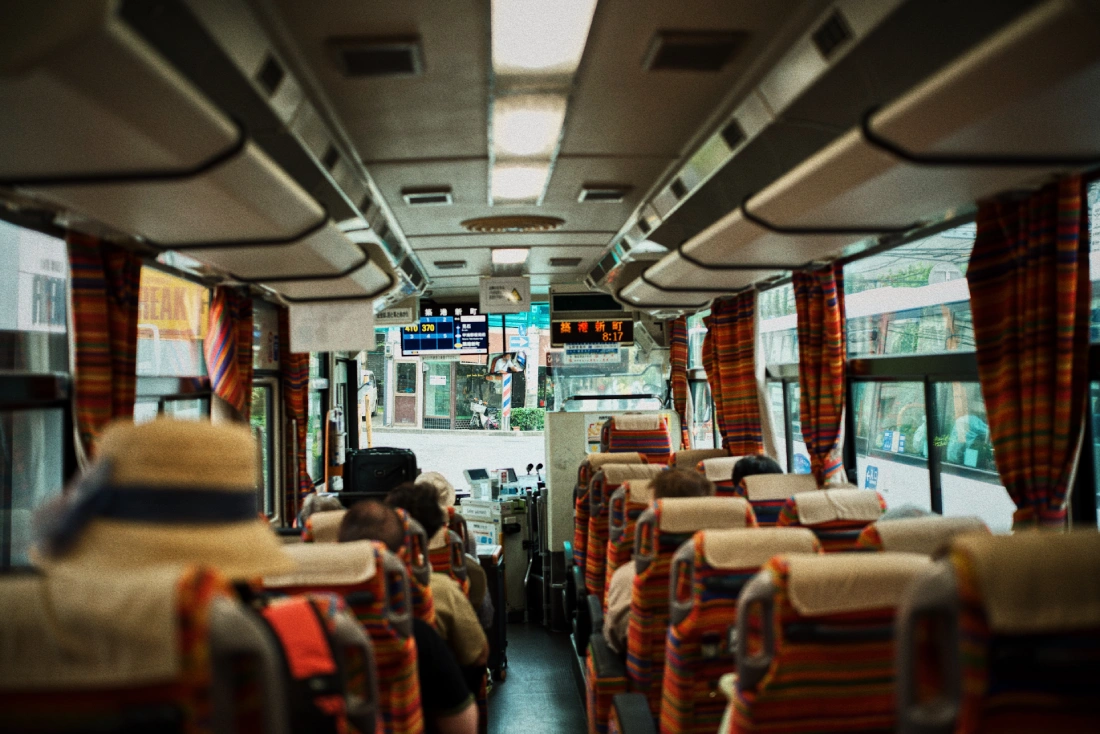
The next morning, excited about the days ahead, we hopped on the local bus to Uno Port, where the ferry to Naoshima would depart. Riding a local Japanese bus again after our last trip ten years ago brought back some memories of our pilgrimage of the Kumano Kodo in Wakayama. But now it was time to write part two of our travels to Japan. For the first 10 days, we headed south from Osaka, a direction we did not choose last time we were here.
But we were not traveling alone for this part of the trip. Our dear LGBTQ+ travel friends, Billy and gay couple Kenny and Jessy, joined us for Naoshima. The three Americans and we have known each other for many years. It was an exciting opportunity to spend quality time together while traveling around one of our favorite destinations in the world.
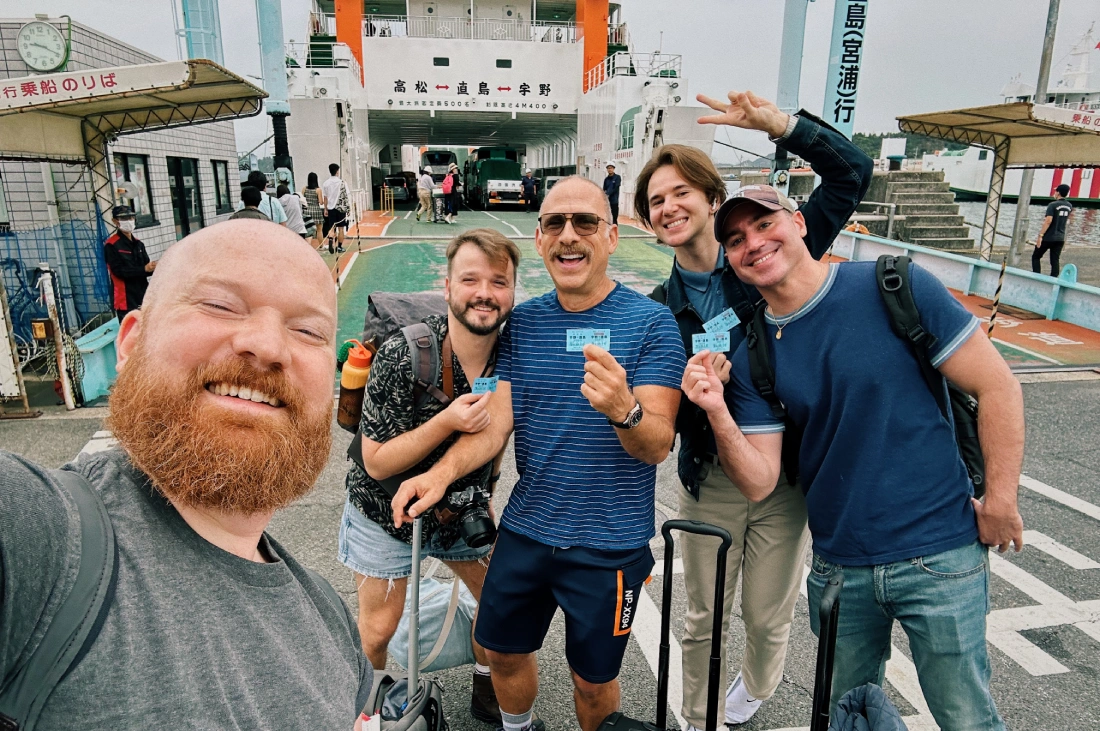
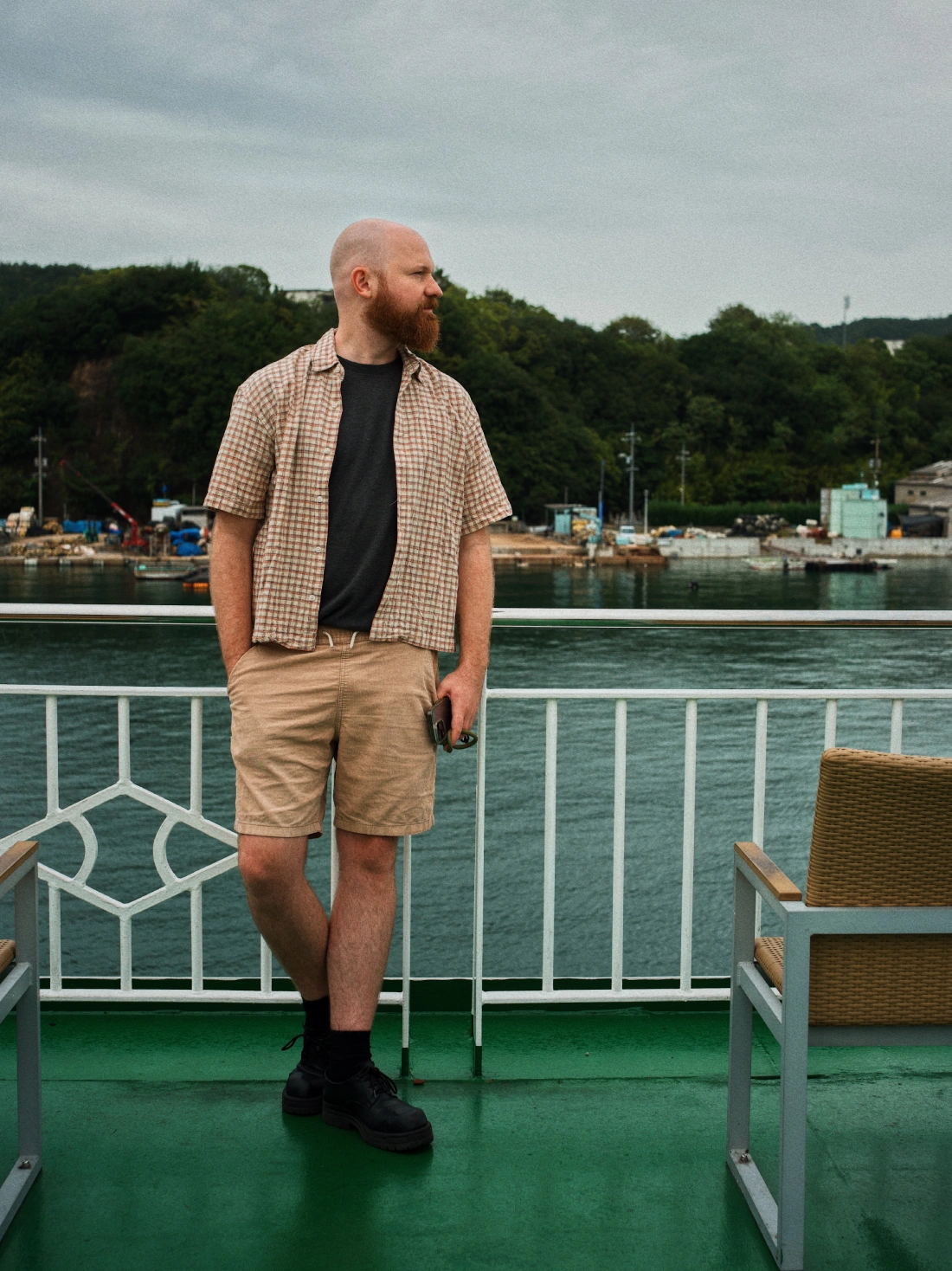
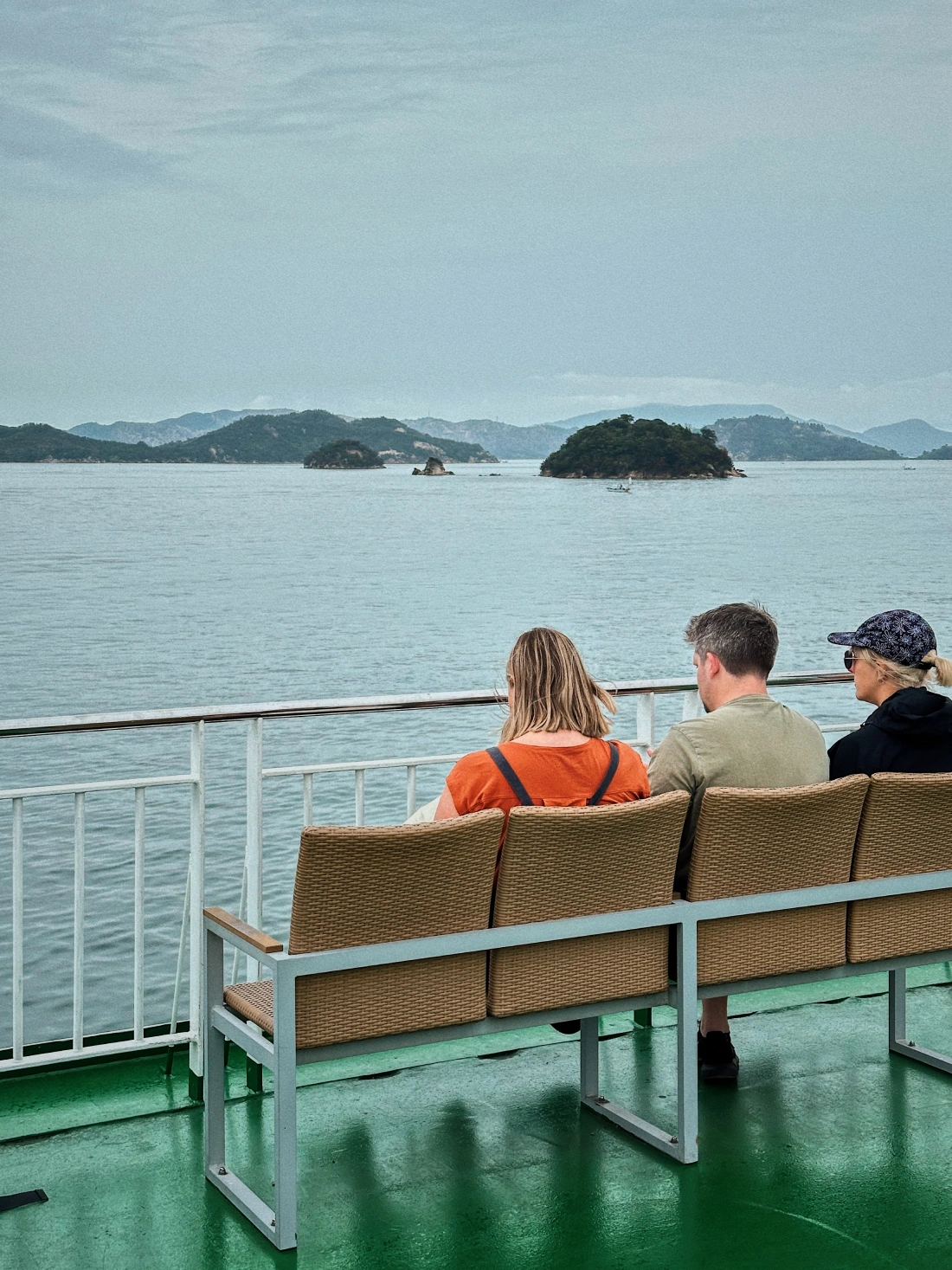
We just made it to the next ferry from Uno to Miyanoura Port on Naoshima, which gave us a long, open view across the Seto Inland Sea, with small islands scattered across the water in every direction. The ferry was loaded with vehicles and some tourists but wasn’t overly crowded at all. As the ferry approached the island, we felt the anticipation building.
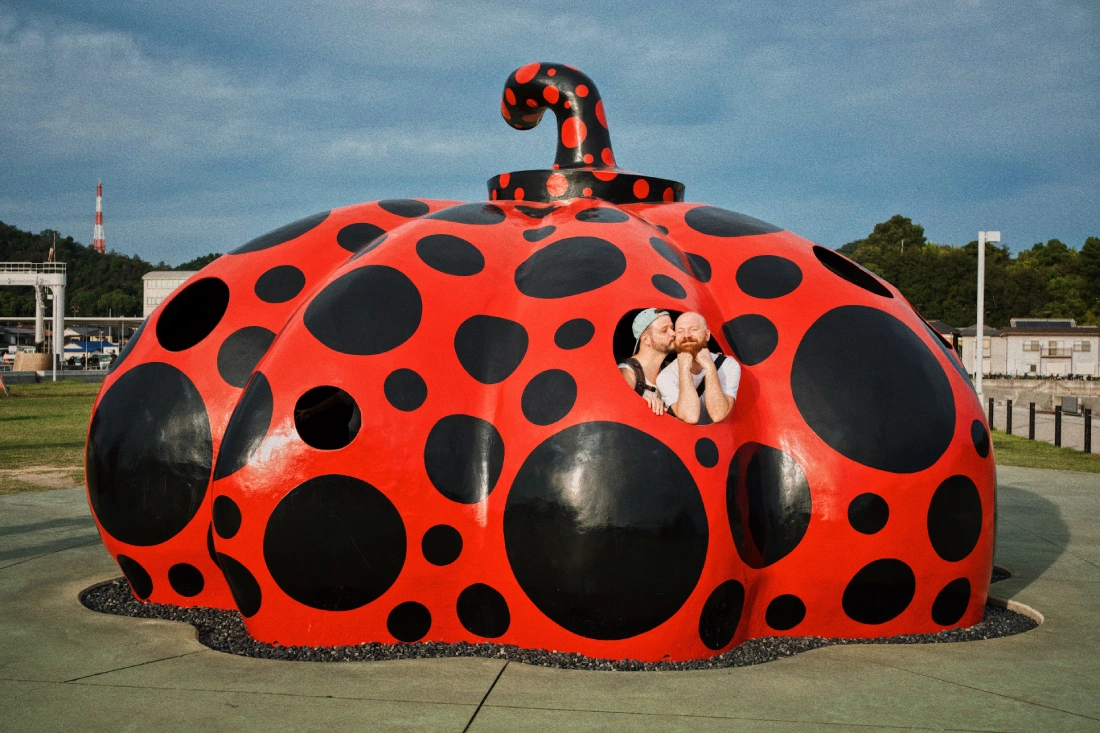
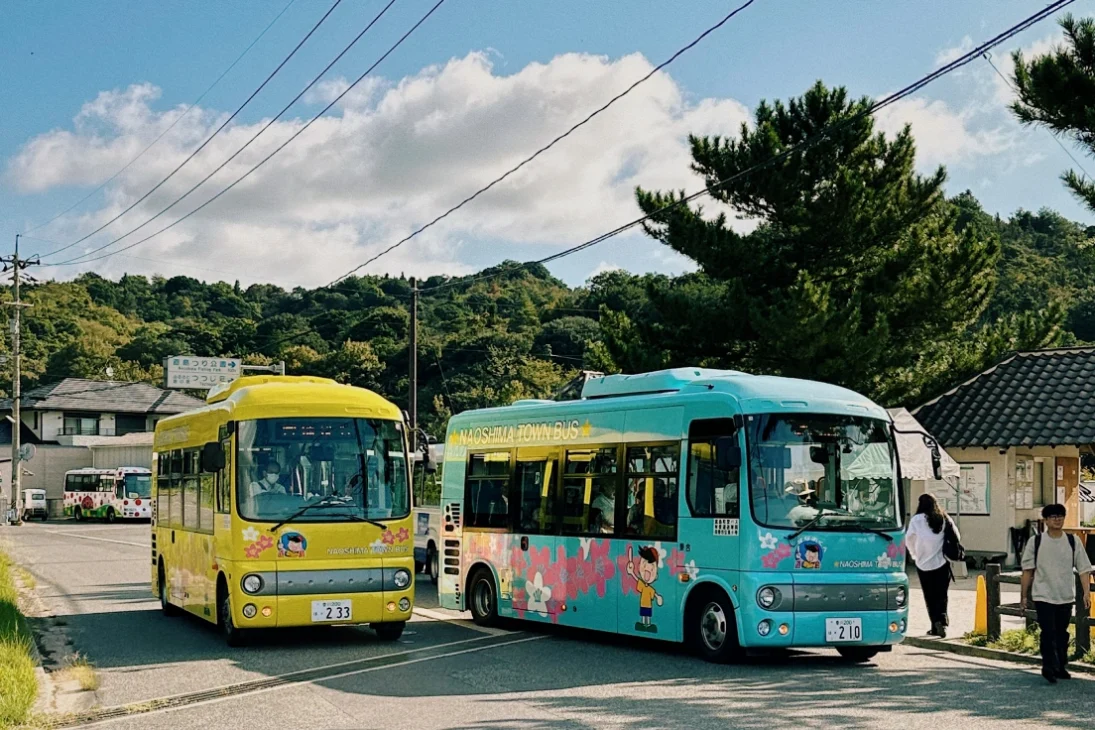
The sight of Yayoi Kusama’s iconic red pumpkin sculpture perched on the pier was a playful welcome to this artistic haven. For just 100 yen, we took the local bus to the last stop of the line, Benesse House Area East Gate, and our home for three nights at Gotanji Beach.
Our Naoshima gay travel guide tip: For ferry schedules and fares, check the Shikoku Ferry website >
Saying good-bye to artist Yayoi Kusama
We’re finishing this article only days after the news of Yayoi Kusama’s death in Tokyo on August 14, 2026, became public on August 27, 2026. She passed away at a hospital in Tokyo at the age of 97.
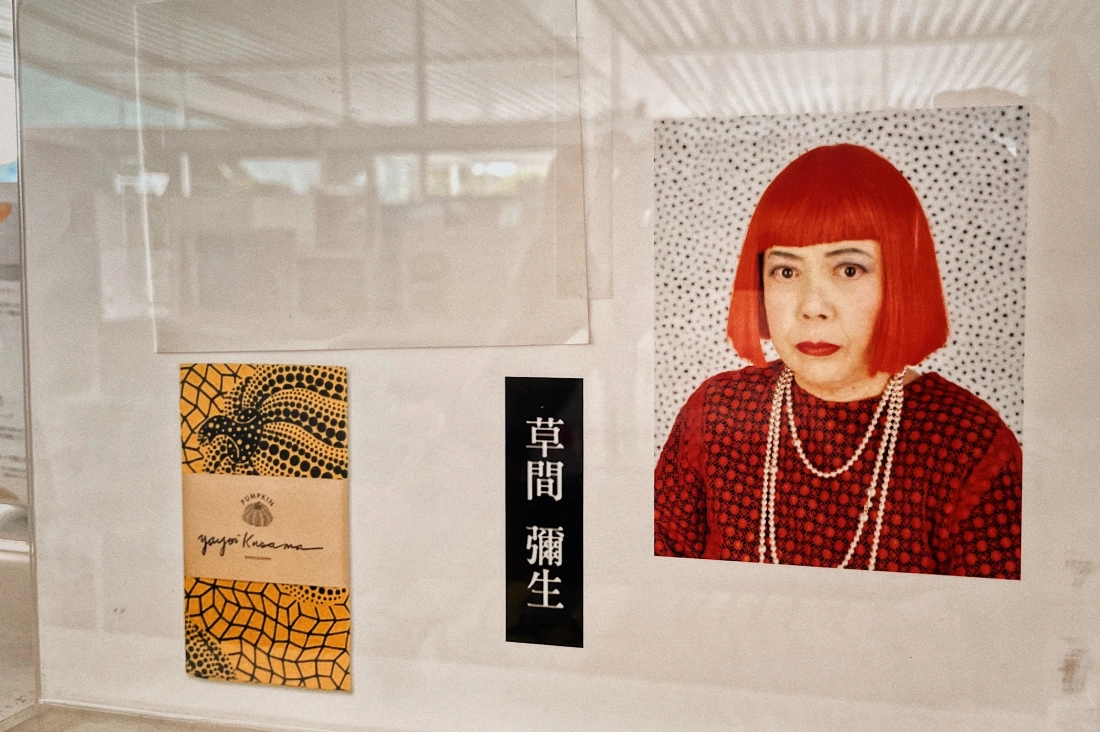
Seeing her red pumpkin on the pier that first afternoon suddenly reads differently in hindsight. The sculpture and her art are still there, still watching over the ferry dock, making the island a little more colorful.
Glamping with a view on Naoshima island
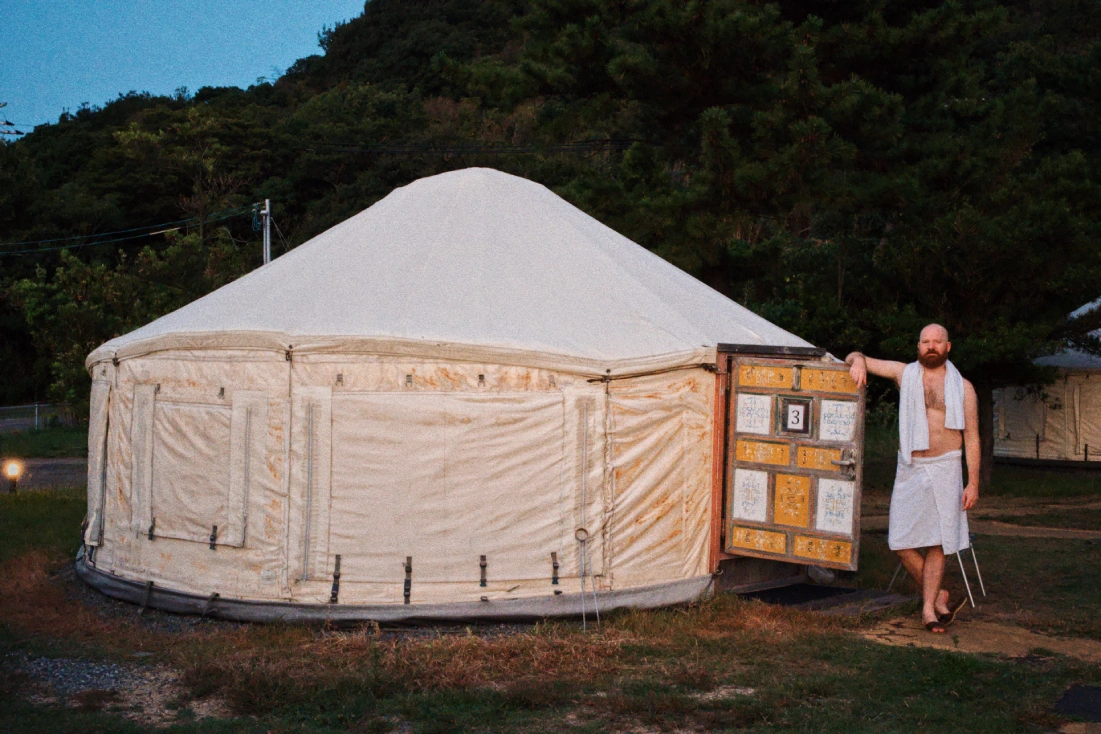
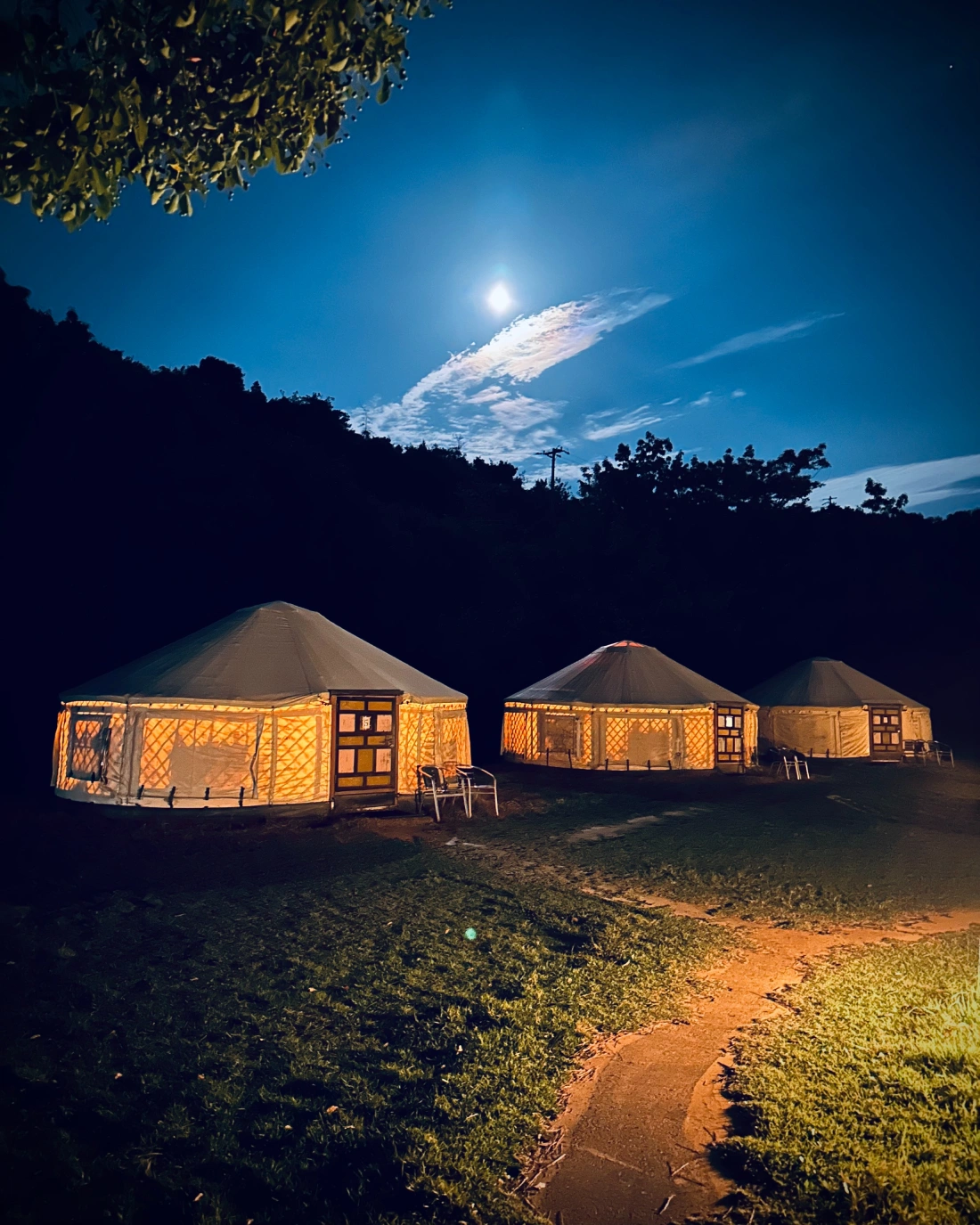
Our accommodation was an unexpected delight, as we booked a glamping adventure at “直島町ふるさと海の家 つつじ荘—SeaSide Park Stay Tsutsujiso”. This wasn’t roughing it in any sense of the word: our yurt was spacious and comfortable, with real beds, electricity, bathrooms, and the option to book a private onsen session.
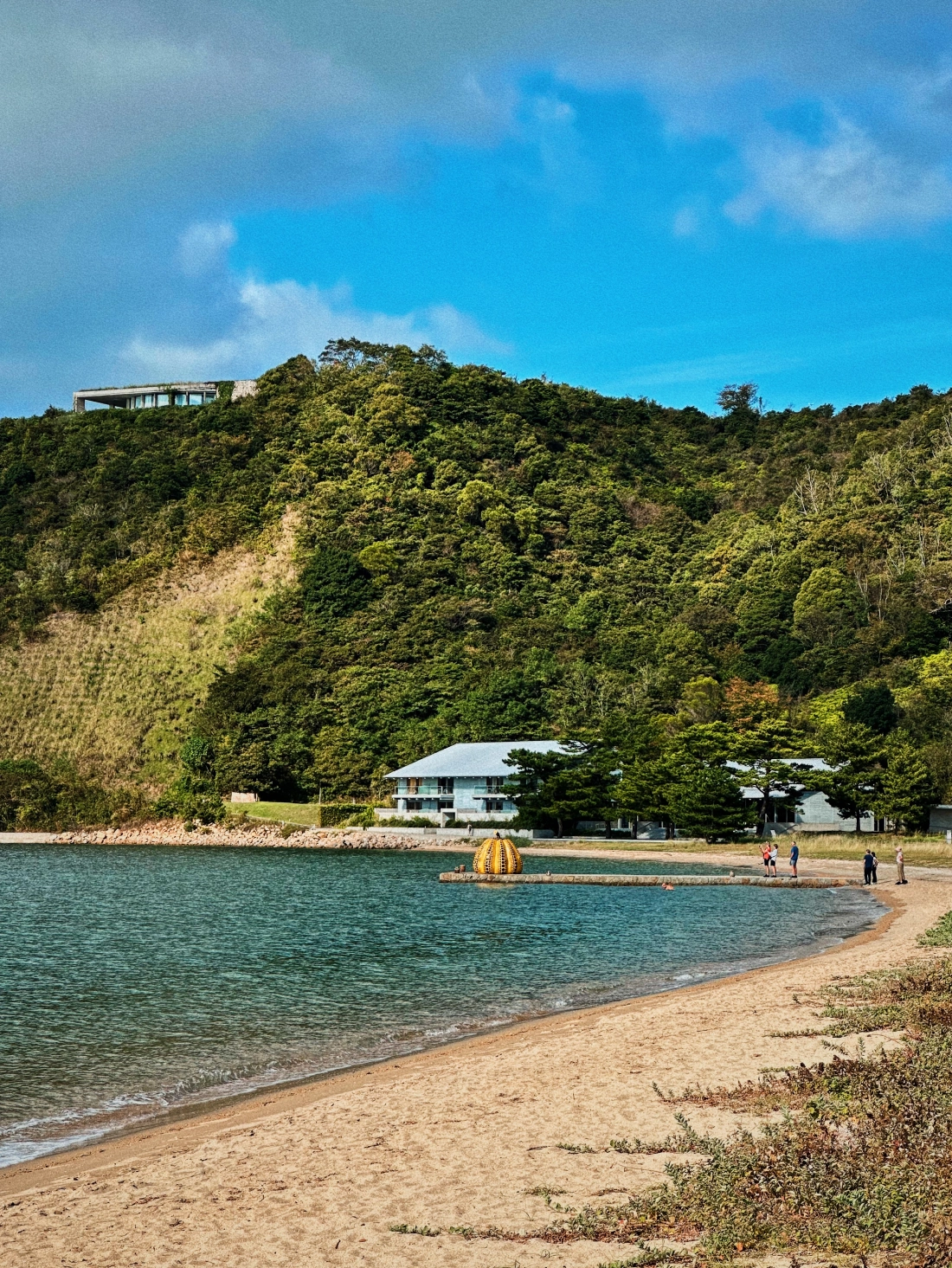
And the water wasn’t only there to look at. A sandy beach stretched from the camping site all the way to one of the museums. Speaking of the museum… The real draw of this camping site was its location, directly across the water from the Benesse House Museum and Kusama’s yellow pumpkin sculpture (main picture of this article).
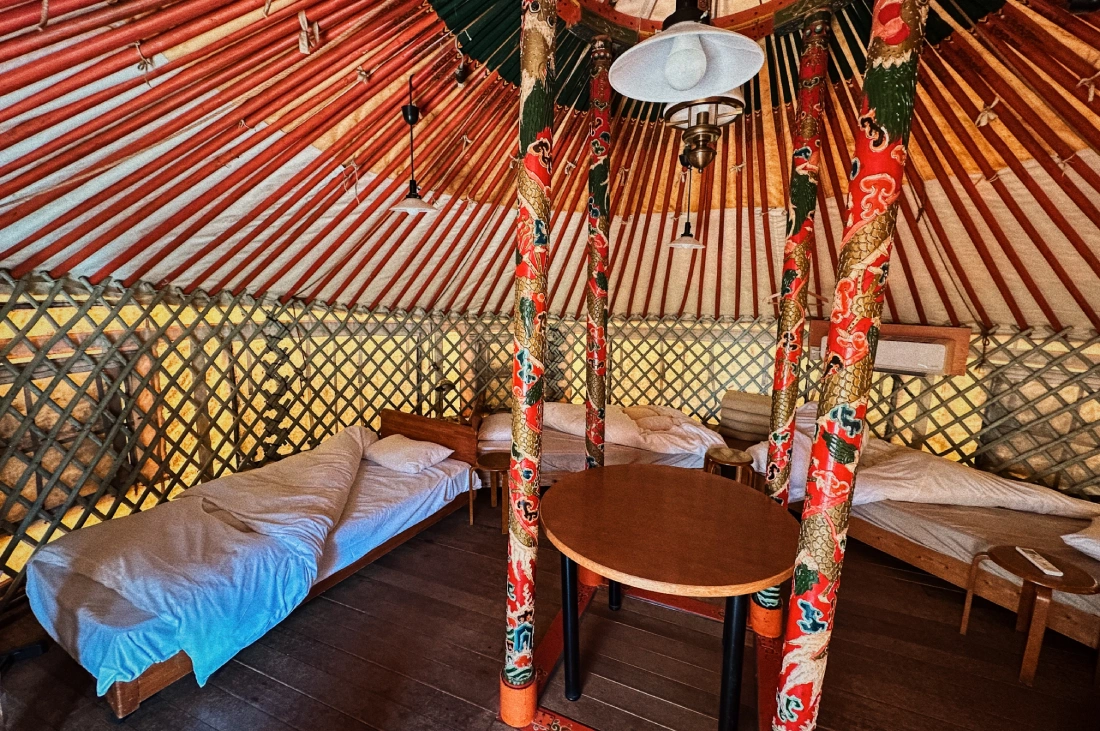
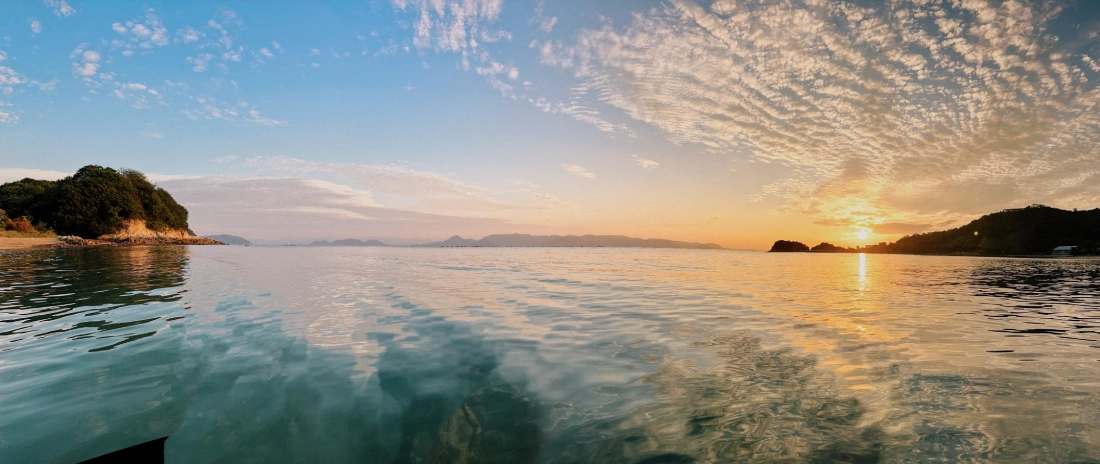
Waking up to sunrise light hitting our yurts and the waves moving quietly against the shore was a genuinely good way to start a morning. One evening, we took a swim around sunset, and it was just magical to see the bay, the forest on the island, and the yellow pumpkin in the warm evening colors.
Our Naoshima gay travel guide tip: For reservations and information at 直島町ふるさと海の家 つつじ荘 -SeaSide Park Stay Tsutsujiso, click on the booking.com affiliate link.
Getting around the island: on two (or four) wheels
Getting around Naoshima is easier than you’d expect for an island scattered with museums and art houses. It’s small enough to explore on foot too, but renting a bicycle is the most popular way to get around. On our second day, we rented electric bikes (for a little extra help on the hilly parts of the island) at OUGIYA RentaCycle right opposite the Miyanoura ferry terminal. It turned out to be the right call for our trip.
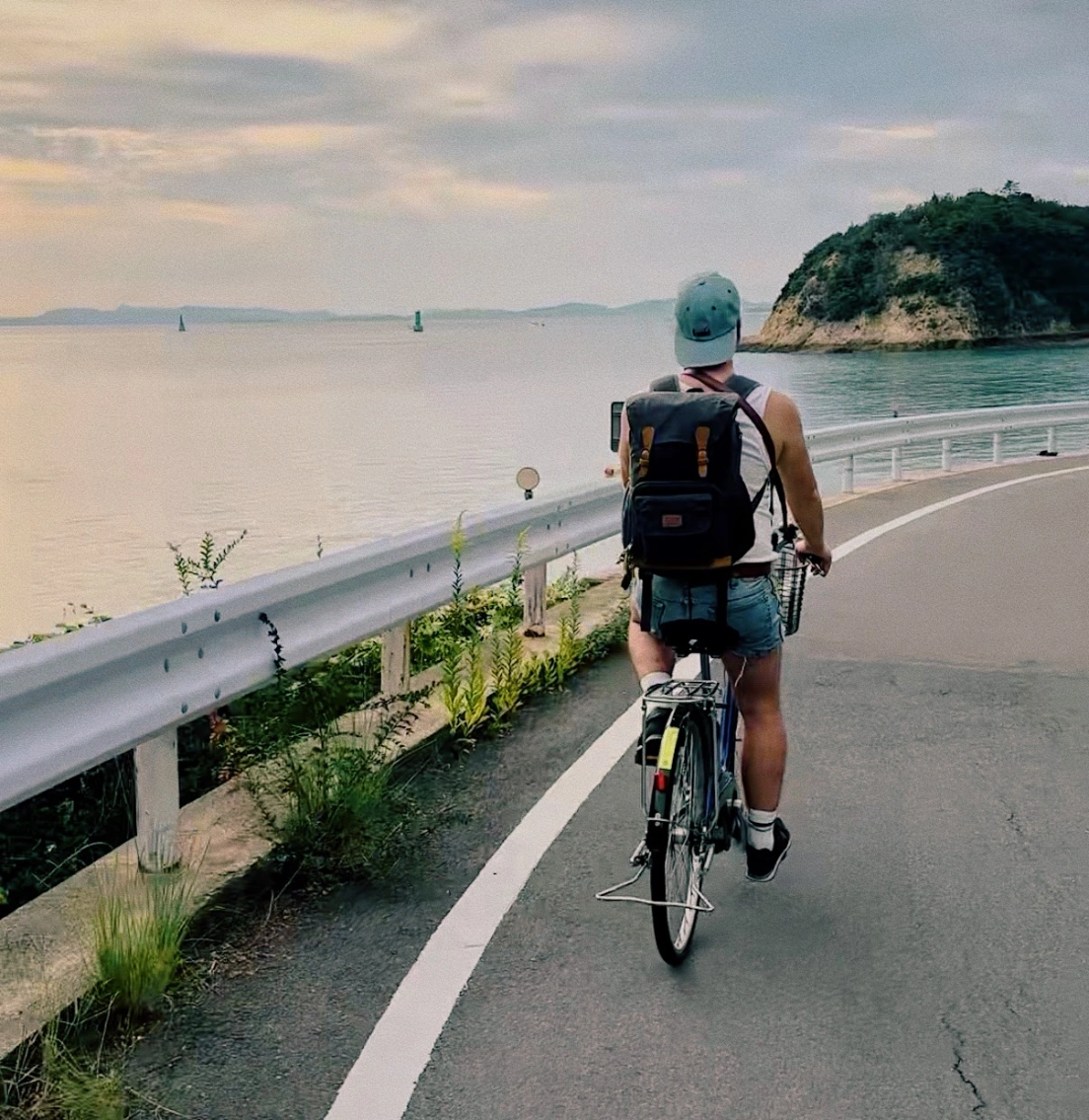
For those less inclined to pedal, a local bus service connects the main areas, and a free shuttle bus runs between the museums. For us, cycling won. It let us find hidden viewing points, quiet lanes, and art installations we’d never have stumbled upon otherwise, and we stopped wherever and whenever we wanted. You know that we, as Amsterdamers, love this kind of freedom on wheels when we travel.
Our Naoshima gay travel guide tip: Just remember to keep to the left, as is the custom in Japan!
Naoshima’s Museums
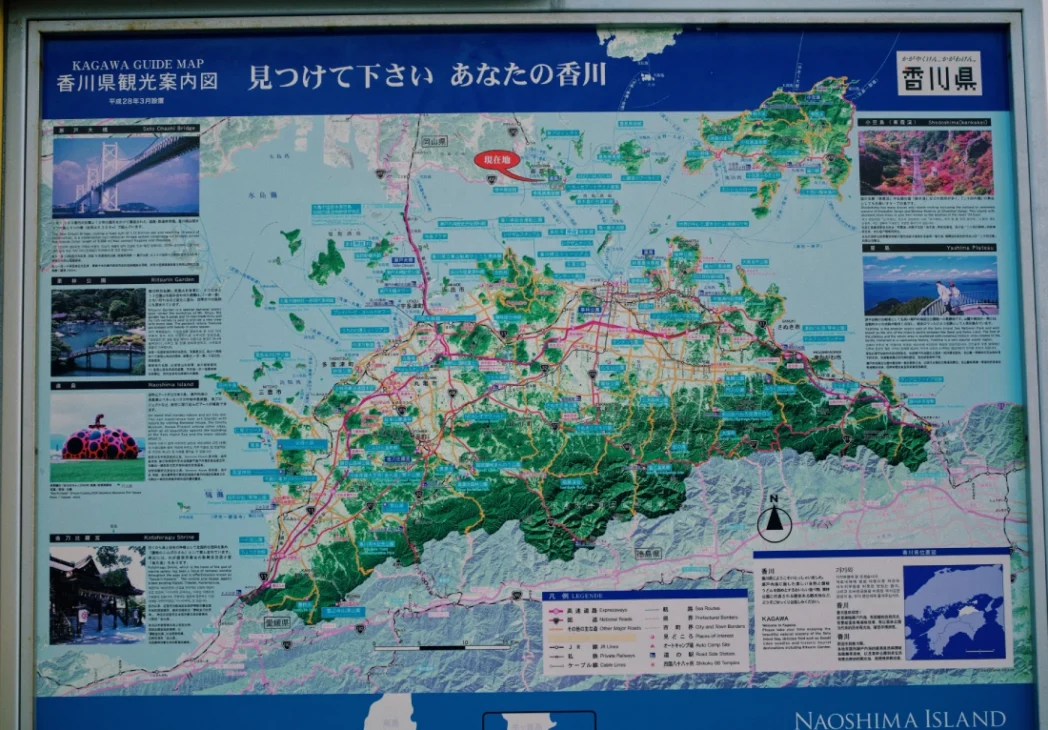
But the main reason we came is that Naoshima packs museum after museum onto a small island, with artworks scattered throughout. And no two of them approach contemporary art the same way. Let us try to give you an overview of our favorites, must-sees, and a few more travel tips along the way.
One important piece of information for the photographers among you: The photography rules are strict and vary by museum, sometimes by building. We respected the rules like everyone else, which is why we don’t have a single photo of some of the most important artworks we could share with you on this blog.
- Benesse House Museum allows photos everywhere except Yukinori Yanagi’s “Banzai Corner.”
- Chichu Art Museum and the Lee Ufan Museum only allow photography up to the reception area, nothing inside the actual gallery rooms.
- In the Art House Project, Minamidera and Kinza are no-photo zones; the other four stops are fine.
- The newer Naoshima New Museum of Art follows a similar pattern to the Benesse House Museum: photos are permitted throughout the building, except for a handful of works.
- Naoshima Public Bath I Love Yu allows photos inside the building, just not during actual bathing hours.
Flash, tripods, selfie sticks, and video are off-limits in all museums on the island regardless. Rules do change, so check the current photography guidelines on Benesse Art Site Naoshima before you go. But now, let’s show you how we experienced Naoshima Island as a gay couple on our honeymoon!
Benesse House Museum Outdoor Works
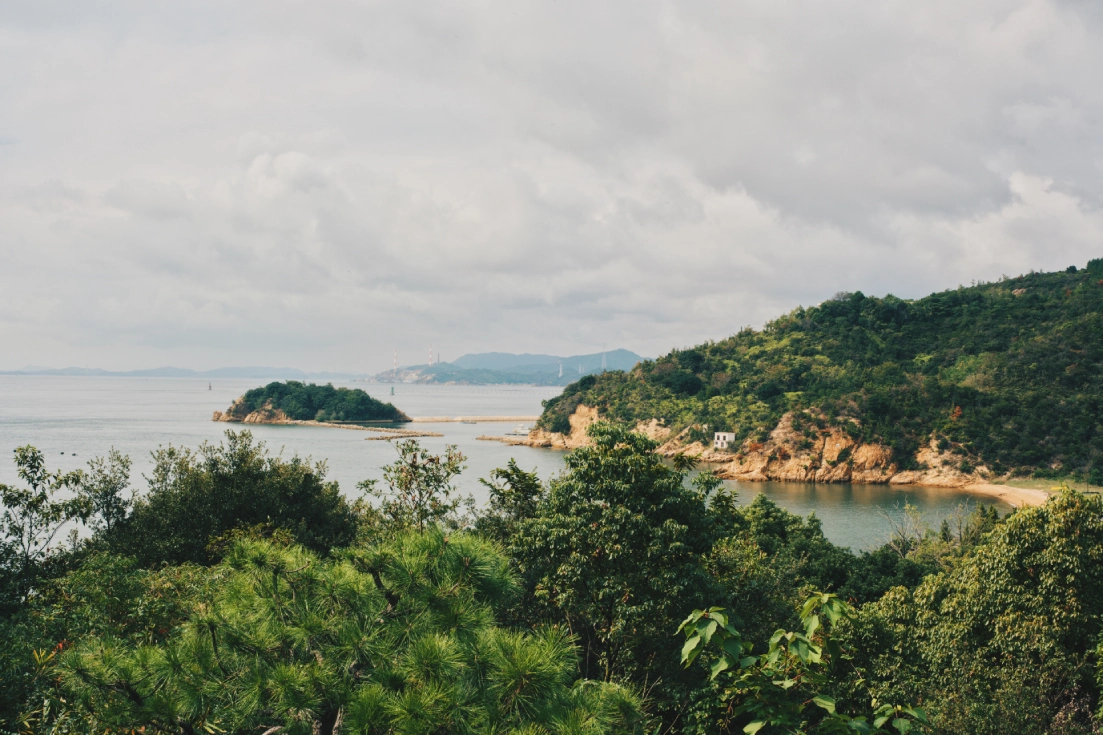
We started our museum visit with a walk along the beach to the Hiroshi Sugimoto Gallery to see the Time Corridors and the Glass Tea House “Mondrian”. In the park in front of the Hiroshi Sugimoto Gallery building, several artworks from the Benesse House Museum Outdoor Works are on display. Take your time to explore them, sit on them, and enjoy the spectacular sea view, which is just as amazing as the art itself, especially from the large patio in front of the gallery.
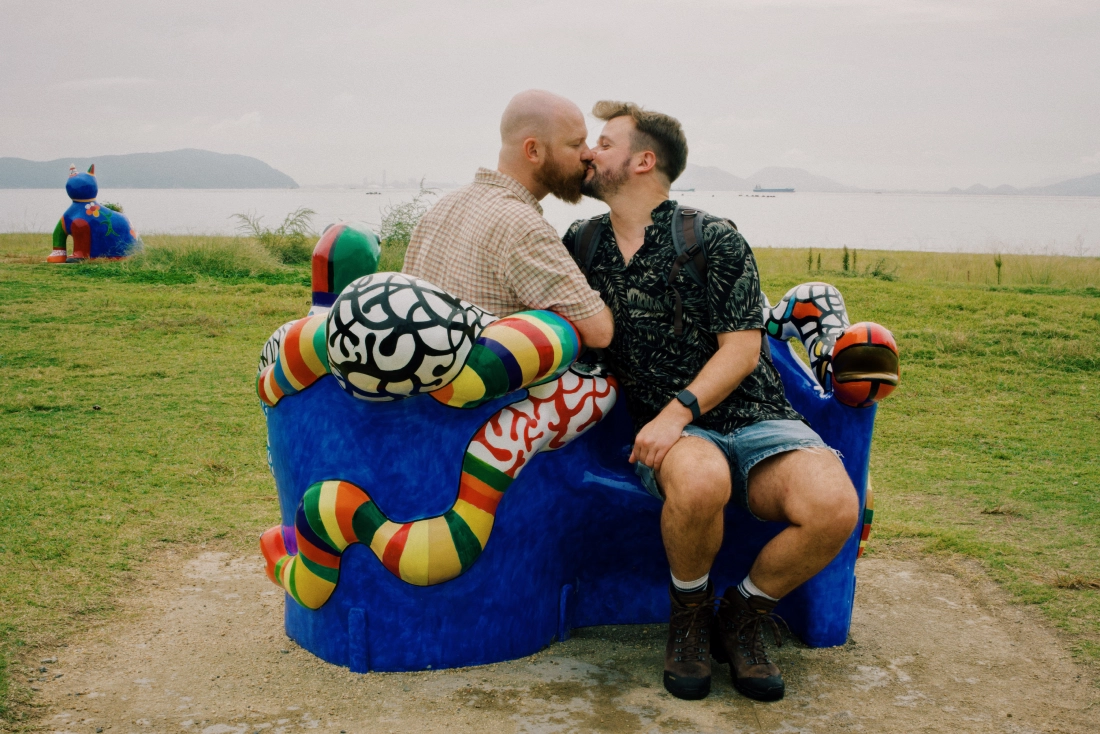
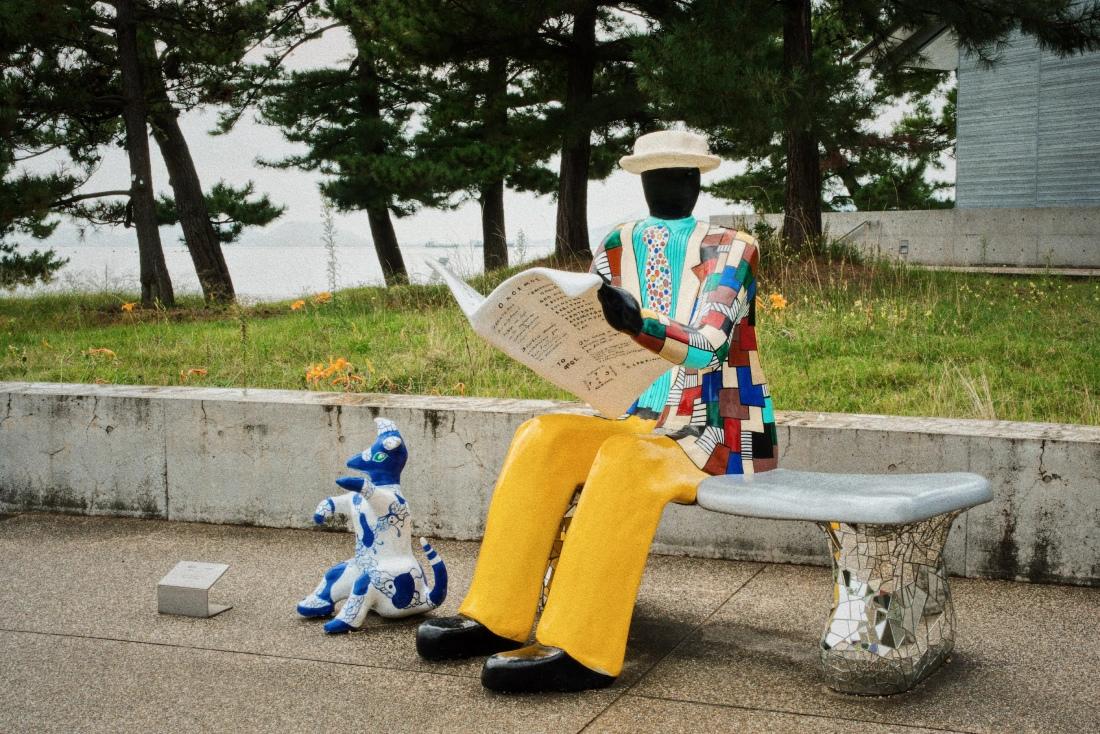
Hiroshi Sugimoto Gallery
The Hiroshi Sugimoto Gallery: Time Corridors is a separate, ticketed building within Benesse House Park, designed by Tadao Ando and opened in 2022 to mark the thirtieth anniversary of Benesse Art Site Naoshima. Photographer and architect Hiroshi Sugimoto filled it with work spanning his career. From early seascape photographs and architectural models to one of the Go’o Shrines, his prism sculptures, and the light installation “Opticks.”
Our Naoshima gay travel guide tip: Tickets are limited and need to be booked online in advance for a specific date and time.
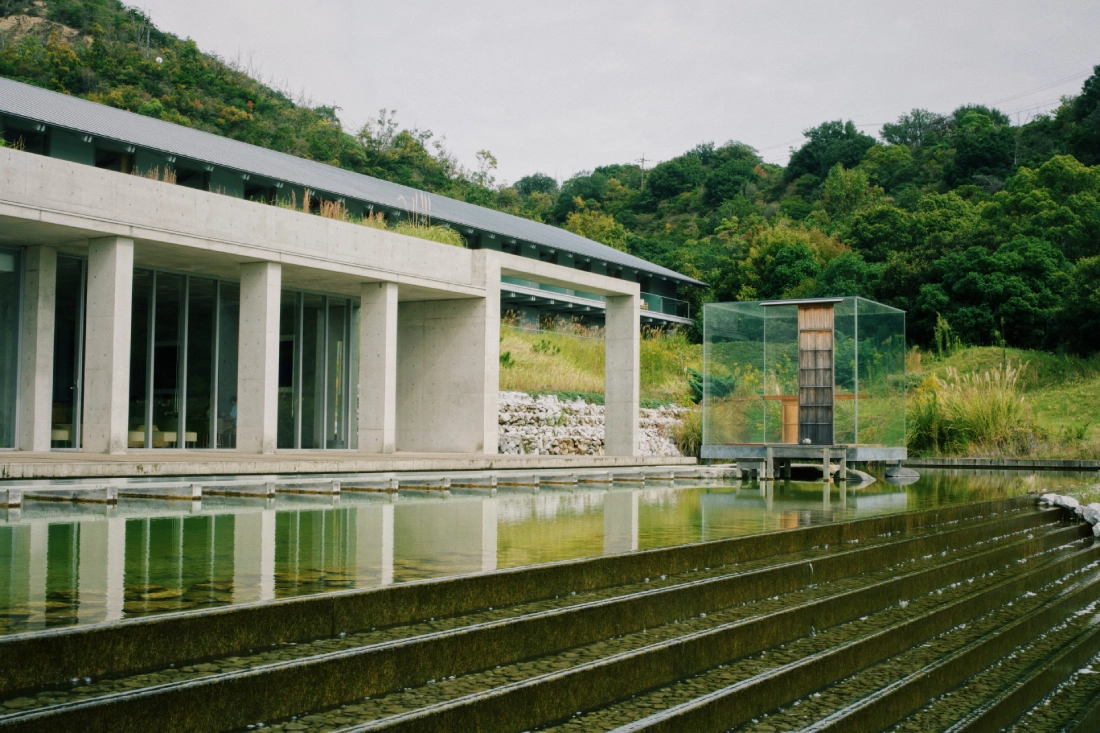
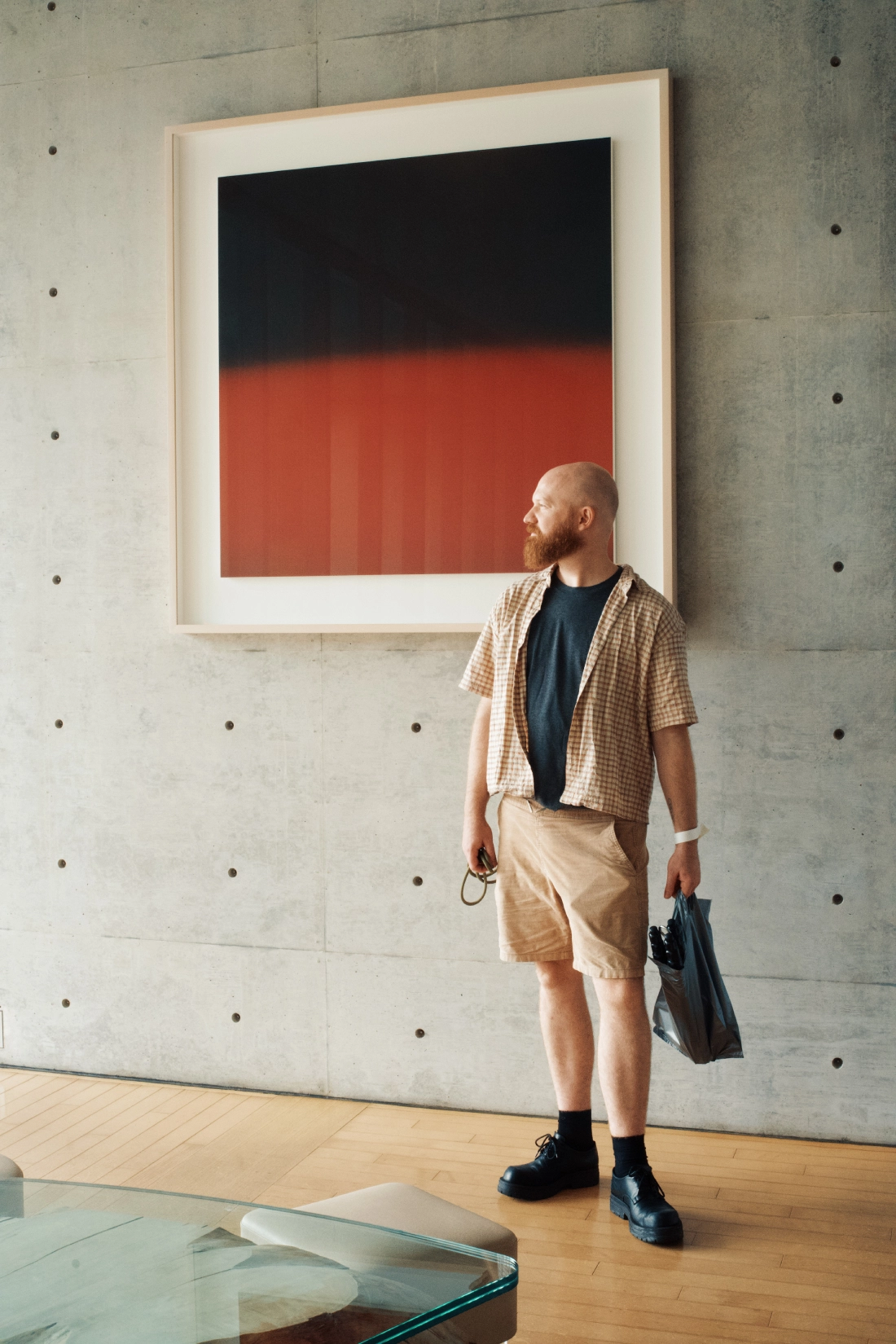
Benesse House Museum
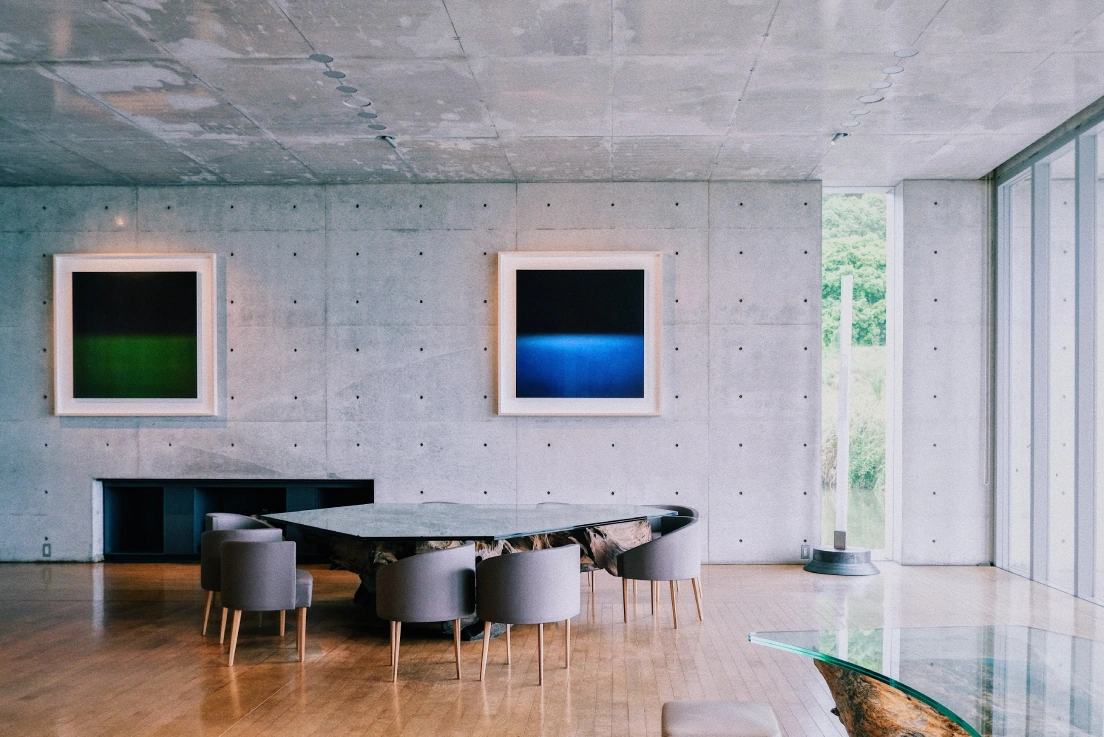
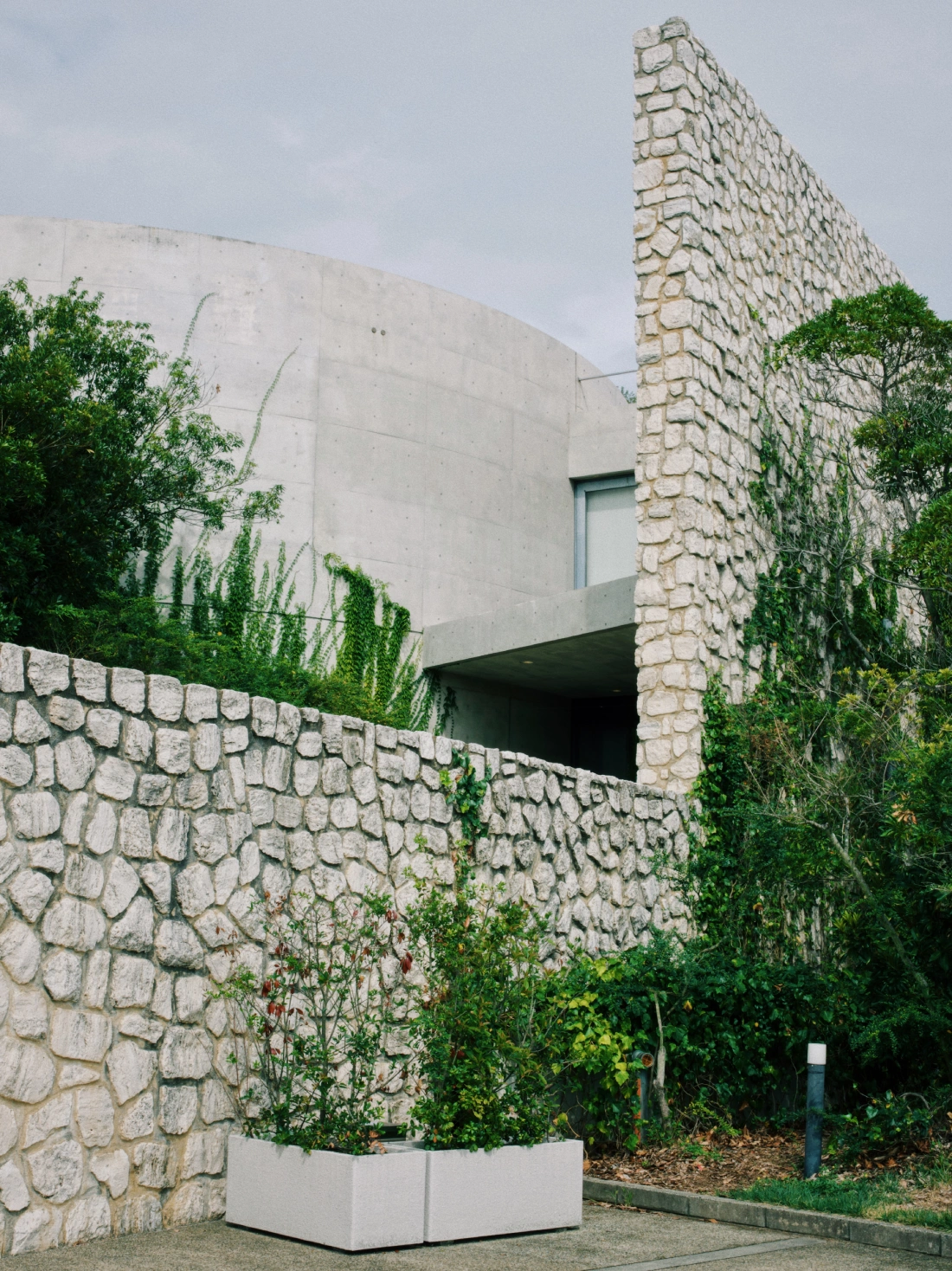
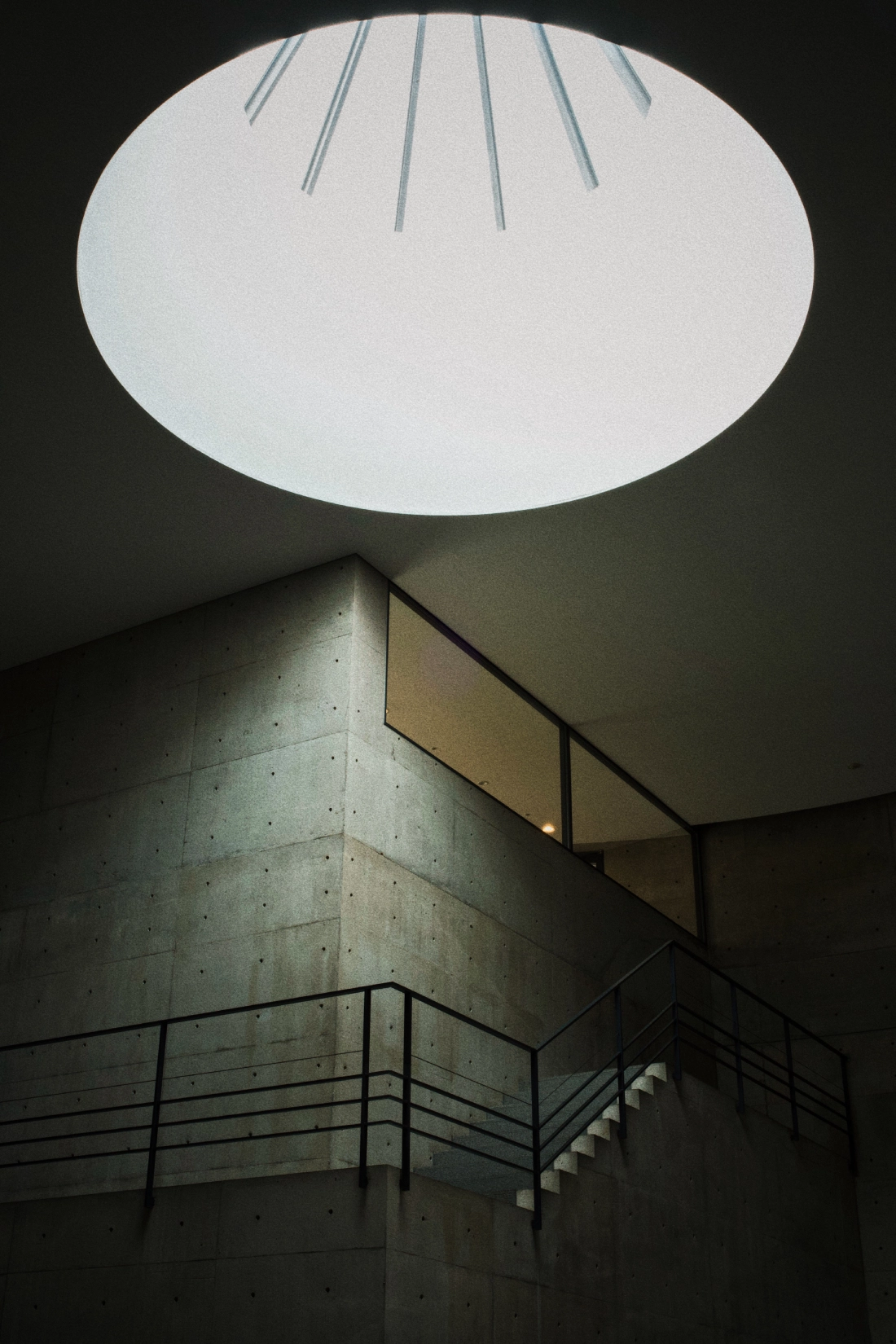
Just a few steps up the hill, and we arrived at the Benesse House Museum. And let us tell you, this wasn’t just another museum visit. Tadao Ando designed the building of the Benesse House Museum, and it shows in every corner: raw concrete, clean lines, and natural light pulled in at exactly the right angles. Perfection. But it was the art inside those walls that held our attention the longest.
Bruce Nauman’s “100 Live and Die”
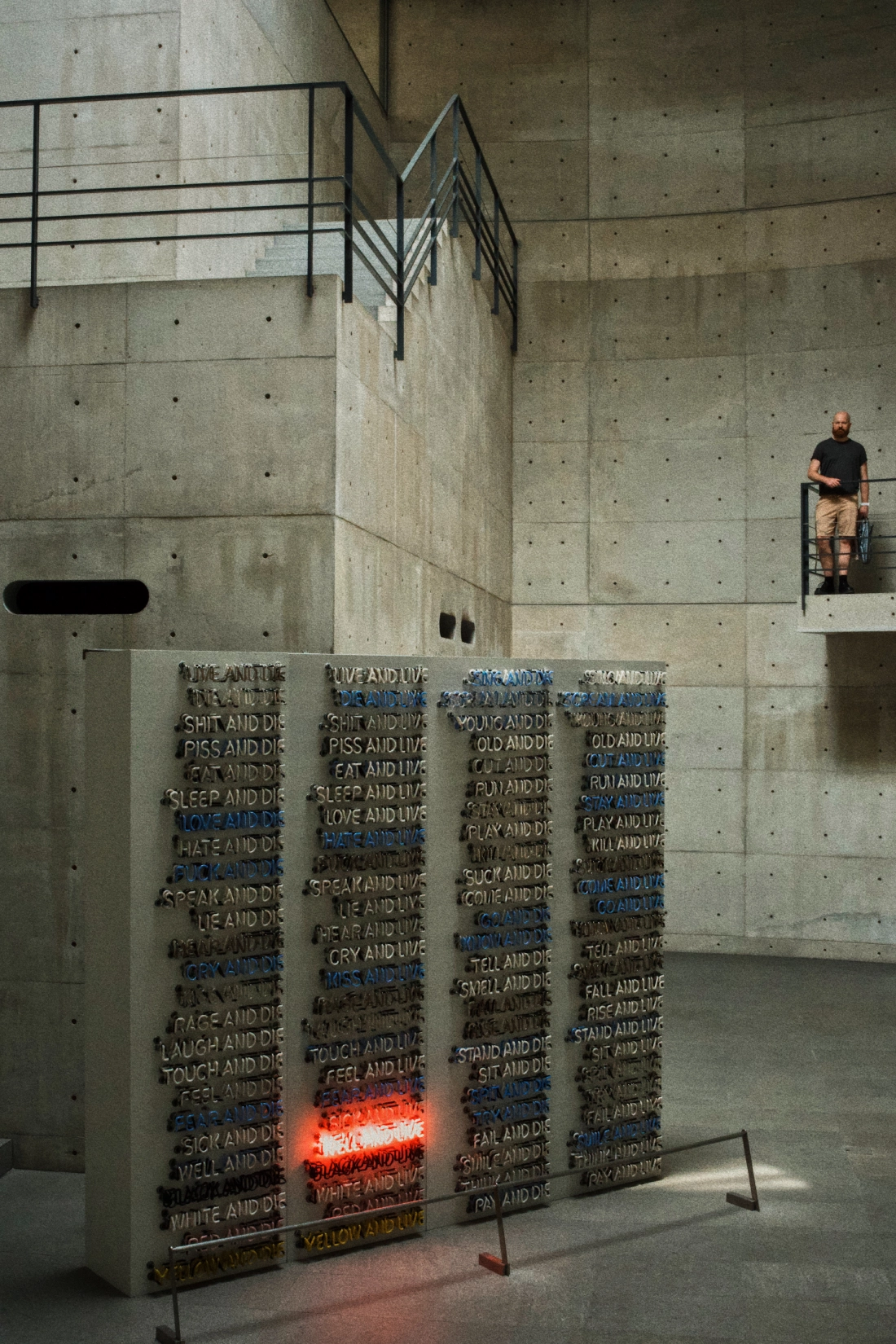
Bruce Nauman’s “100 Live and Die” stopped us in our tracks. A grid of neon phrases flashes on and off in shifting colors, blunt commands paired with life and death, lighting the room in pulses. As gay men, we know something about living on a tighter rope than most, joy and grief close enough to touch. Set against the endless sea outside the window, Nauman’s piece landed harder than we expected.
Kan Yasuda’s “Secret of the Sky”
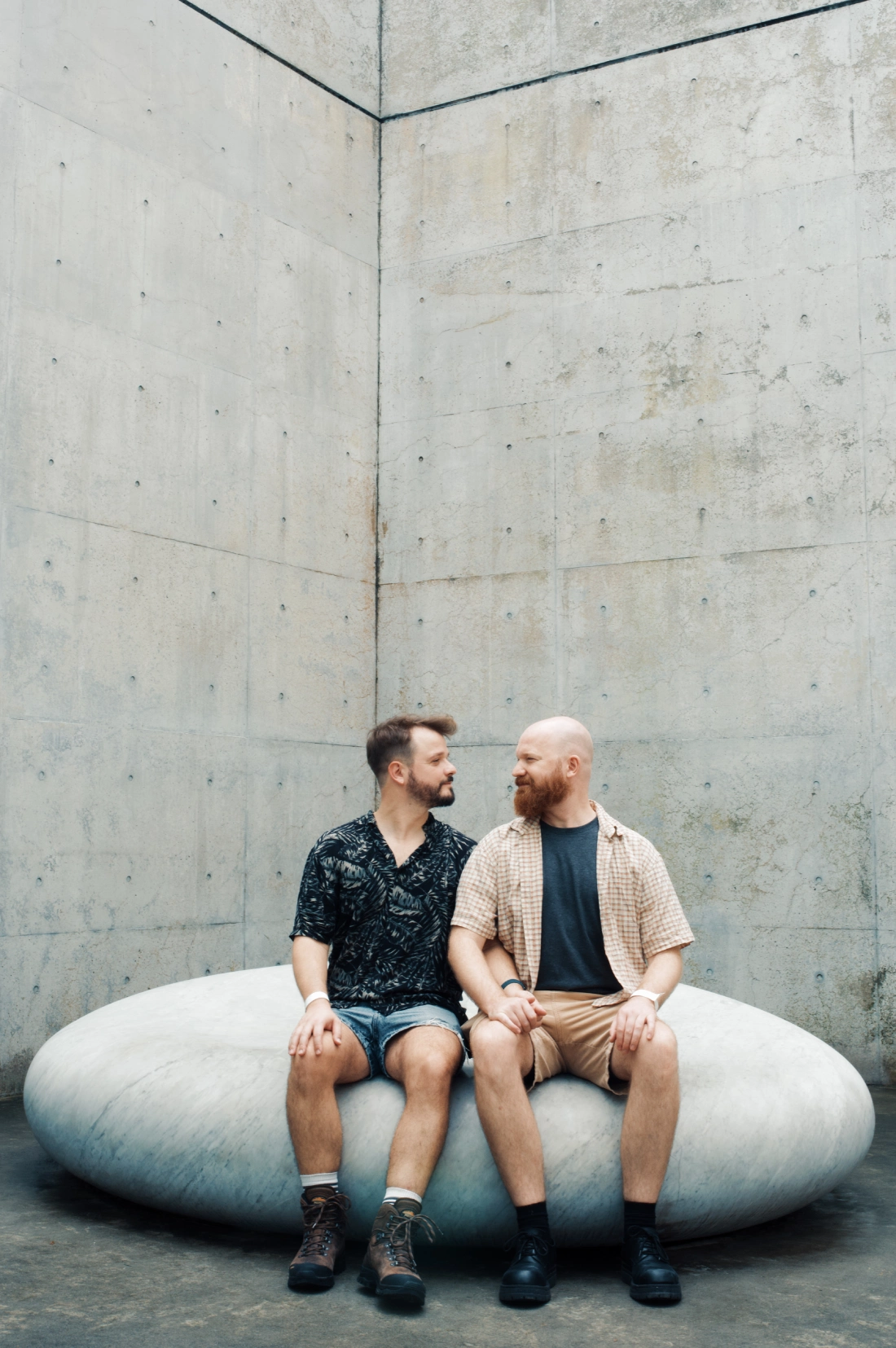
Further on, we came across Kan Yasuda’s “Secret of the Sky,” a massive sculpture built from smooth curves and deep hollows. Up close, it felt less like a sculpture on display and more like something that had grown out of the landscape itself, a quiet, watchful shape visitors could sit on and look up at the sky from.
Hiroshi Sugimoto’s “Time Exposed”
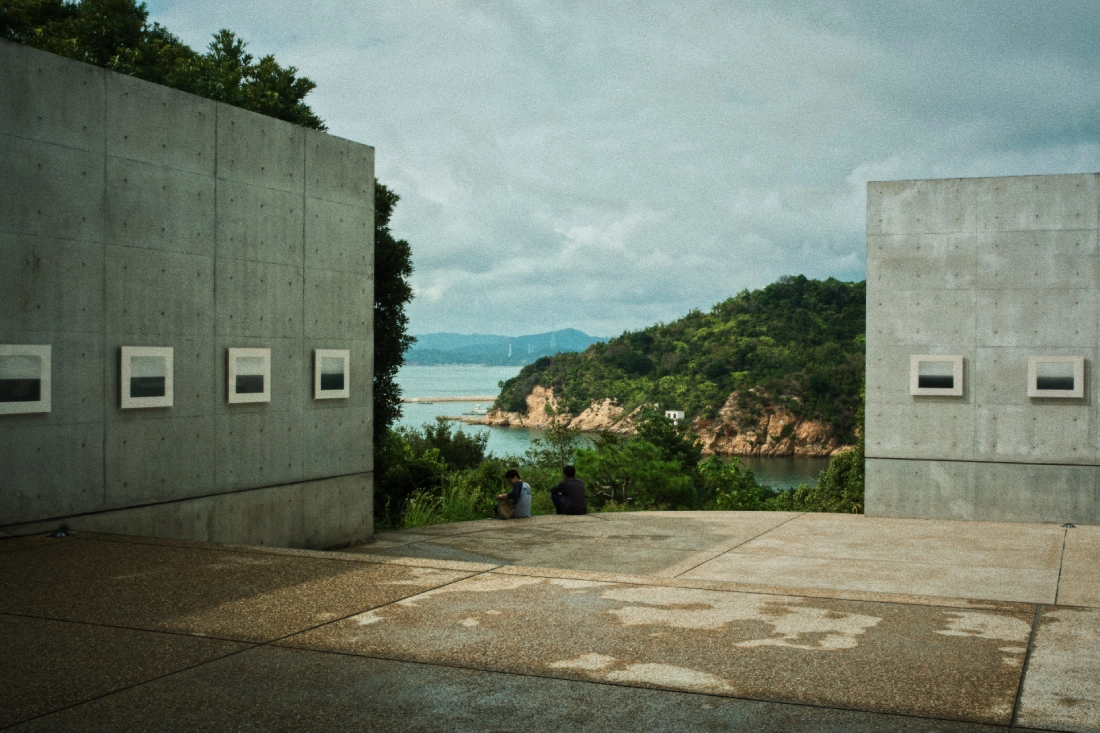
And then there was Hiroshi Sugimoto’s “Time Exposed” series: black-and-white photographs of the sea and horizon, each taken with an exposure long enough to smooth the water into something closer to fog. They’re arranged in a row along a patio that overlooks an actual bay, and after a minute of looking, the photos and the real view behind them start to blur together. We stood there longer than we meant to, going back and forth between the printed horizon and the real one, trying to spot the difference.
Chichu Art Museum
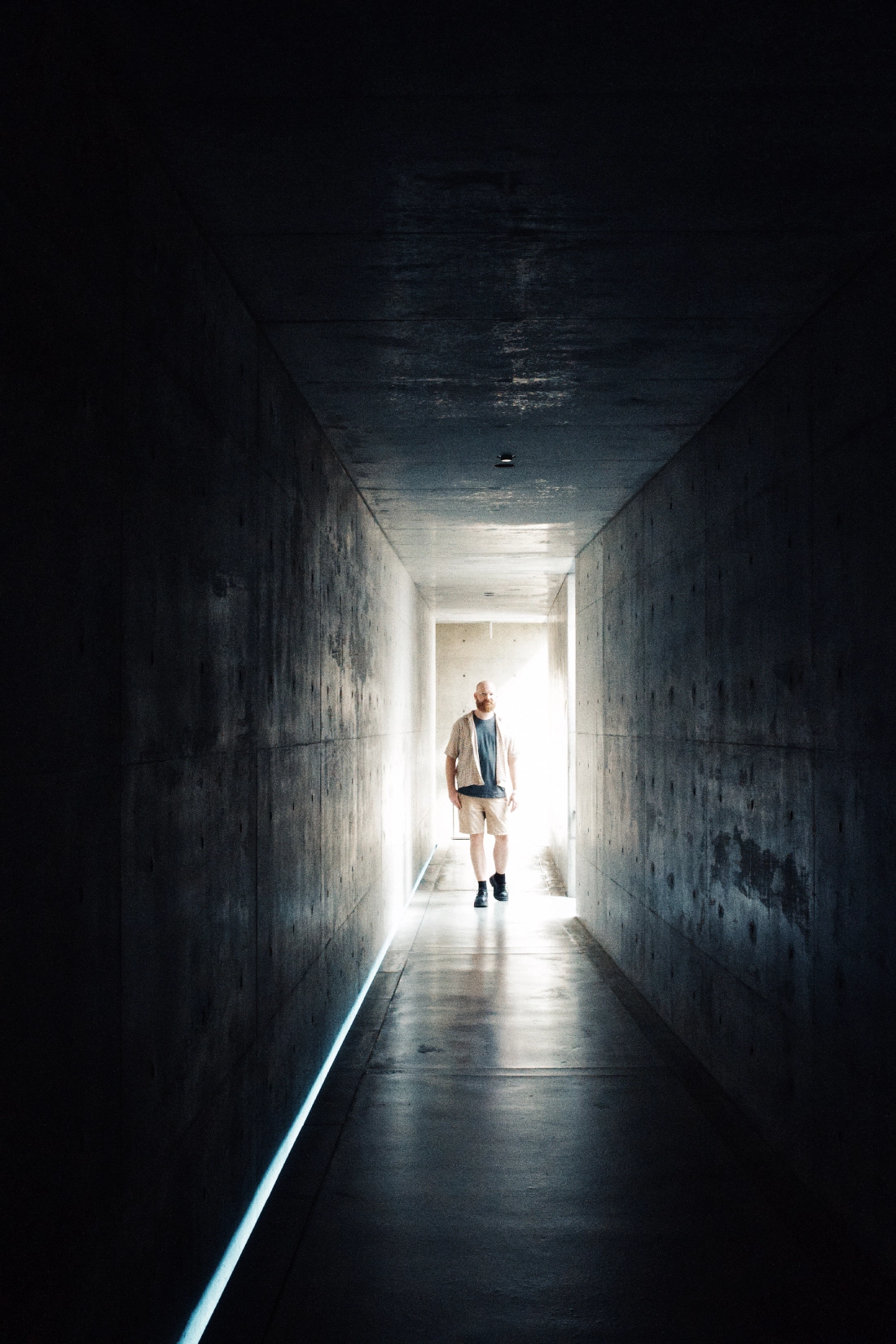
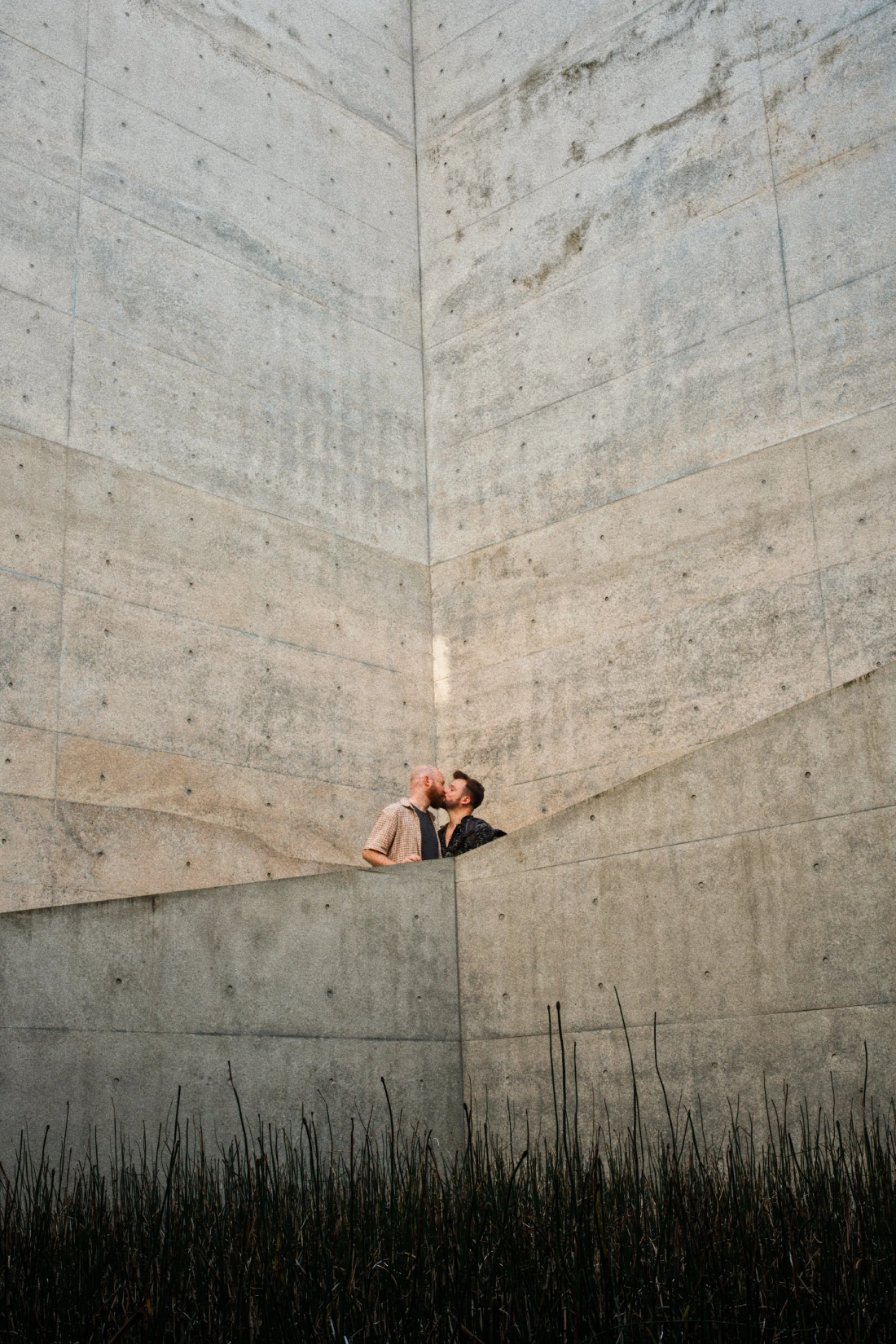
Descending into the Chichu Art Museum felt like entering another world. Built entirely underground, this Ando building runs almost entirely on natural light, so the rooms genuinely change in mood depending on the hour and the weather outside.
James Turrell’s “Open Sky” room felt different from anything else on the island. You sit along the wall of a stark white room, open straight up to the sky through a square cut into the ceiling, and just watch. The color shifts on its own, from deep blue toward grey, and at one point a plane crossed the square overhead and was gone again in seconds. We lost track of time in there, which doesn’t happen to us often.
Walter De Maria’s “Time/Timeless/No Time” sits in a room built specifically for it: a black granite sphere at the center, facing rows of gold-leafed wooden columns mounted on the walls. Like the rest of Chichu, the room runs on natural light alone, so the sphere looks different depending on the hour, sometimes a flat black shape, sometimes catching a visible shine along its curve. We came back to this room twice on purpose, once in the afternoon and once closer to closing, just to see the difference.
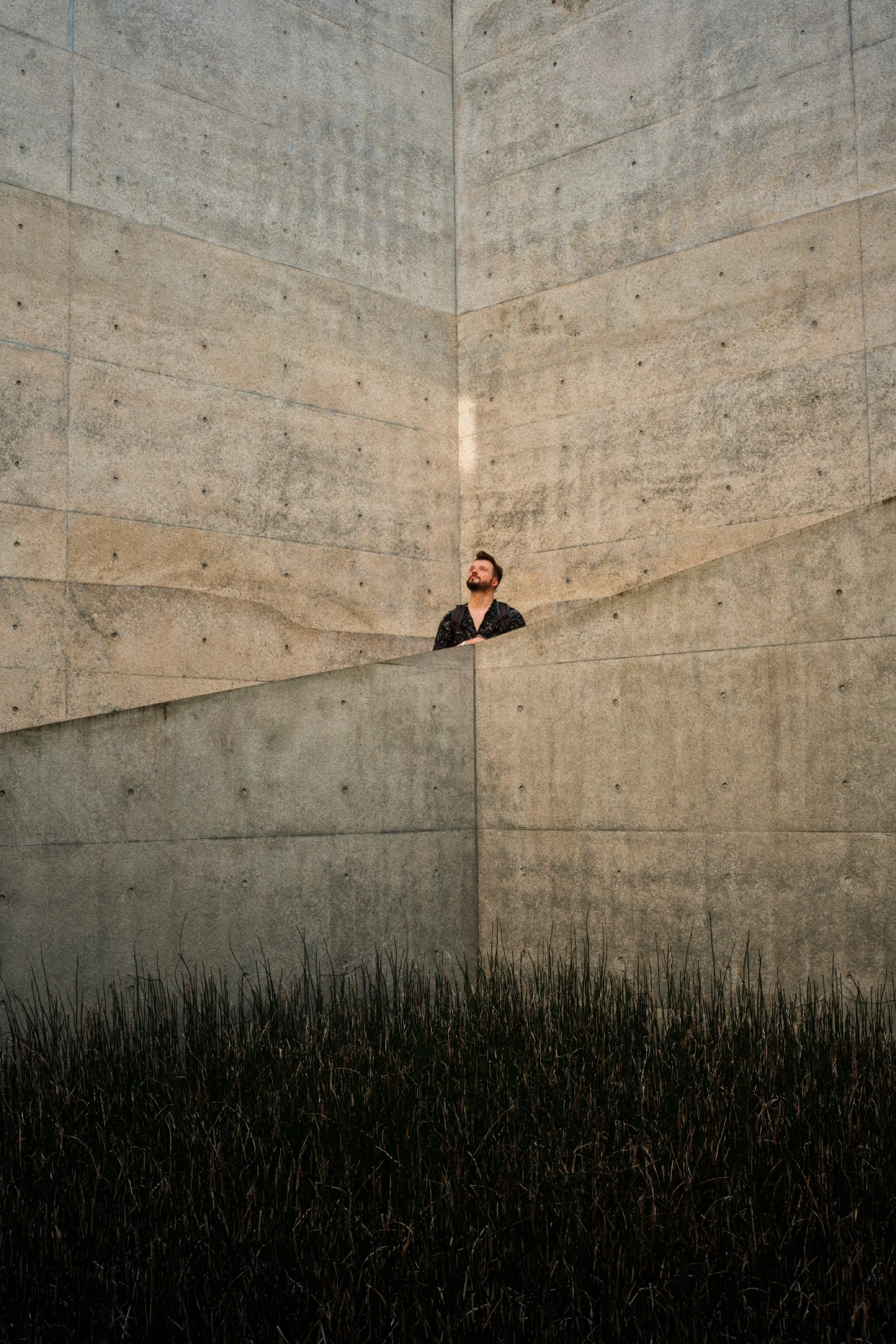
The museum’s Monet room holds five paintings from his “Water Lilies” series, lit entirely by (indirect) daylight that shifts through the day, changing how the paintings look depending on when you walk in. We’d seen these paintings a hundred times in books, but a printed reproduction flattens out exactly what makes them work. Up close, individual brushstrokes of green, violet, and white sit right next to each other, only blurring into water lilies once you step back. The room asks you to slow down in a way a screen never does.
Lee Ufan Museum:
The Lee Ufan Museum, dedicated to the Korean minimalist artist Lee Ufan, was a study in restraint and simplicity. The stark white walls and concrete floors provided a neutral backdrop for Ufan’s powerful works. His paintings, with their bold brushstrokes and minimalist compositions, evoked a sense of Zen-like calm.
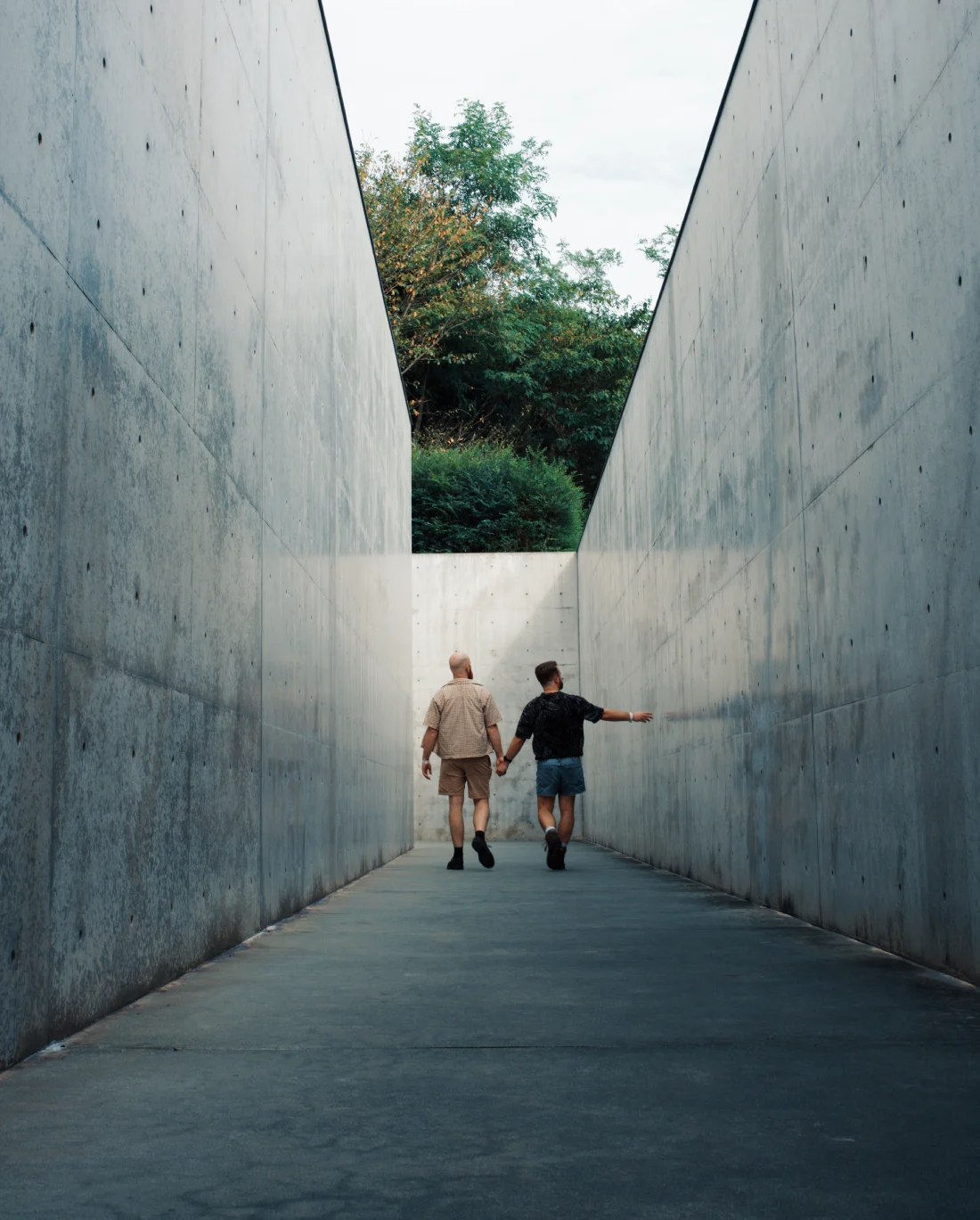
And his sculptures, featuring large stones and metal plates, seemed to interact with the surrounding landscape, blurring the lines between art and nature. We found ourselves drawn to the quiet contemplation that Ufan’s work inspired, a welcome respite from the noise and chaos of the world. Of course, we also spent some time walking around the adjoining park, which features open-air artworks. Here, once again, it became visible how the incredibly smooth architecture and art blend into the landscape of the Japanese “art” island.
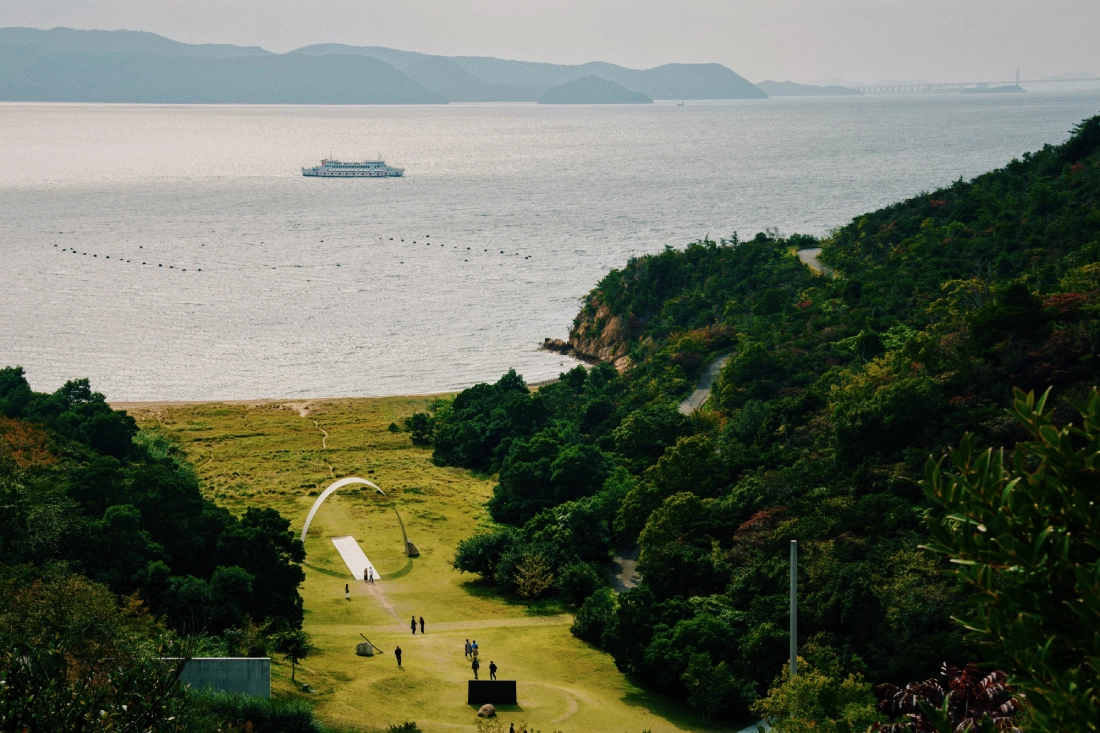
The Art House Project:
Beyond the museums, Naoshima is home to the Art House Project, a unique initiative that transforms abandoned Japanese houses in the traditional Honmura district into site-specific art installations. We visited them all, riding our bikes around the island.
Kinza
This former community center is a dark, low-ceilinged room where the light rises from the floor instead of falling from above. Once our eyes adjusted, we began to notice small marbles, thin disks, and slim strings scattered across the floor, objects that felt as if they had been left untouched for decades. Visitors get about fifteen minutes inside before the quiet, closed-in feeling turns from meditative to almost too much.
Kadoya
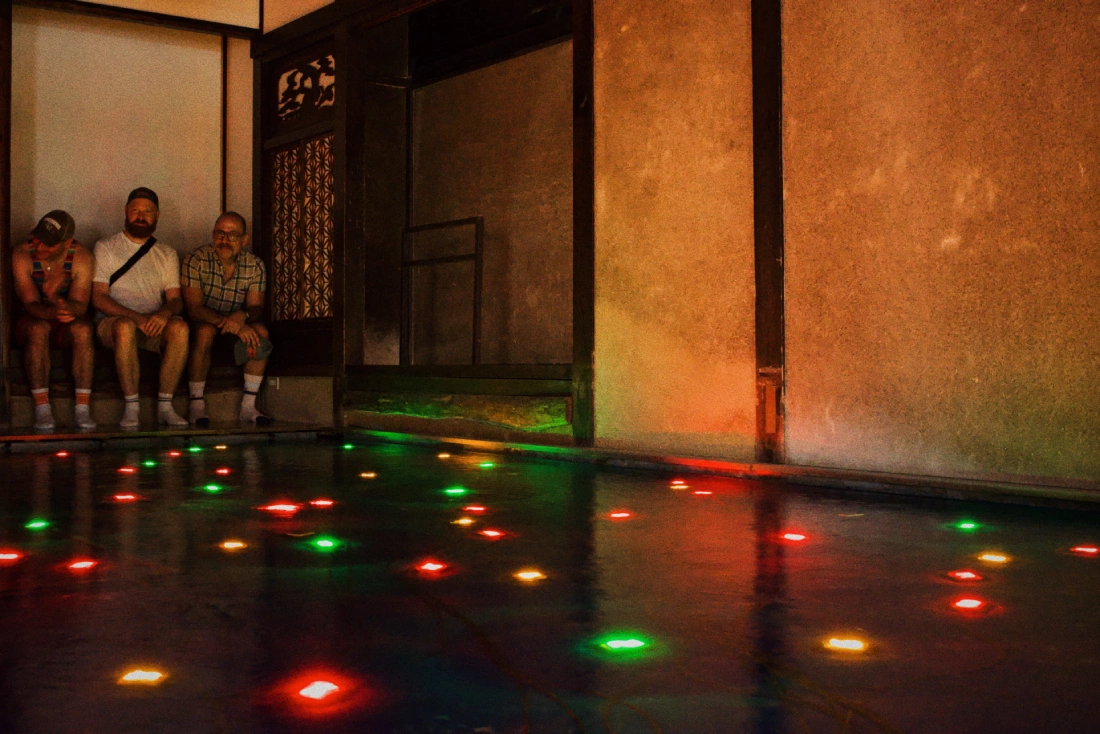
Stepping into this former sake brewery means entering darkness first, then slowly noticing hundreds of small LED counters submerged in a shallow pool at your feet, each blinking at its own speed, cycling from one to nine and resetting. No two counters are in sync, so the whole room seems to breathe.
Minamidera
Minamidera is pitch dark when you walk in, dark enough that you lose all sense of the room’s size, feeling your way along a handrail to find a seat. It takes several minutes before your eyes adjust enough to make out a faint square of color glowing somewhere ahead. We couldn’t agree afterward on how big the room actually was.
Go’o Shrine
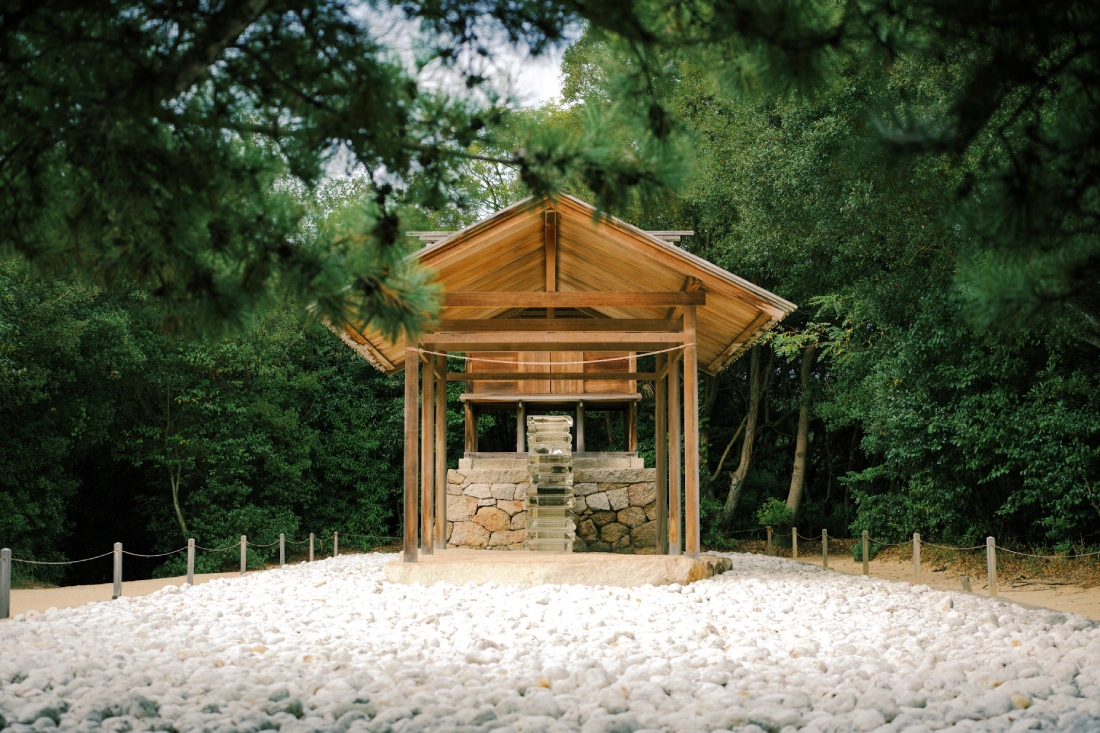
This is Hiroshi Sugimoto’s rebuild of Go’o Shrine, a Shinto shrine dating back to the Edo period that had fallen into disrepair before his restoration. A staircase of thick optical glass leads up to the traditional wooden shrine. Under the main hall sits a stone burial chamber you can actually walk down into, cool and dim, a nod to the ancient burial mounds found elsewhere on the island. Old and new, aboveground and below, light and stone: that contrast is what sets the shrine apart from the rest of the Art House Project.
Haisha
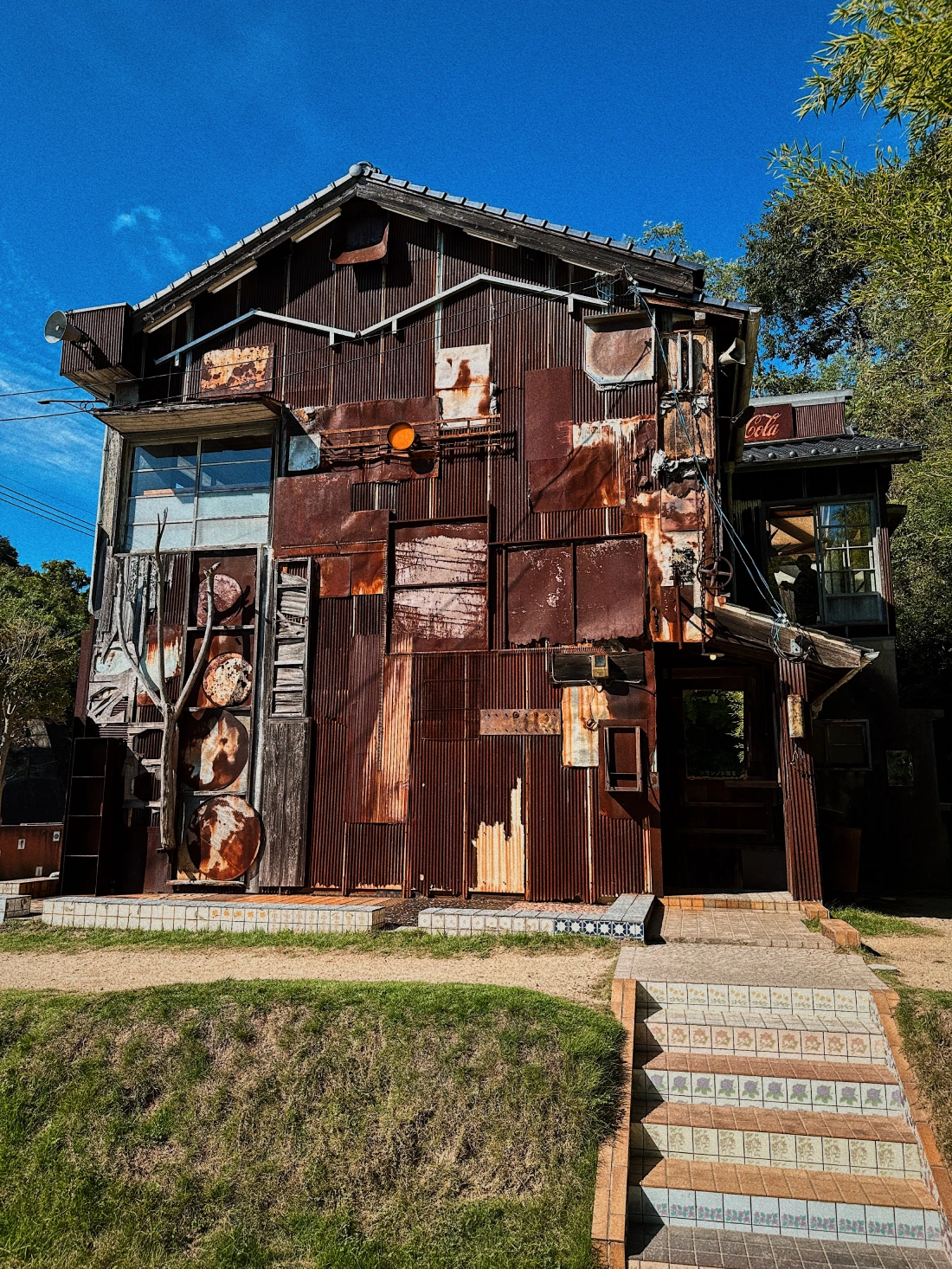
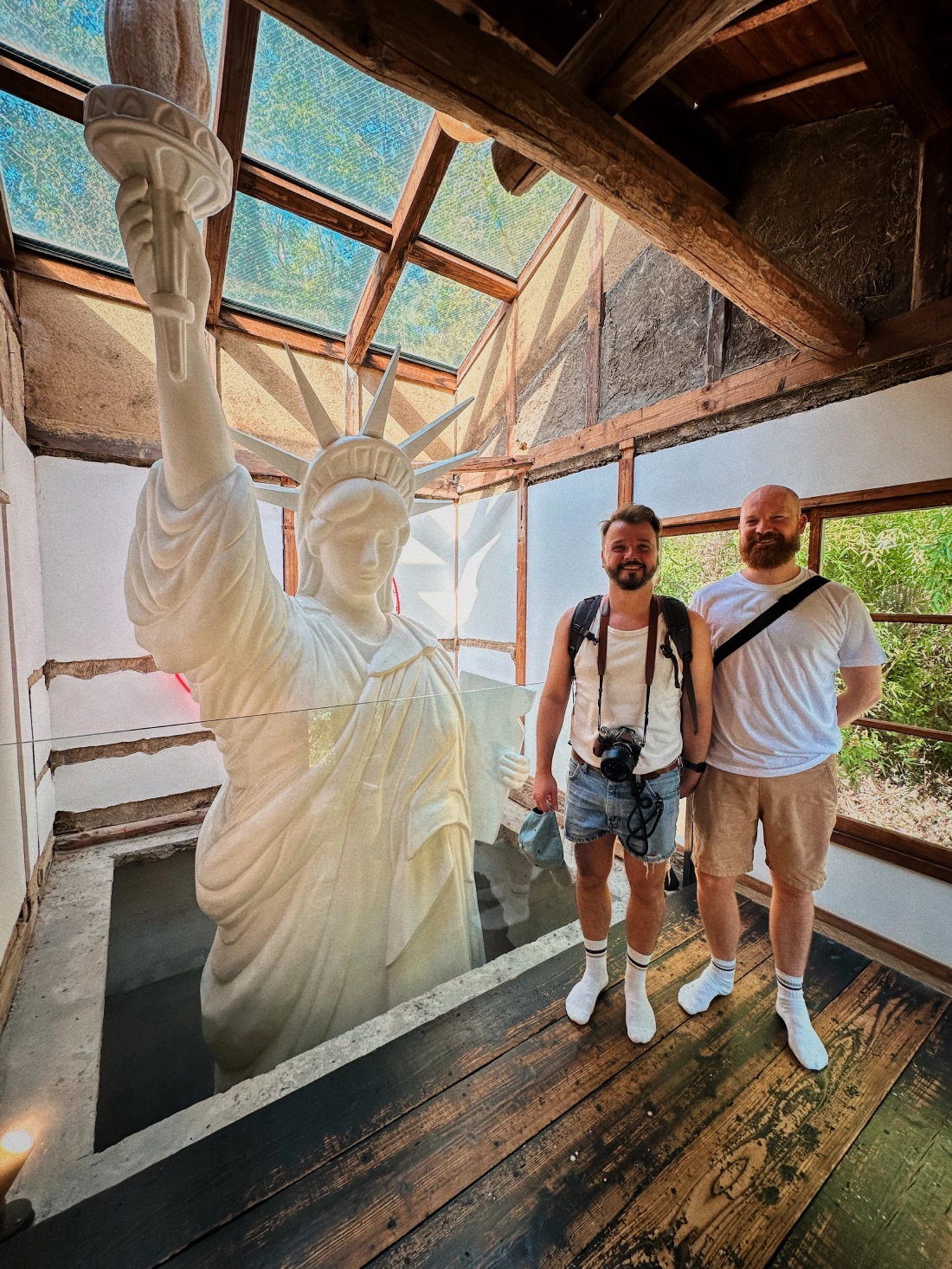
Haisha used to be the town dentist’s office, and artist Shinro Ohtake filled it with an odd, cluttered mix of collage, found objects, and large sculptures. This includes a replica of the Statue of Liberty you can spot from more than one floor of the house. It’s the loudest, busiest space in the whole project, a deliberate contrast to the restraint everywhere else on the island.
Ishibashi
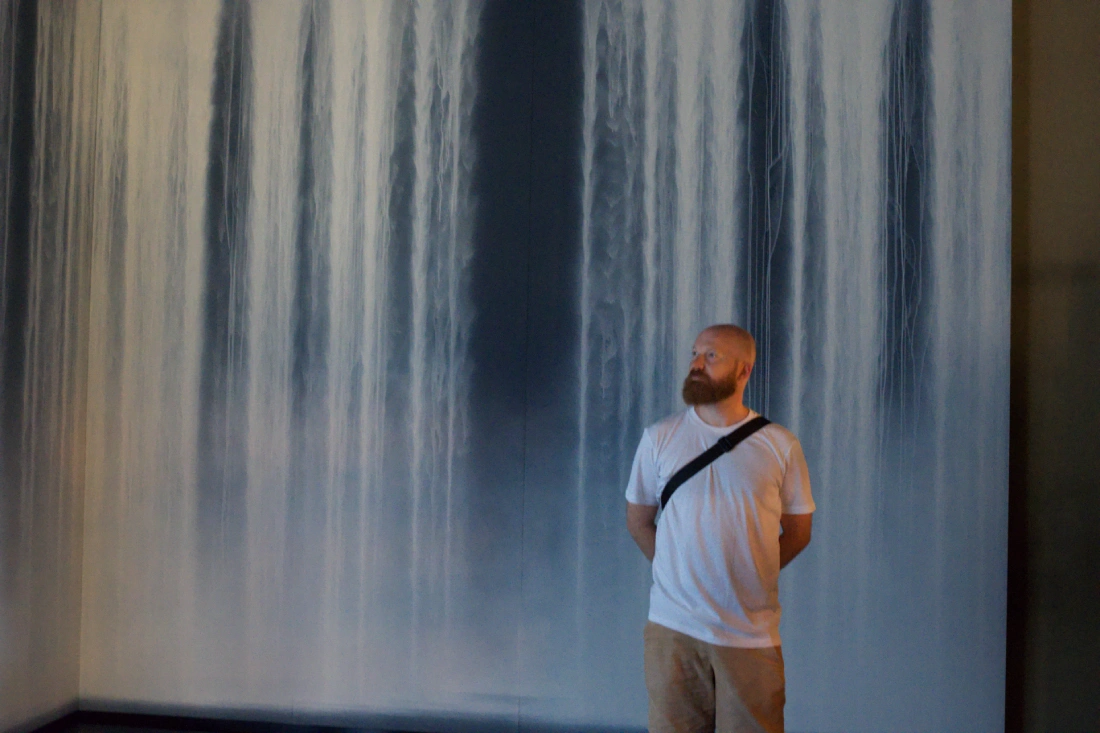
Ishibashi is the quietest stop of the six, a restored merchant’s house built around the sound of water moving somewhere just out of sight. After Haisha’s noise and clutter, walking into this stillness felt almost like a deliberate palate cleanser, whether the project’s curators planned it that way or not.
Narcissus Garden at Valley Gallery
Kusama’s pumpkins are the most photographed artworks on Naoshima, but her “Narcissus Garden” at the Valley Gallery is worth the detour too: hundreds of mirrored steel spheres scattered across a pond, the surrounding grass, and a small building resembling a shrine. Each one reflects the sky, the water, and whoever happens to be standing nearby.
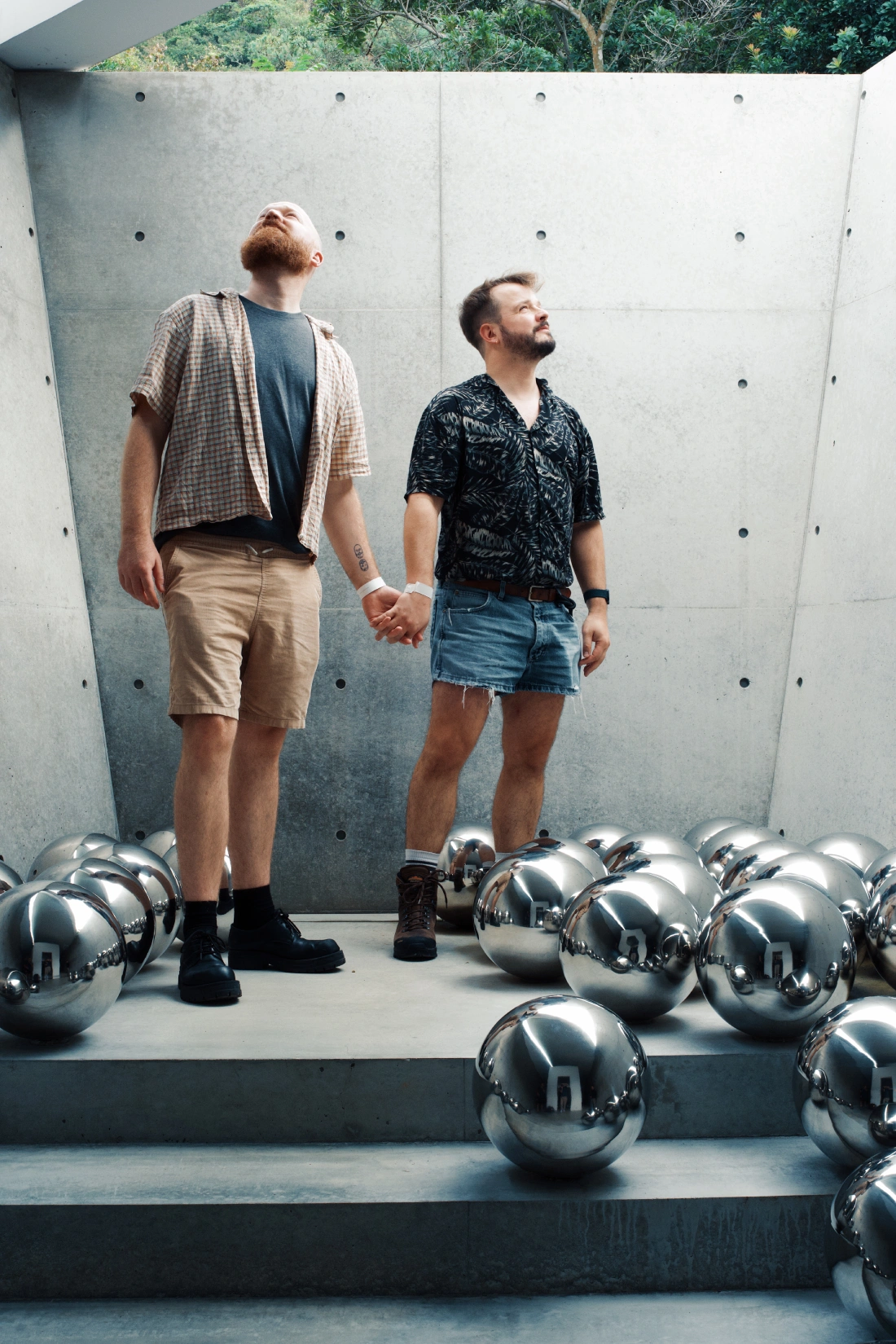
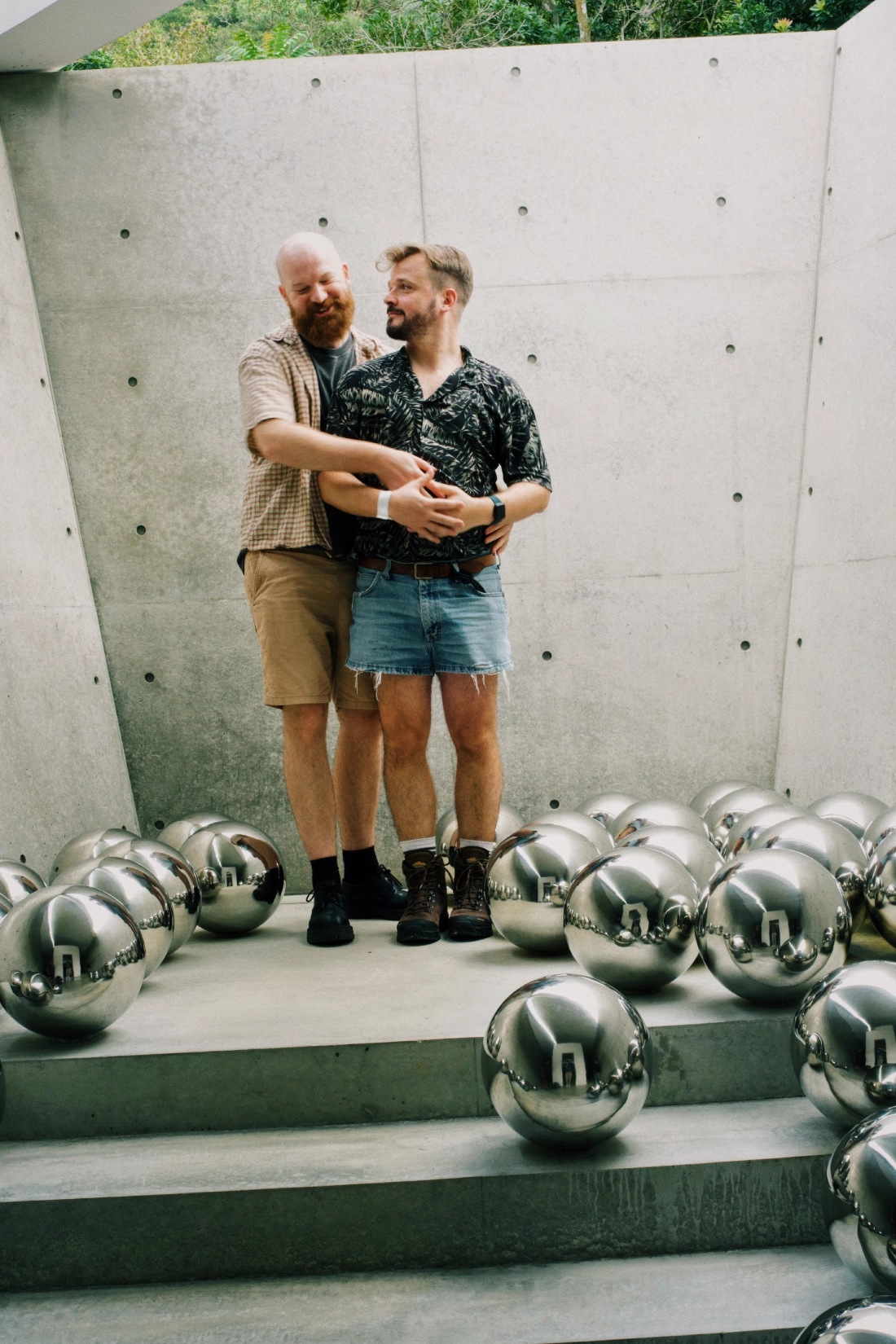
Walk around it, and you catch fragments of yourself in dozens of spheres at once, distorted and multiplied. We love our little photo moment there, feeling the movement of the sun and the wind in the building’s semi-open space. It was a lovely break into nature and an ideal place to spend time with art outdoors between the museum visits.

Advertisement
Order our book now!
The perfect present to inspire (German-speaking) LGBTQ+ travelers and their allies to travel the world open-minded, respectfully, and with a happy heart.
Order our book online or purchase it in bookstores in Germany, Austria, and Switzerland.
Restaurant tips and a cocktail bar
Naoshima’s food scene is compact, which is easy to forgive on an island built around contemplation rather than nightlife. Restaurants close early and seating disappears fast during peak art season, so we planned our days around meals rather than the other way around. Here’s where we ate, drank, and unwound between museum visits, cocktail bar included:
- Breakfast with pastry at the 7-Eleven, the only convenience store on the island
- Coffee break at Hifumiyo Coffee opposite the Minamidera house
- Lunch break at the Benesse House Museum Cafe (ベネッセハウス ミュージアムカフェ)
- Lunch break at the vegan restaurant Aisunao in the Honmura area of Naoshima
- Dinner day 1 at Naoshima Pasta REGALO
- Dinner day 2 at Little Plum
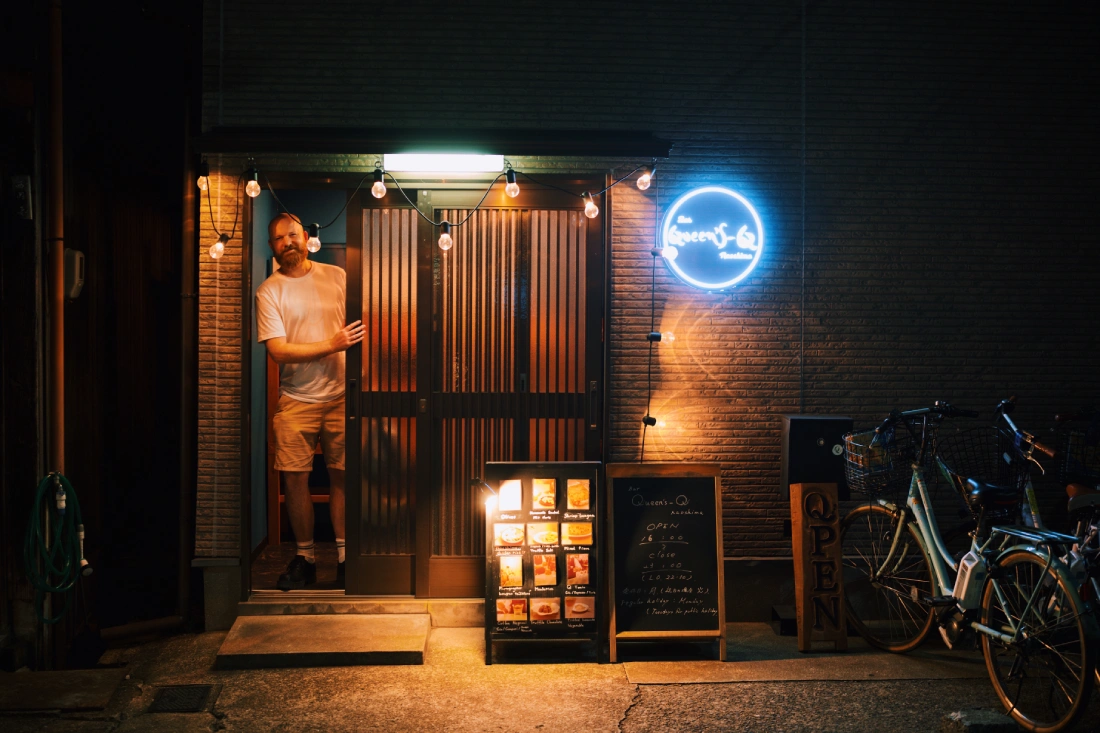
- Cocktails at BAR Queens-Q Naoshima
Japanese bath houses
Naoshima Public Bathhouse I Love Yu, a short walk from the ferry port, was our stop for a proper soak. Visiting a bathhouse in every city in Japan we travel to has become a small tradition of ours. And of course, Naoshima was no exception. The bathhouse traditionally has separate sides for the two binary genders. So we took the right door for the male section.
And we totally fell for the bathhouse’s kitschy vintage style the moment we walked in. After a whole day cycling around the island, we truly enjoyed spending a couple of hours there before dinner: the ritual scrub-down and clean up on the little plastic chairs first, then easing into the hot water with a small folded towel balanced on our heads to catch the sweat.
A New Museum Since Our Visit: Naoshima New Museum of Art
Naoshima now has a fifth major museum. The Naoshima New Museum of Art, also known as the NNMOA, opened on the island in spring 2025, several months after our trip. So this part comes from research rather than our own two feet on the ground, unlike everything else in this Naoshima gay travel guide.
It was Tadao Ando who designed the building again, his tenth project for Benesse Art Site Naoshima since 1992. The new museum on Naoshima is located on a hilltop near Honmura. It’s built into the hillside across three floors, two of them underground, with black plaster walls meant to evoke burned cedar and a stacked-pebble fence that ties the building into the surrounding landscape. A central staircase room draws natural light down through a skylight to the underground galleries, with four gallery spaces arranged around it. A café on the north side looks out over Teshima Island and the Seto Inland Sea.
As of this writing, the exhibition runs through November 23, 2026, and features work by artists across Asia, including Takashi Murakami, Cai Guo-Qiang, Do Ho Suh, and Aida Makoto, as well as newer additions such as Kenjiro Okazaki’s “Tender Buttons.” Admission is ¥1,500 booked online or ¥1,700 at the door, free for anyone 15 or under.
Ando Museum Naoshima
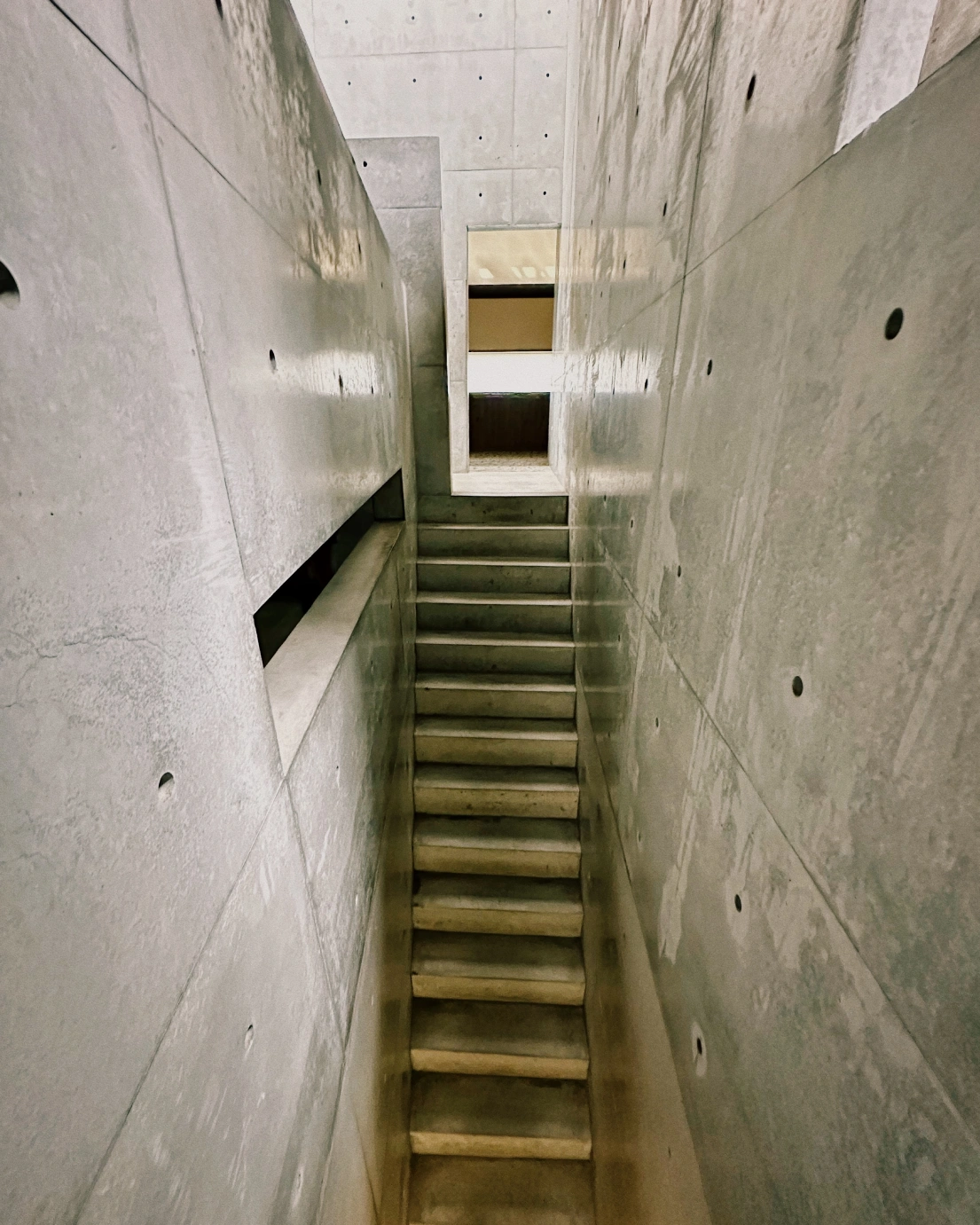
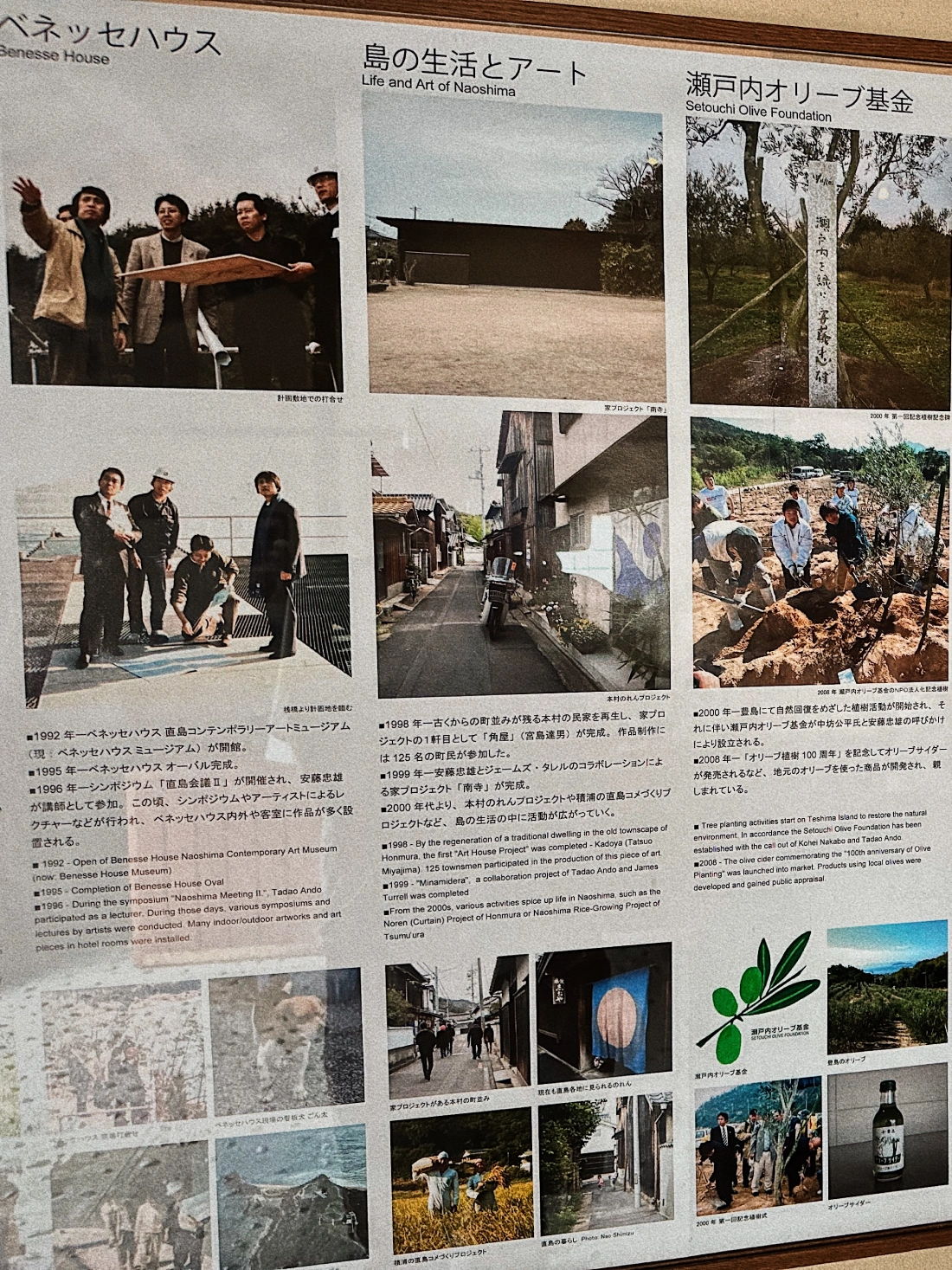
Naoshima has so much Tadao Ando architecture that the island eventually gave him his own museum, the Ando Museum. Of course, we had to visit this museum for our Naoshima gay travel guide, too. A short walk from the six houses, the Ando Museum sits inside a century-old wooden home in Honmura, with a raw concrete box built into the traditional structure. Visitors have two floors to explore.
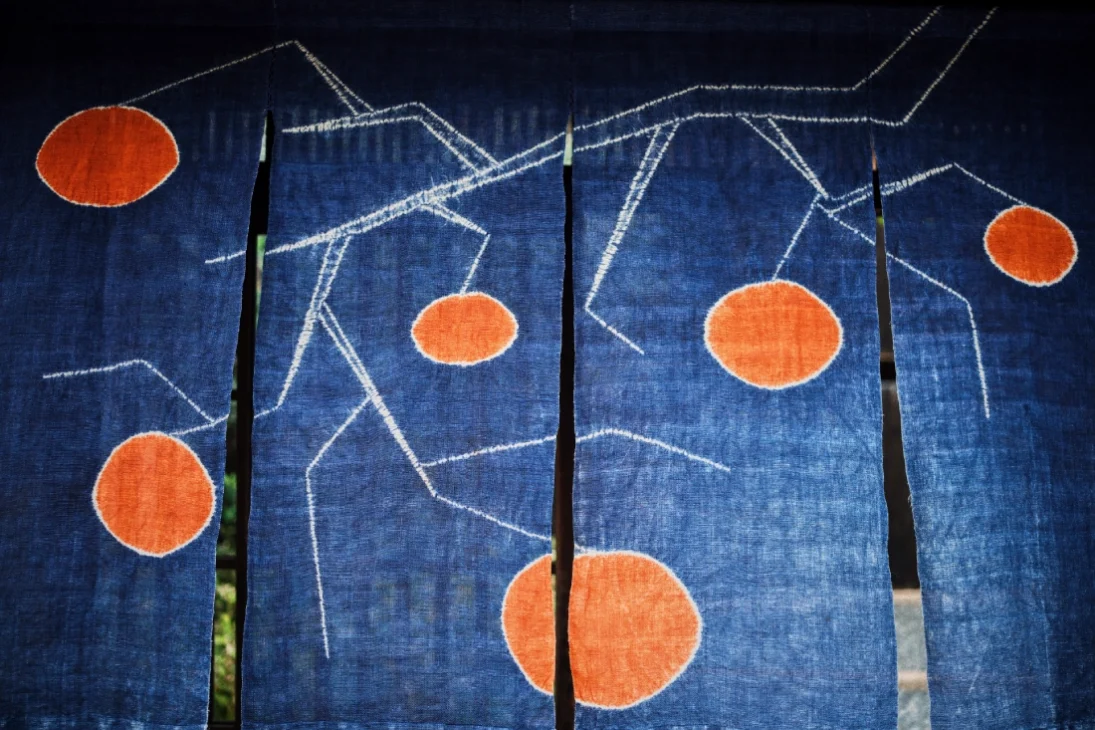
In the museum, we learned a lot about how museums on the island are built and on which concepts they are based. Ando’s own photographs, sketches, and models are contributing to the understanding of this place and other important art spaces on the island. They fill the space, tracing his work from the Benesse House Museum through the Chichu Art Museum and beyond.
Naoshima Gay Travel Guide: Quick Answers to your questions
How many days do you need on Naoshima?
Three full days was our sweet spot for the main sights: one to settle in and cycle the coastline, one for the Benesse House and Chichu museums, and one for the Lee Ufan Museum and the Art House Project. A rushed day trip from Okayama is possible, but it skips the slow pace that makes Naoshima worth the detour.
How do you get to Naoshima?
Fly into Kansai International Airport in Osaka, take the Shinkansen south to Okayama, then a local bus or train to Uno Port, where a short ferry crosses to Miyanoura Port on Naoshima. The whole connection from Osaka takes about half a day.
How do you get around the island once you’re there?
Cycling is the easiest way to see Naoshima at your own pace. Electric bikes are widely available, including at OUGIYA RentaCycle, right by the Umi-no-Eki (Marine Terminal) Naoshima. A local bus and a free museum shuttle also connect the main areas if you’d rather not pedal.
What does it cost to visit the museums?
Each museum charges admission: the Chichu Art Museum runs ¥2,500–3,000 depending on the day; the Benesse House Museum (which includes Valley Gallery) is ¥1,300–1,500; the Lee Ufan Museum is ¥1,200–1,400; and the Hiroshi Sugimoto Gallery is ¥1,600–1,700. The Art House Project sells individual tickets from ¥600 or a multi-site ticket covering five houses for around ¥1,200. Children 15 and under generally get in free. For the most recent ticket information, visit the official website.
Do you need to book tickets in advance?
Yes, for two of them. The Chichu Art Museum and the Hiroshi Sugimoto Gallery both require an online reservation for a specific date and time, and both sell out during peak art season. Benesse House Museum, Lee Ufan Museum, and the Art House Project are more flexible and can usually be booked the same day. We had booked everything in advance to avoid any last-minute ticket planning.
Is Naoshima gay-friendly for a couple?
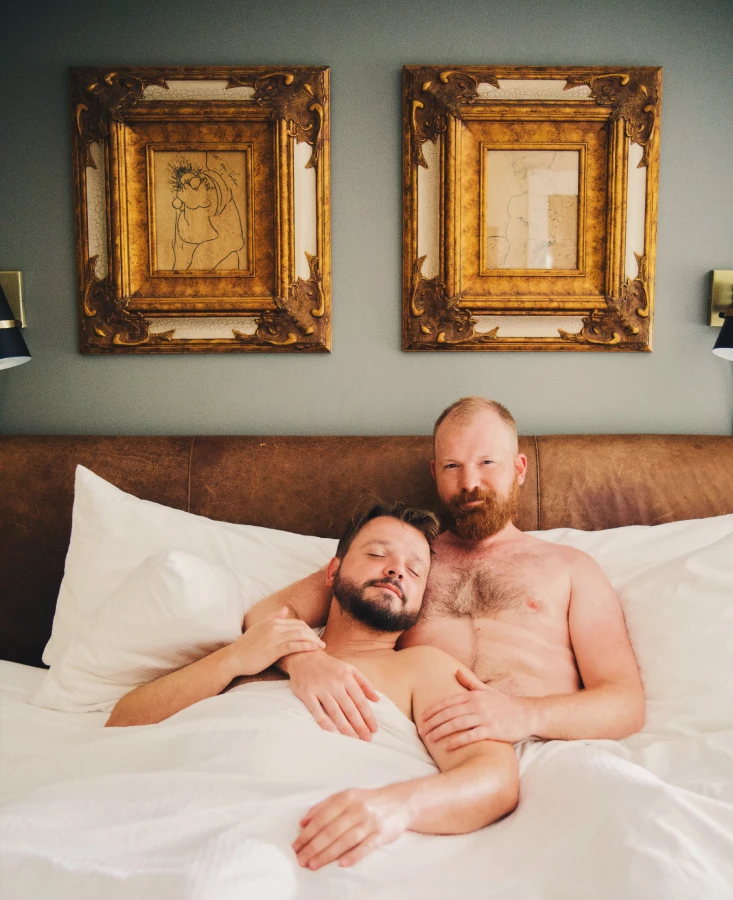
We traveled the island, holding hands, and never got a second look. It’s worth knowing that Japan doesn’t yet have national marriage equality: same-sex couples still can’t legally marry, and the question is currently in front of the Supreme Court after lower courts have gone both ways. On the ground, in a small, art-focused, tourist-heavy place like Naoshima, none of that legal uncertainty showed up in how we were treated. Here’s more about the current situation in Japan for the queer community.
Gay Travel Index 2026
The Berlin-based Spartacus informs LGBTQ+ and queer travelers about how gay-friendly a holiday destination is, based on several ranking criteria.
Which country ranks first? Where is it safe to travel to as a gay and LGBTQ+ traveler?
You can use the GTI to prepare for your gaycation and to guide your choice of holiday destination.
More Gay Travel Guides for Japan
Naoshima was just one stop on a longer trip, so if you’re planning gay travel in Japan beyond the art island, these five guides pick up where this one leaves off.
- Osaka for Gay Couples: Our Tips for Japan’s Most Dynamic City, our full account of Osaka Pride and the city’s LGBTQ+ scene, from this same October 2024 trip.
- Nakagin Capsule Tower: Historic Organic Architecture in Tokyo, Japan, for more of the architecture obsession that brought us to Ando and Sugimoto’s buildings on Naoshima in the first place.
- Kumano Kodo Pilgrimage: Our Spiritual Japanese Hiking Adventure, the trip we kept thinking back to on Naoshima’s ferry rides from ten years earlier in Wakayama.
- Koyasan: 120 Temples of Japanese Buddhism at Mount Kōya, if the quiet, spiritual side of Go’o Shrine is what stuck with you most.
- Kumagaiji Buddhist Temple Lodging in Koyasan, Japan: Our review of the temple stay itself, for anyone drawn to Naoshima’s own unusual take on where to sleep.
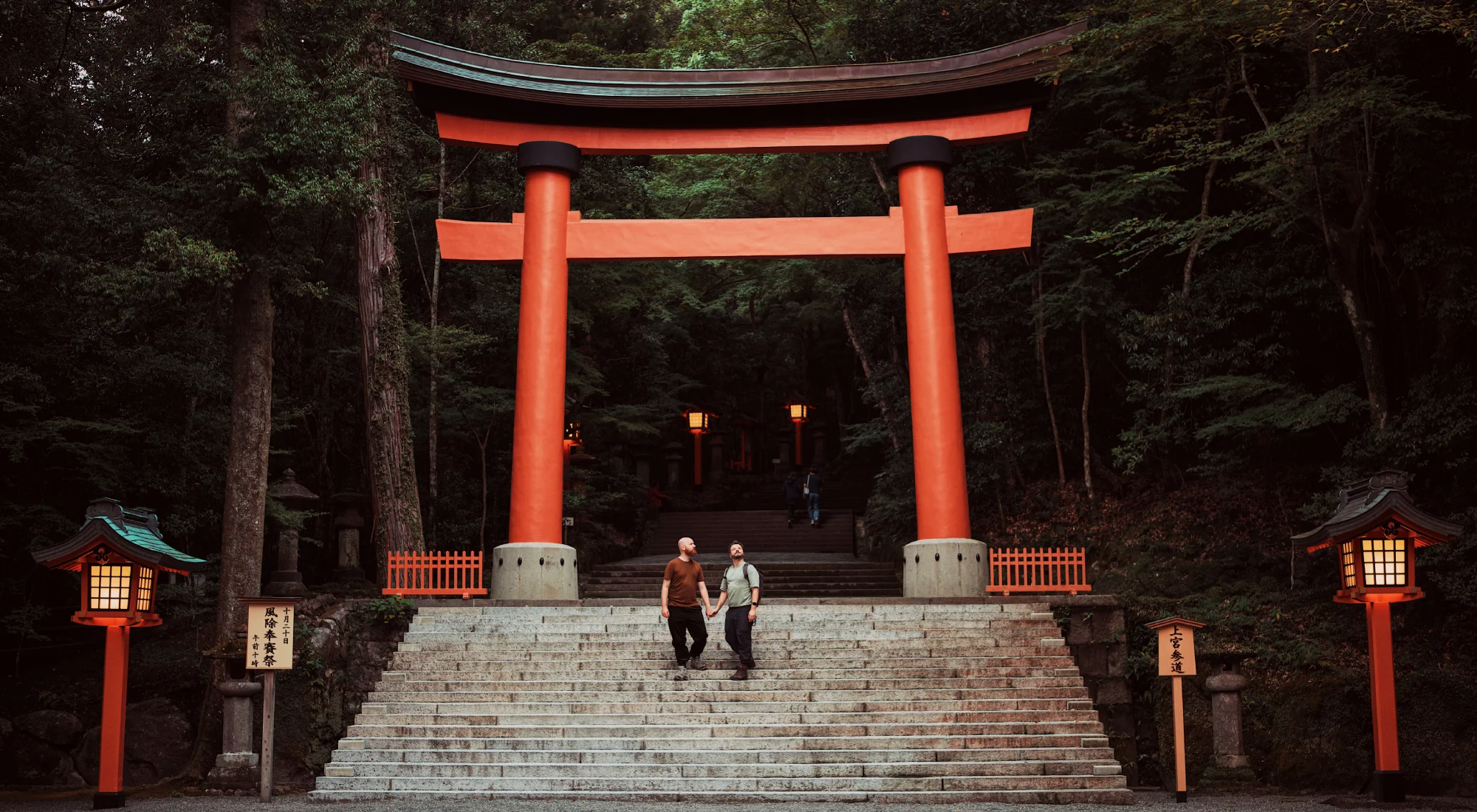
Now it is your turn to plan your Naoshima trip with our gay travel guide
Naoshima rewards a slow visit, not a rushed day trip from Okayama. Give yourself at least three days: one to settle in and cycle the coastline, one for the Benesse House and Chichu museums, and one for the Lee Ufan Museum and the Art House Project scattered through Honmura.
Book a queer-welcoming accommodation or Booking.com Travel Proud property near Gotanji Beach early, and reserve an e-bike the moment you land in Miyanoura.
Do you like it? PIN IT!
This stop was the first part of our honeymoon route through Japan in 2024: starting in Osaka for the IGLTA Convention and the Pride that followed, on to Naoshima, then Beppu, an overnight ferry back to Osaka, two bonus days at Universal Studios, Kyoto, and finally Tokyo, including Disneyland and DisneySea. If you’re still mapping your route, that guide covers more of what we saw along the way, and our About page has more on who we are and why we travel this way.
Do you want to know more about travel news from the LGBTQ+ community? Follow us on Instagram, Threads, Pinterest, TikTok, YouTube, and Facebook! See you at a Pride or CSD demonstration somewhere in this beautiful, diverse, and eclectic world!
Karl & Daan.